 Join on WhatsApp
 Join on Telegram
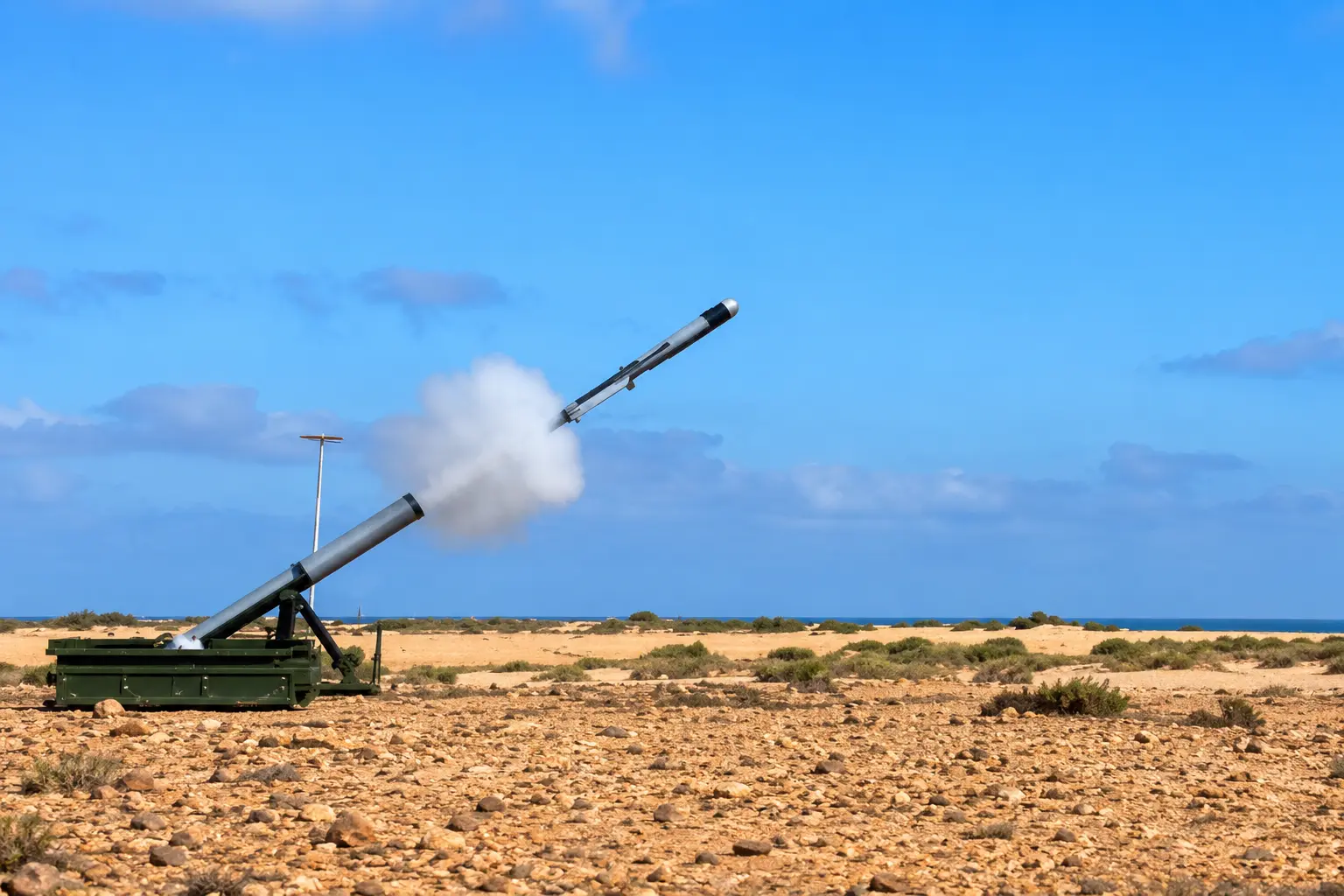
Marrakech – The US Army has disclosed that it successfully tested its Long Range Precision Munition (LRPM) during African Lion 2026 in Tan-Tan, Morocco, marking a significant milestone for the weapon system.
The announcement was published this week by the Army’s Portfolio Acquisition Executive (PAE) Fires. It revealed that an operational army user employed five LRPMs during the “deep strike” portion of the exercise in early May.
Two munitions were fired in a simultaneous strike on May 2. Three more followed on May 4 in another coordinated engagement. Both operations validated one-to-many control in-flight and mission execution autonomy.
The LRPM is a tube-launched, semi-autonomous munition designed for optionally human-on-the-loop operation. It can coordinate multiple simultaneous strikes against one or more targets.
The system consists of an Altius 700 air vehicle and a government-designed payload developed through the US Army Combat Capabilities Development Command (DEVCOM) Aviation and Missile Center (AvMC). It can be launched from the air or the ground and has a range exceeding 290 kilometers.
During the exercise, the munitions were employed in an LRPM-only “wolfpack,” demonstrating what the army described as a self-sufficient “hunter-killer” concept. The wolfpack configuration networks multiple munitions to penetrate deep into complex enemy territory.
The operational user who managed the strikes said the system provided “accurate and reliable performance” while maintaining a “streamlined operator setup.” The ability to integrate “advanced long-range strike capabilities without adding excessive equipment, cables, or sustainment requirements” was seen as “a major benefit to the end user,” the operator added.
The LRPM is a program of record executed under a Middle Tier of Acquisition Rapid Prototyping (MTA-RP) framework. The army says it is on track to begin fielding ahead of schedule by the end of 2027.
Read also: Morocco’s Frigate Mohammed VI Joins Naval Review for US 250th Anniversary
The tests took place during African Lion 2026, AFRICOM’s largest annual joint exercise. The drill ran for nearly three weeks and concluded on May 8 across Morocco, Ghana, Senegal, and Tunisia. It brought together over 5,600 military personnel from more than 40 countries. More than 30 US-based defense industry partners tested emerging technologies in live conditions.
US Secretary of Defense Pete Hegseth, speaking via video at the closing ceremony in Agadir, affirmed “there is no better partner than Morocco” to host the exercise. He described African Lion as “an innovation laboratory” integrating artificial intelligence, robotics, and next-generation digital technologies into operational scenarios under real-world conditions.
Lieutenant General Mohammed Berrid, Inspector General of the Royal Armed Forces, noted that the 2027 edition will coincide with the 250th anniversary of diplomatic relations between Morocco and the United States.
The LRPM disclosure comes as the bilateral defense partnership enters a new phase. The Senate Armed Services Committee advanced the FY2027 National Defense Authorization Act on June 15, with Section 1268 directing the Pentagon to develop a comprehensive plan to position Morocco as Washington’s leading military partner in Africa.
The legislation calls for expanding joint exercises, establishing a drone center of excellence, deepening counterterrorism cooperation, and advancing Moroccan force modernization through American defense procurement.
Introduced by committee chairman Senator Roger Wicker and passed 18-9, the provision aligns with the 2026-2036 US-Morocco Defense Cooperation Roadmap signed in Washington on April 15. If enacted, it would codify the bilateral defense partnership into American law.