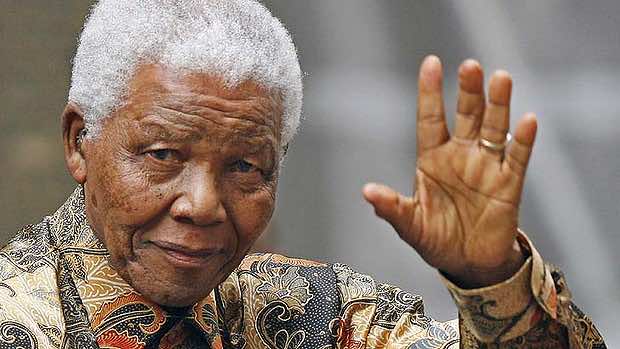
Fez- What I say in this article can never do full justice to Nelson Mandela, one of the greatest human beings ever to live on this earth and who passed away last Thursday at the age of 95 years.
I had heard of Nelson Mandela for the first time through Moroccan radio and television when I was a young student at Mohamed V University in Rabat in the early seventies. Moroccan student population at the time expressed its unconditional support for Mandela and his comrades against colonial and racist Pretoria regime, through demonstrations and protests.
His arrest and imprisonment had raised the indignation and dismay of students worldwide. We were all convinced that the colonial regime of South Africa was ruthless and unfair to the indigenous black population who only wanted freedom, dignity and social justice.
I was driving on the road Fez – Meknes to the Royal Military Academy to teach English to a class of Moroccan and African cadets, when I heard on the radio that Nelson Mandela was freed after 27 years imprisonment on Robben Island in South Africa. All students and teachers shared the good news with joy. It was as if Africa had reunited with its released son and as if the whole of Africa was finally free and independent. It was the end of the system of racial segregation known as apartheid, which was abolished in 1994. It was the long and painful struggle of Mandela and his comrades of the ANC (African National Congress) against this racist system that had led to its abolition.
The following year, I learned that Mandela was elected president with an overwhelming majority. He became the first democratically elected free and modern South African president. But I was beginning to worry and wonder whether Mandela will remain in power for life like most African and Arab heads of states?
As I read Mandela’s autobiography ” Long Walk to Freedom”, I wondered how he could possibly have resisted and maintained his good health and good spirits after more than a quarter century in prison under inhuman conditions and how he was able to achieve the unthinkable , ending the conflict between white and black South Africans and becoming president of the largest economic power in Africa. And just as I was thinking about his great national reconciliation approach that had inspired countries like Morocco to turn the page of the harsh past in order to indulge in democracy and development, he shocked the world by declaring that he would not run for office after the end of his first term in 1999.
I was both amazed and impressed by this historic decision, because at the time it was unusual for an African or Arab outgoing president to voluntarily withdraw from power. In our region, for example, the leaders and heads of state remain in power for life, they are out of power either by military coup, or by natural causes or by revolution.
I feel that I was extremely lucky and honored that the beginning of my university studies coincided with the exacerbation of the armed struggle against apartheid and that the beginning of my career as a university professor and researcher coincided with the release of Mandela and his return in African politics.
His strength, perseverance, patience, wisdom, love for peace and for his people, his humility and inclusive strategy, and compromise have inspired millions of young and adult people around the world better than any course of citizenship or civic education .
In 2011, he issued a statement urging the youth in the region of the Arab Spring to use wisdom and avoid violence and revenge, giving a chance for dialogue, reconciliation and negotiations. He stated that had his country followed the path of vengeance after his release, it would never have been able to end the civil war.
Unfortunately for many Arab countries, power has ended up in the hands of a few dictators who had followed the same method and repressive colonial policies that African and Arab peoples had to fight vigorously to regain their independence. They have amassed wealth while endless hunger and unemployment invaded their societies, pushing more young people into the abyss of poverty or to illegal migration.
In fact more than 10 years after Mandela has left office, fulfilling a historic step towards third world countries , the “heads of state for life” in the Arab countries continue to cling to power against the will of their peoples. However, I am optimistic because the example of Mandela gave a boost to democratic reforms in Africa, where several heads of state have finally obeyed the constitution of their countries and are removed without violence.
I am also glad that Mandela has inspired millions of young people the world over and will inspire future generations to continue the struggle for human dignity, social justice, respect for diversity and democracy.
Never a president or leader has gathered so many powerful world figures to his funeral. More than 100 Heads of State and Government from around the world, including U.S. President Barack Obama and three of his predecessors, George Bush the father, Jimmy Carter and Bill Clinton, French President François Hollande, the British Prime Minister David Cameron and UN Secretary General Ban Ki -moon are present at the funeral and burial of the man who was the symbol of freedom and equality in his country and elsewhere. This is a clear sign of the kind of impact Nelson Mandela has left the world.
I wish Arab leaders follow his example, even a little, so that our spring is a spring of freedom, democracy and reconciliation.
I wonder why the Arab world in particular does not learn lessons from Mandela’s legacy based on dialogue, tolerance and respect for others, because it is the only way out of the stalemate in which we find ourselves.
The views expressed in this article are the author’s own and do not necessarily reflect Morocco World News’ editorial policy
© Morocco World News. All Rights Reserved. This material may not be published, rewritten or redistributed