
 Join on WhatsApp
 Join on Telegram
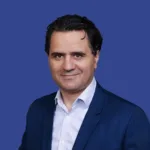
New York – Last week, many Moroccan media outlets reported the “news” that Driss Lashgar, Secretary General of Morocco’s opposition party, the Socialist Union of Popular Forces (known by its French acronym USFP), was “unanimously elected in New York as Vice President of the Socialist International,” an organization that brings together social democratic, socialist and labor parties.
The news was shared widely on social media, with many Moroccans celebrating Lashgar’s achievement. Most people applauded the report, believing that the Moroccan politician is the only Vice President of the organization.
Those media outlets, however, failed to mention that in fact the Socialist International has 33 Vice Presidents, each of whom is elected every four years based upon fair geographical representation and consideration for gender balance.
The last election of the socialist organization was held at its 26th congress convened from August 30 to September 1, 2012, in Cape Town, South Africa.
The Cape Town congress resulted in the election of former Greek Prime Minister, George Papandreou, as President. 33 Vice Presidents from all continents were also elected. Nezha Chekrouni, a leading member of the USFP, a former Minister, and Morocco’s current Ambassador to Canada was among the Vice Presidents elected in 2012.
What matters to every Moroccan citizen is not the election of Lashgar, but whether after his election he and his party are making any effort to prevent the organization from adopting positions contrary to Morocco’s interests, such as with respect to the question of Western Sahara.
In his quest for personal glory, Lashgar failed to defend Morocco’s most strategic interests. Moroccan media in their reporting of his election overlooked that the Socialist International unanimously adopted its mission report on the Western Sahara at the end of the two-day conference.
The least that one can say is that the language of the mission report runs contrary to Morocco’s position regarding the Western Sahara. In fact, the report calls for the direct involvement of the United Nations Secretary General, Ban Ki-moon, in the settlement of the conflict. Of greater concern is that the text that was adopted in the presence of the Moroccan delegation calls for the involvement of the African Union in the negotiations process and states that the principle of self-determination is “the unique legitimate way” to find a solution to the conflict.
This stance is in stark opposition to Morocco’s position on the conflict. Moroccan diplomacy has long called upon the United Nations to explore innovative ways to reach a political and mutually acceptable solution to the conflict away from the stubborn interpretation of the concept of self-determination as necessarily leading to the independence of the territory.
In addition, Moroccan diplomacy has been fiercely opposed to any involvement of the African Union in the conflict. Being the only regional organization that has granted full membership to the Polisario, Morocco believes that the AU has no business being involved in the resolution of the conflict.
As one might have expected, the Polisario welcomed the adoption of the Socialist International’s mission report, because it lends support to its position with regards to the settlement of the conflict by means of a referendum of self-determination.
Instead of celebrating his election as Vice-President of the SI, Lashgar and his four USFP comrades have the political duty to defend Morocco’s position and oppose the inclusion of such an anti-Moroccan language in the organization’s report. Short of being able to stop the adoption of the report, the Moroccan delegation should have at least broken the unanimity by voting against it and/or issuing a separate communiqué to express its disagreement with it and its reservations regarding its language.
But none of this was done. The Moroccan politician sought instead to present himself to the Moroccan public as a public figure who is internationally respected and can be counted on. Additionally, the language of the report stands in stark opposition to the upbeat statement Lashgar made to Moroccan media outlet Medias24 when he suggested that this year’s report was better than previous years’ reports. He added that his party participated in the drafting of the report, which calls for “finding a political solution.” Lashgar failed to mention, however, that the report did not call for a political solution as he claimed, but for a “just, peaceful and lasting solution to the conflict.”
The wording of this sentence goes against the language contained in the resolutions adopted by the Security Council since 2007. The Security Council resolutions call for finding a “just, long-lasting and mutually acceptable political solution to the conflict.” The wording of the Security Council’s sentence precludes the imposition of any solution that is not political and not mutually agreed upon by the parties, whereas the wording of the SI report would permit a non-political resolution that is not mutually agreed upon.
In addition, Lashgar either ignores or is not aware that the SI report contains a key sentence that is diametrically opposed to Morocco’s position. The report calls for backing the United Nations Mission in the territory, known as MINURSO, in the accomplishment of its main task – holding a referendum on the Saharawi people’s right to self-determination – as the only legitimate way to resolve the conflict, which is simply not acceptable to Morocco.
The referendum called for in the SI report is necessarily the same one that would presumably lead to the independence of the Western Sahara, an outcome that Morocco opposes. Perhaps the Moroccan politician should be reminded that his country’s diplomacy has been adamant in recent years in emphasizing that the role of MINURSO in the disputed territory is limited to the monitoring of the cease-fire, and that holding a referendum regarding self-determination has been rendered unworkable due to irreconcilable positions of Morocco and the Polisario with respect to the Saharawis who should be eligible to vote in such a referendum.
It is disheartening to have to point out that the SI was unanimously in favor of adopting a report that is against Morocco’ interests in the presence of a Moroccan delegation that is supposed to defend its country.
Apparently, parliamentary and parallel diplomacy, as called for by King Mohammed VI in his speech before parliament in October 2013, will have to wait until Moroccan politicians demonstrate real love for their country and are willing to defend the Kingdom instead of pursuing their ambitions for power and personal interests.
All you hear from some politicians about “parallel diplomacy” is but a mere PR stunt aimed at seeking popularity and respectability in the eye of Moroccan public opinion. Until such time, Moroccans must count on the only public figure worthy of trust, King Mohammed VI.
Samir Bennis is the co-founder of and editor-in-chief of Morocco World News. You can follow him @Samir Bennis
© Morocco World News. All Rights Reserved. This material may not be published, rewritten or redistributed without permission