
Rabat – Morocco’s Energy Transition and Sustainable Development Minister, Leila Benali, outlined an ambitious plan to strengthen the country’s energy resilience and expand its renewable capacity.
Addressing the House of Councillors on Tuesday, she announced a project to boost petroleum storage by 1.8 million cubic meters by 2030, adding the equivalent of 41 extra days to Morocco’s national consumption reserves.
Speaking at the House of Councillors on Tuesday, Benali announced a MAD 5 billion ($488 million) initiative to support private sector projects to increase petroleum storage capacity by 1.8 million cubic meters by 2030.
This expansion, equivalent to 41 additional days of national consumption reserves, is projected to create over 3,600 direct jobs and thousands of indirect ones.
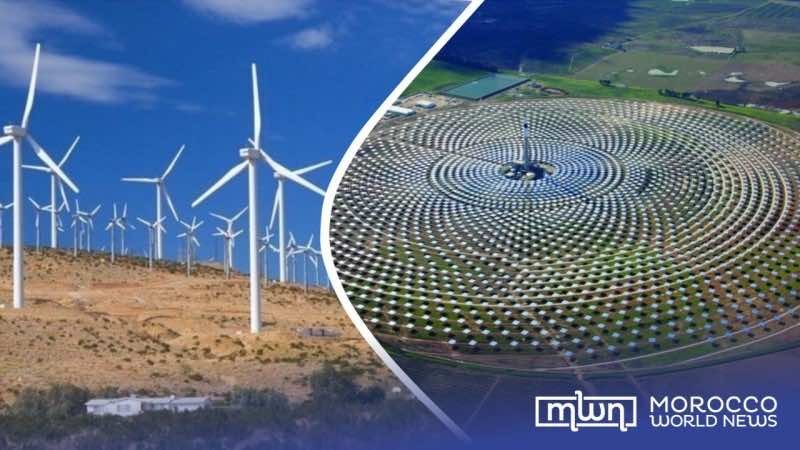
In addition to storage projects, Benali noted astronomical progress in renewable energy development. By August 2024, Morocco’s renewable electricity capacity had reached 5,300 megawatts, reflecting a 7.3% increase under the current government.
Notably, wind energy surpassed hydropower for the first time in electricity production, signaling a transformative shift in Morocco’s energy mix.
“Renewable energy now supplies one-fifth of Morocco’s electricity demand,” Benali stated, adding that her ministry had approved private sector projects totaling over 2 gigawatts of renewable capacity within two years—a record-breaking authorization.
Read Also: Morocco Advances Renewable Energy with 270 MW Jbel Lahdid Wind Farm Launch
The minister underlined the impact of recent energy reforms in reducing production costs, noting that renewable energy, including advanced battery storage, now costs less than MAD 0.40 ($0.04) per kilowatt-hour. This achievement positions Morocco’s clean energy sector as globally competitive.
Renewable energy investments have also seen a dramatic increase, surging from MAD 3.5 billion ($341 million) annually before 2021 to MAD 15 billion ($1.46 billion) per year after 2023.
Looking ahead, Benali announced that MAD 30 billion ($2.93 billion) has been allocated for future projects, including a 3-gigawatt high-capacity electrical interconnection line linking southern and central Morocco.
In September, Morocco introduced three decrees to accelerate its renewable energy transition.
The first mandates smart meters to enhance grid efficiency and renewable energy integration. The second establishes “certificates of origin” for renewable electricity, promoting green energy and aligning with global standards. The third supports energy service companies in implementing energy-saving measures and improving equipment performance.
These developments reflect Morocco’s commitment to energy independence and sustainability, further solidifying its status as a renewable energy leader in Africa and beyond.