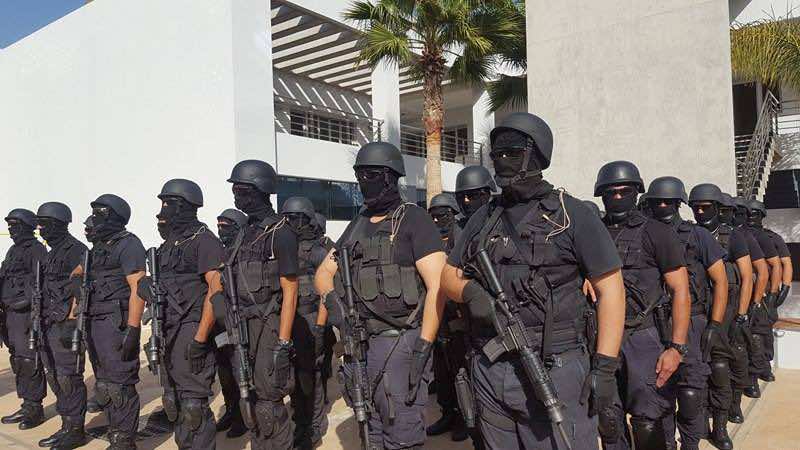
Washington – Morocco’s counterterrorism strategy serves as ‘a practical model’ to fight terrorism in the Sahel, according to a report released by The Inter-University Center on Terrorism Studies (IUCTS) and the Potomac Institute for Policy Studies.
“In sum, Rabat’s holistic security strategies, ranging from expanded international cooperation (e.g., joining the African Union) to developing tolerant Islamic approaches, seem to serve as a practical model to bring potential terrorist threats to manageable levels,” the source stated.
While security challenges persist in Morocco, “During 2016, Morocco continued to improve its counterterrorism capabilities, as demonstrated by multiple arrests of suspected terrorists, seizing weapons, and aborting violent plots,” the report pointed out.
The eighth annual report, “Terrorism in North Africa and the Sahel in 2016,” noted that the artificial conflict over the Sahara provides openings for extremists to exploit and impede security and economic cooperation. It stresses the need to settle the Sahara issue as soon as possible.
Throughout the Maghreb and Sahel region, the report lists 235 attacks. This emphasizes the need to assess the humanitarian, political, social, economic and strategic costs of each attack.
According to the report, the countries most affected by terror attacks in 2016 were Libya, Mali, Tunisia and Algeria.
The report called on West countries to work with the countries in the region to consolidate their anti-terrorist capacities to prevent terrorist acts and their harmful effects. Particular importance should be given to political, social and economic development programs. These will “generate more effective antidotes to these growing threats to the stability, peace and prosperity of the region.”
In this regard, the report puts forward five major recommendations. In particular, it calls for a comprehensive strategy to tackle humanitarian crises in Africa. It also stresses the need to take pro-active measures with international and regional partners “with a view to preventing radicalization, instability and violence.”
The report also recommends strengthening the security capacities of regional leaders, supporting Muslim leaders in promoting the practice of a moderate Islam, and implementing counter-radicalization programs that limit the appeal of extremist recruiters.