


 Join on WhatsApp
  Join on Telegram
 Rabat – Amina Benkhadra, the director general of the National Office of Hydrocarbons and Mine(ONHYM), has said that Morocco’s sedimentary basins are still not sufficiently explored, despite constituting oil stocks likely increase hydrocarbon reserves.
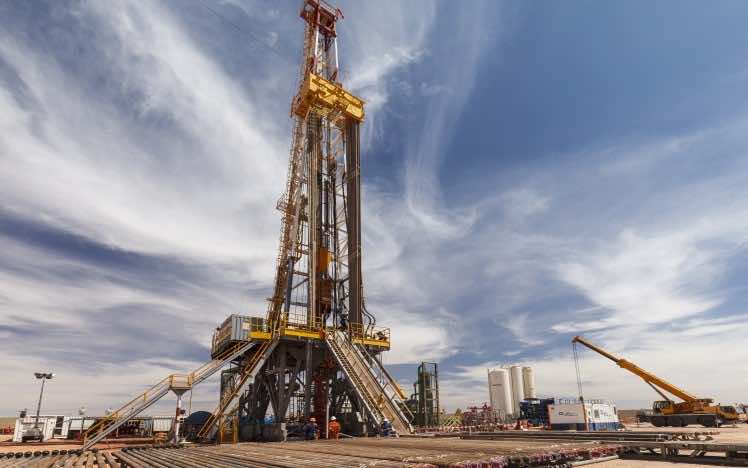
Three-hundred and forty wells had been drilled in Morocco by the end of June 2017, 43 of which were drilled off the kingdom’s shores.
This number represents an average density of four drillings per 1000 square kilometers, compared to an average of 10 per 100 kilometers worldwide, Benkhadra told Maghreb Arab Press (MAP).
The director general explained that ONHYM is determined to be a catalyst for the oil exploration process, by doubling its efforts to enhance the potential of Moroccan sediments and the petroleum industry internationally.
According to Benkhadra, the project aims to develop and maintain international partnerships and attract new investors in order to identify and boost the potential of Moroccan sediments.
Twenty oil companies are currently active in Morocco, she noted, adding that negotiations are currently underway with four new internationally-renowned firms. To date, the areas covered by excavation works have reached 180,121.42 square kilometers.
ONHYM added that between 2010 and 2016, the value of investments in hydrocarbon exploration reached approximately MAD 16 billion, 98 percent of which was provided by the group’s partners.
However, by the end of August 2017, these investments amounted to MAD 466.9 million for the partners and MAD 18.8 million for the National Bureau of Hydrocarbons and Mines.
Benkhadra stressed that these investments could reach MAD 1.3 billion and MAD 36.4 million respectively by the end of 2017.
The director added that the efforts of the ONHYM and its partners led to the discovery of promising gas reserves in the western and Essaouira basins, explaining that the recent excavation works at the Tendara area in the Njoud basin also confirmed the presence of natural gas in the region.
The office and its partners established three drilling wells in the Tendara area during the 2016- 2017 period. As for the stocks discovered in the West Basin, Benkhadra explained that, although they are small in size, they remain economically important due to the existence of a network of pipes.
The stocks are also important due to their proximity to several industrial units in Kenitra, which will make them profitable.
The official also said that the budget forecast for 2018 in terms of investment is estimated at MAD 124 million for the National Bureau of Hydrocarbons and minerals, compared to about MAD 1.34 billion for the partners.


