


 Join on WhatsApp
 Join on Telegram
Rabat – Announced earlier this week to represent Morocco at the Mideast conference in Poland, Morocco’s Foreign Affairs Minister held a conference with his Spanish counterpart instead.
On Monday, Polish Minister of Foreign Affairs Jacek Czaputowicz confirmed that Morocco will be represented at the Middle East Conference in Warsaw by Nasser Bourita.
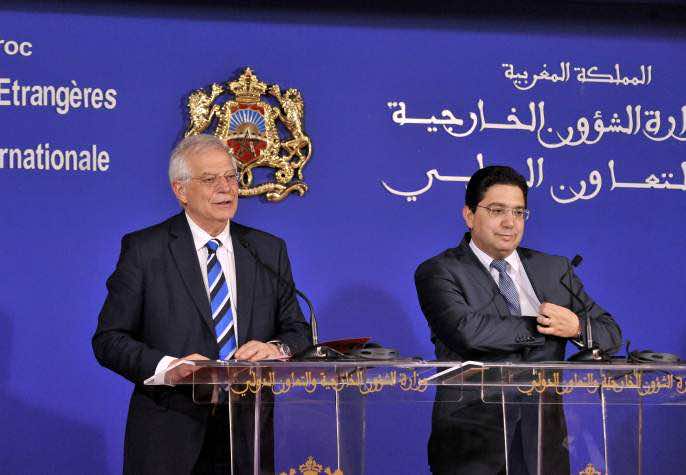
But Bourita appears to have ditched the ongoing Warsaw Mideast Conference. Instead, the minister chaired a joint press conference with his Spanish counterpart on the Spanish-Moroccan diplomatic ties in conjunction with the Spanish royal visit to Rabat.
Bourita’s decision comes against the backdrop of aggravating concerns in Morocco’s relations with a number of Mideast players, including most recently Saudi Arabia and the United Arab Emirates (UAE).
Although Rabat has consistently played down the gravity of growing signs of disagreements with Riyadh on numerous regional dossiers, including the Yemen War and the Trump’s administration’s Palestine’s agenda, public discourse indicates that the Saudi-Moroccan alliance is far from unaffected by recent developments.
Meanwhile, Spain has been a strong and valuable Moroccan ally. When some voices in Brussels expressed concerns about the prospects of EU-Morocco cooperation, especially on migration and fisheries, Madrid repeatedly sided with Morocco.
Spanish authorities on various occasions voiced support for a number of Moroccan demands to the EU, saying that the success of the EU policies on security and migration passes through solid partnership with Morocco.
Mohcine Jazouli represents Morocco
But in a bid to avoid raising any further concerns or upset the other attendees of the US-organized Warsaw conference, the Moroccan diplomacy did outright snub the event.
Instead, Minister delegate for African cooperation, Mohcine Jazouli, flew to Warsaw to take part in the event, which is taking place in the presence of Saudi Arabia, Yemen, Israel, UAE and Kuwait.
The conference aims to discuss the challenges and humanitarian issues facing the Middle East.
During the meeting’s session on countering terrorism and illegal financing” on Thursday , El Jazouli spoke about Morocco’s counterterrorism strategy..
He said that the Moroccan strategy in curbing radicalization and fighting violent extremism has become a reference at the global and regional levels.
He also added that countering terrorism is a shared responsibility because it requires the mobilization of the international community.
The official added that the international community’s effort might help curb the scourge of terrorism.
Morocco’s anti-extremism strategy is recognized in the international community. Morocco ranked 132 out of 163 in the 2018 Terrorism Index report, gaining nine places compared to the 2017 report when it ranked 123rd.
Despite collecting plaudits for its performance on security, Morocco has introduced in recent years a number of new measures to upgrade its anti-terrorism architecture. The upgraded hard security measures include, among others, regional cooperation, intelligence sharing, the promotion of moderate Islam, and democratic reform.
The strategy also includes renovation and upgrading of mosques, making official lists of imams public, training imams, and reviewing laws governing worship sites.


