


 Join on WhatsApp
  Join on Telegram
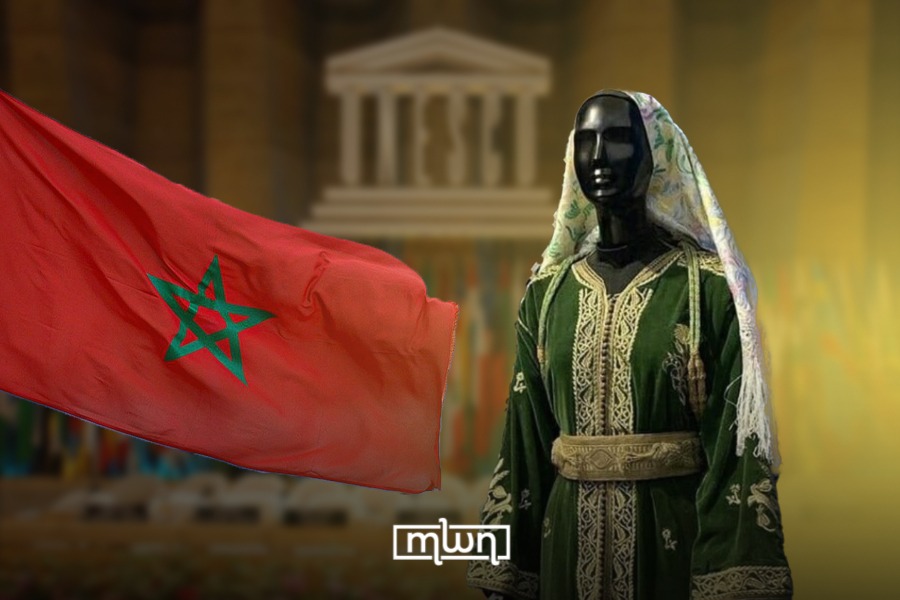
 Rabat – Morocco has officially succeeded in having the Moroccan caftan recognized as part of UNESCO’s Intangible Cultural Heritage. The decision was approved today during a meeting of the UNESCO Intergovernmental Committee for the Safeguarding of Intangible Cultural Heritage, held in India.
This international recognition marks a major achievement for Morocco as it reinforces its efforts to safeguard its cultural identity and preserve an essential part of its heritage, as well as protect this centuries-old garment from cultural appropriation.
Morocco submitted a complete file showing the richness and long history of the caftan. The file was prepared by the Ministry of Youth, Culture and Communication, together with Morocco’s Permanent Delegation to UNESCO in Paris. It includes detailed information about the skills, craftsmanship, and social roles connected to the caftan, as well as the communities that keep this tradition alive.
The Ministry of Culture said this recognition represents a “new achievement for the Kingdom under the leadership of King Mohammed VI, who continues to give great attention to Moroccan culture and the protection of national heritage.”
The statement added that the Moroccan caftan is more than a piece of clothing, as it is a living symbol of Moroccan identity, passed down through generations for more than eight centuries, from mothers to daughters and from master artisans to their apprentices.
“It represents exceptional technical and artistic heritage and is celebrated around the world,” stated the ministry.
Read also: Moroccan Caftan Officially Inscribed on UNESCO Heritage List
This “careful and well-documented” submission also avoided any political elements, focusing only on the cultural value of the caftan, noted the statement.
Following UNESCO’s decision, the ministry expressed its gratitude to all Moroccan artisans and craftspeople for their hard work, as well as to civil society in Morocco and abroad who help protect and promote the country’s cultural heritage.
The Moroccan caftan is a richly decorated, elegant garment – often a long tunic or robe, made from fine fabrics such as velvet, silk, or brocade, and adorned with intricate embroidery, button‑work, and traditional braided trim.
Many caftans use materials and techniques mastered over centuries in historic artisan cities such as Fez and Rabat, where generations of skilled craftspeople have honed their weaving, embroidery, and tailoring.
A symbol of Moroccan identity
Over time, these artisans developed distinct regional styles and techniques that make the Moroccan caftan uniquely beautiful and instantly recognizable.
Until today, the caftan continues to evolve, as many Moroccan designers reinterpret it and give it modern shapes or touches while respecting its traditional roots. This traditional garment is a staple at weddings, celebrations, religious festivals, and other special occasions.
It represents a bridge between past and present that keeps Morocco’s cultural identity alive.
But the caftan’s rich heritage, similar to other parts of Moroccan culture, has also faced several threats through cultural appropriation, mainly from Algeria. The neighboring country has previously attempted to include a photograph of “caftan el-ntaa,” which originated in Fez, in its own heritage file submitted to UNESCO.
In December 2024, Morocco succeeded at stopping Algeria from falsely claiming the Fassi caftan. “With this decision, which rejects the inclusion of the image of the Moroccan caftan in Algeria’s file due to its failure to respect intellectual property rights, UNESCO has confirmed a new act of cultural theft by Algeria, and this is not the first time,” read a statement from Morocco’s culture ministry.
Many Moroccans, including academics and cultural figures, have signed petitions calling on UNESCO to reject such appropriation attempts, insisting that the caftan remains an unequivocally Moroccan treasure.
And today’s recognition represents an important step in protecting an important part of national heritage that is also a symbol of identity, artistry, and history that belongs to Moroccans alone.


