 Join on WhatsApp
 Join on Telegram
Rabat – A video has emerged of two men assaulting a father and his family for supposedly wanting to change religion.
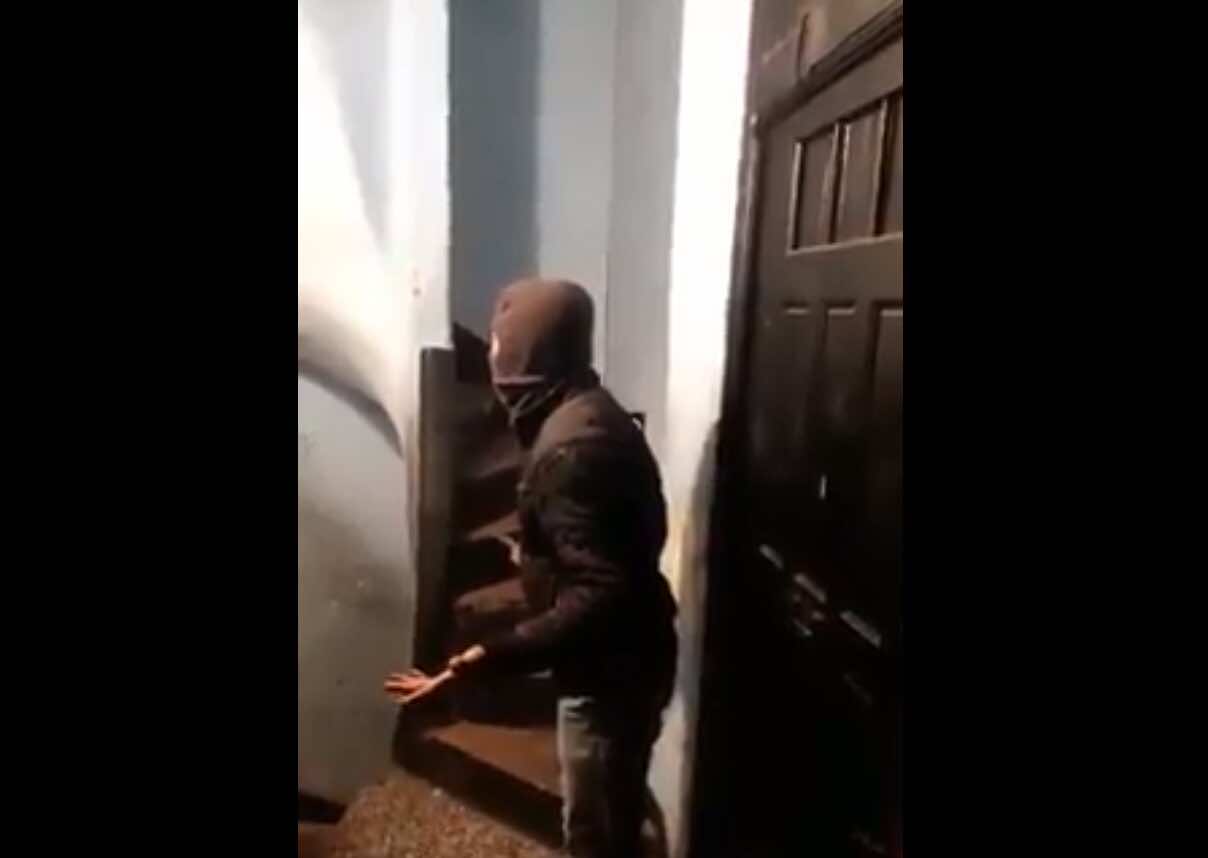
The images are disturbing and grim. They show two men in hoods, with one armed with a large knife, forcing their way into the home of a man whom they accuse of apostasy and treason for “betraying the religion.”
As the two attackers tried to storm the man’s home, whispers and sounds of a baby crying can be heard from inside the family’s locked home.
Meanwhile, the elder of the children tries to call the police to report the incident.
“Call them my daughter,” the man says, his voice suffused with panic and fear.
The video does not provide context, nor do the viewers immediately know the buildup to the grim scene.
But the reason for the attack is apparent, clear enough from the short clip. “So you are planning to change your religion? You want to change? We will show you now,” the attackers say, as they threaten to cause a gas leak and burn down the man’s home.
Silent plight
The event highlights the silent plight of Morocco’s tiny minority of Christians. Morocco is overwhelmingly Muslim (almost 99%), and Islam is widely considered as the state religion.
While Christians from other nationalities report experiencing little or no hostility from Moroccans, Moroccan converts have repeatedly reported being the objects of ridicule and death threats. This was particularly the case recently, in March, as a number of Christian associations tried to use Pope Francis’s historic visit to Morocco to draw attention to their situation.
As late as 2010, it was common for Moroccan converts to be considered traitors and undeserving of the Moroccan identity. Being Muslim was readily synonymous with being Moroccan, and death was the widely accepted sentence for apostates or Muslims who change their religion.
Recent changes
But there have been a series of reforms in recent years.
Morocco’s King Mohammed VI has on multiple occasions expressed his attachment to religious tolerance and interfaith dialogue, which he has said constitute the founding pillars of Morocco’s Maliki interpretation of Islam.
“I am the commander of all believers,” King Mohammed VI recently said, pointing out, as he welcomed the pope in March, that Morocco seeks to uphold equal treatment for all its citizens, regardless of their religious orientation.
In early 2017, Morocco’s High Religious Committee historically changed its position on the fate of Christian converts and apostates.
In line with the country’s desire to emerge as a beacon of tolerant and difference-accommodating Islam, the body said that Moroccans would henceforth be free to change their religion.
Most recently, amid fears of a resurgence of fundamentalist interpretations of Islam after news emerged of the heinous beheading of two Scandinavian tourists, the council of Moroccan Ulemmas reaffirmed its stance on the need to foster tolerance and interfaith-dialogue.
“An effective Islamic jurisprudence in the 21st century must think and accompany its environment’s social changes,” the body said. It added that Islam today needs to accommodate social and cultural changes and be “grounded in tolerance and openness.”
But this latest heinous, fanaticism-drenched incident comes as a telling reminder that changes in Morocco’s official discourse and policy on religion have not trickled down to some parts of the country.
Earlier reports of the horrific incident said the attack took place in Agadir.
However, preliminary findings from a police investigation have denied those claims. At the moment of writing, the investigation is ongoing to determine both the exact location of the incident and the identity of the attackers.