


Rabat – In 2003, Casablanca experienced terrorist attacks at a popular tourist restaurant and internet café. Suicide bombers, from the shantytown of Sidi Moumen, aimed an attack directly towards discouraging Western influence by literally ridding the place of who they saw as its perpetrators — Western tourists in Morocco.
The second attack, at an internet café, perhaps more indirectly discouraged Western influence because it was at a cyber venue. This could be seen as a statement against outside influences that could permeate Moroccan society by way of the internet.
However, radical Islamism is seen as a threat to the stability of Morocco’s government because it invokes violence and destruction, and it challenges the establishment. In Morocco, the radical Islamist narrative is a challenge to the Moroccan king because it casts doubt over his legitimacy as amir al-mu’minin — the “commander of the faithful” or head of religion.
As much as Islamism is concerned with permeating external areas of life, Sufism is focused on the internal workings of each individual. It sees religion as emphasizing personal enlightenment by encouraging people to look into themselves to find Allah.
Sufis are focused on their search for a way inside themselves which will lead them to God. They believe that the path to Him can be found through meditation and purification. Because Sufism is so internally focused, Sufis are seen as a political and uninvolved in political affairs.
Sufism encourages believers to disengage from the material world, which includes politics and government, to better align oneself with the spiritual world, and to learn the truth of God. Sufism teaches that the material world is all illusion and, because of its illusive nature, it is better to free oneself from the bounds of material life, and to search for reality and understanding in the divine.
Religion has always been important to Moroccans but it has been moderate and tolerant. Jews lived and thrived in Morocco for 2,000 years, thanks to this moderation. When the Sephardic Jews were kicked out of Spain in 1492, Morocco was one of the few countries that opened its doors to them.
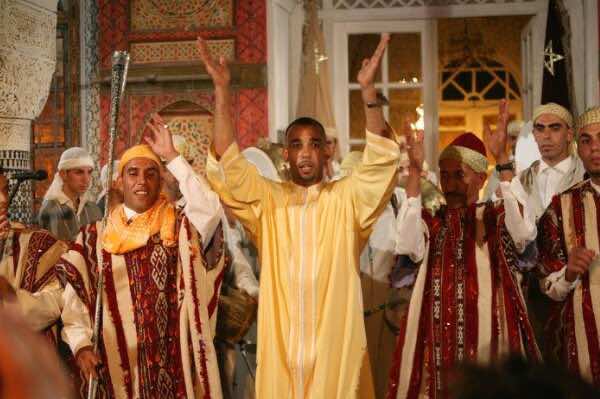
Moroccan Islam — a term rejected by Islamists who believe there is only one Islam with no local colorations — is a mixture of Sufism and Maraboutism. The Sufis arrived from the east around the 15th century and spread across the country, preaching a moderate Islam to uneducated farmers.
On their death, they were elevated to the rank of saint: marabout. People built shrines on their tombs and gave them Baraka — divine grace — attributes that allow healing powers.

Is Sufism antidote to extremism?
There are hundreds of shrines of saints around Morocco with a reputation of different healing powers and whose Baraka is celebrated every year at the end of the agricultural cycle with a festival organized by the entire tribe for days, reminiscent of ancient pagan rites.
Since the “Arab spring” in 2011, the establishment, which had always favored Sufi Islam, increased its support for religious lodges, such as the powerful Boutchichiya lodge in Berkane, which boasts 2 million members worldwide, including civil servants, intellectuals, and government officials.
In Morocco, there are dozens of other Sufi lodges and orders that owe allegiance to the monarchy and give it its religious legitimacy and political strength.
Realizing that the fragmentation of religious representation will make the imarat al-mu’minin (commandership of the faithful) stronger and more legitimate, the king has even allowed the presence of Moroccan Shias in northern Morocco, under strict conditions of allegiance to the monarchy.
Morocco has gone through the Arab uprisings and the ensuing Islamist power takeover unscathed. This is thanks to the predominance of Sufi Islam in the majority of the Moroccan territory, which is almost as old as the monarchy itself.
Moroccan Sufism, represented by Maraboutism, is tolerant, open and accepting of the other in his “otherness.” It has earned the country worldwide respect. Today, many countries are approaching Morocco to benefit from its religious experience, especially in imam training. Dozens of foreign students are registered in the Imam Academy of Rabat.
Moroccan Islam is couched in Sufism. And that has proved to be a successful antidote against religious extremism and proof that the “Moroccan exception” is a tangible reality in the Muslim world.
You can follow Professor Mohamed CHTATOU on Twitter: @Ayurinu




