 Join on WhatsApp
 Join on Telegram
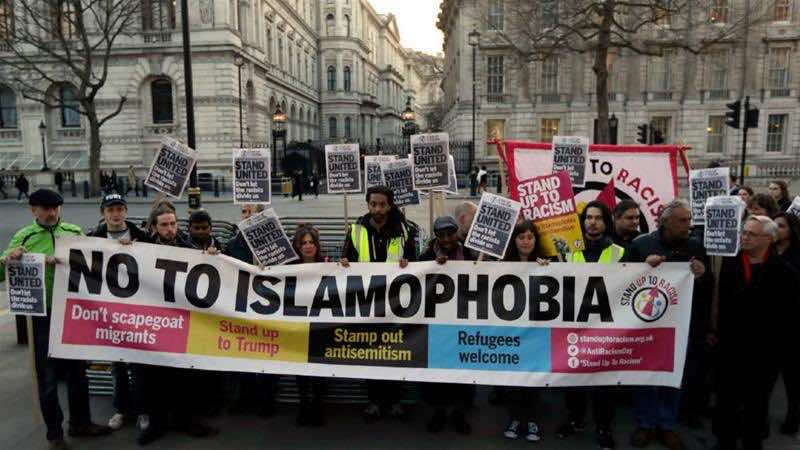
Rabat – “If families gather for holy month of Ramadan will there be a huge spike in COVID cases. Doctors are very worried,” tweeted British journalist Andrew Pierce on April 12, prompting fears of a rise in Islamophobia and scapegoating in the UK.
Following the controversial tweet, a rash of newspaper articles appeared in British press warning of the dangers of Ramadan amid the novel coronavirus pandemic. Right-wing tabloid the Daily Mail, home to Pierce, warned on April 14 that Ramadan could “lead to a rise of coronavirus cases.”
“Fears of spike in coronavirus because of Ramadan,” Metro splashed on its April 14 front page. The usually balanced Times newspaper plumped for a similarly sensationalist title, though the content of the article did analyze the bigger picture.
Britain’s Twitterati have also come out in force, accusing the press and right-wing public figures of exploiting the uncertainty and fear caused by the COVID-19 pandemic to stir racial and religious tensions. The facts, meanwhile, remain mired in slurs and political posturing.
The burst of fear-mongering headlines and tweets stemmed from an out-of-context quote from an interview exploring the disproportionate number of ethnic minorities contracting COVID-19 in the UK.
‘Disturbing and worrying’
On April 10, chair of the British Medical Association (BMA) Dr. Chaand Nagpaul called on the government to launch an investigation into the impact of the coronavirus pandemic on black, Asian, and minority ethnic people (BAME). The call came in response to statistics suggesting that BAME people in the UK are more vulnerable to the virus.
The first 10 National Health Service (NHS) doctors to die after contracting the virus were all BAME, with most coming from the Middle East and Africa.
Nearly half of the NHS medical staff are BAME (44%), while only 14% of the British population self-define as BAME. Even with this skewed data, Nagpaul argued the fact that all of the deceased doctors were BAME is “extremely disturbing and worrying.”
Commenting on the doctors who lost their lives in the ongoing battle against the pandemic, the BMA chair explained that the BAME population “make up about a third of those in intensive care.”
The Intensive Care National Audit and Research Centre released early findings of research into coronavirus-related deaths in the UK ahead of Nagpaul’s statement. Over one third (35%) of patients in UK intensive care units are BAME, the report showed.
“We have heard that the virus does not discriminate between individuals but there’s no doubt there appears to be a manifest disproportionate severity of infection in BAME people,” Nagpaul said, urging the government to investigate.
Since the BMA chair made his impassioned request to the government, it appears that the right-wing machine has crushed and twisted the call to support BAME medical staff into a motive for discrimination, with non-white medical staff facing abuse and accusations of further spreading the virus.
Worse still, the British press is going out of their way to link the worrying statistics on the impact the novel coronavirus is having on the UK’s BAME population with Ramadan.
Out of context
“A consultant at Queen Elizabeth Hospital in Birmingham has now claimed that more social interaction during the holy month could lead to an increase in cases,” the Daily Mail began an article warning about the “spike” in contagion Ramadan could bring.
Responding to the worrying statistics highlighted by the BMA, NHS consultant Dr. Adnan Sharif explored the reasons behind the high proportion of BAME people contracting the virus in an interview with the Times.
“Anything that leads to more social interaction is a big worry,” he told the Times, explaining that Muslims traditionally gather during Ramadan to break fast together. Social distancing measures will, however, make this impossible during Ramadan 2020.
Sharif explained why the BAME population may be disproportionately affected by the coronavirus pandemic. He did discuss Ramadan but, it appears, his comments have been taken largely out of context to serve a right-wing agenda.
“There is plenty of awareness within the BAME community with regards to coronavirus,” the consultant said in a second interview with Asian Voice. “The increase in the coronavirus deaths within the BAME community can be attributed to a mix of co-existing health and issues and poor socio-economic conditions in which they live.”
Sharif explained that many BAME people, particularly Asian families, live in multi-generational households with as many as 11 or 12 living in one residence. “What kind of social distancing would be followed by a family of 11 members living in a 3-bedroom house?” he asked.
Muslims on lockdown
As Islamophobic rhetoric and out-of-context statements spread like wildfire through the imagination of the British right-wing, British Muslims are taking measures to protect themselves and the wider community as the pandemic claims more and more lives across the UK.
On its official website, the Muslim Council of Britain (MCB) states: “At present, it is unlikely that social distancing measures will be lifted and we will be able to return to our normal routines. As such, congregational acts of worship for Muslims outside of the home will still be banned to stop the spread of the virus.”
The body goes on to outline specificities of worship and traditions, reminding British Muslims that the restrictions include “taraweeh prayers at the mosque or anywhere outside our own homes, spiritual talks in the community or iftars (breaking of the fast) with friends and family to attend.”
The website provides specific advice for Muslims who are working or studying at home during the COVID-19 pandemic and shares suggestions on how to organize virtual iftar gatherings on video calls.
A spokesperson for the MBA discussed the new and worrying rise in Islamophobic rhetoric and scapegoating with Al Jazeera.
“These stories are not only untrue and dangerous, but also undermine the mammoth work of Muslims in supporting the national effort, MCB’s Miqdaad Versi told Al Jazeera, citing the growing number of Muslim medics who have lost their lives while working for the NHS during the pandemic.
“We can only urge mainstream commentators to avoid such an irresponsible and reckless framing, especially at a time when community solidarity is all the more important,” he added.
Religious hate
The spike in Islamophobic rhetoric ahead of Ramadan came just after the UK’s much larger Christian and culturally-Christian population celebrated Easter. Though the government did remind citizens and residents to celebrate at home and not to visit family or friends over the bank holiday weekend, headlines suggesting the Christian festival would cause a spike in transmission did not surface.
Muslims represent only 4.8% of the British population, while over half of the country’s population identify as Christian. It is therefore highly unlikely that even a small portion of the Muslim population breaking lockdown measures for prayer would cause a national disaster on a scale that newspapers are suggesting.
Furthermore, there is no evidence to show British Muslims are not adhering to the government’s strict lockdown measures. The implicit suggestion that the UK’s comparatively tiny Muslim community needs more social distancing reminders than the white Christian majority is a colonial throw-back and a reflection of a malignant and deep-seated superiority complex heavily ingrained in modern British culture.
The Muslim and BAME doctors and nurses who are risking their lives everyday to save British coronavirus patients of all ethnicities and religions need no reminders about the importance of social cohesion, community, sacrifice, and the “Dunkirk spirit.”
It appears, however, that the British press is in dire need of a lesson in the Great British values of tolerance and solidarity.