 Join on WhatsApp
 Join on Telegram
Rabat – In her book “The Withering Away of the Totalitarian State,” American author Jeane D. Kirkpatrick described the Polisario Front as a totalitarian organization. Like its counterparts, this military front seeks to “create an aura of legitimacy around their violent efforts to seize power,” she wrote.
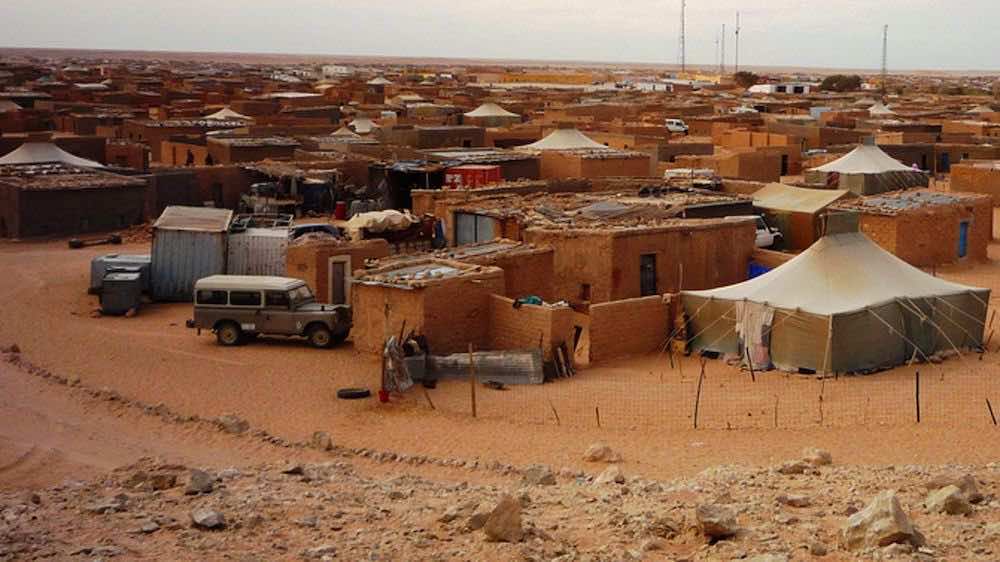
Miguel Angel Puyol Garcia, Director of the Center for Spanish-Moroccan Studies, gave the same testimony in a 2010 interview with Maghreb Arab Press. He honestly called a spade a spade: “The Polisario is a dictatorial movement that respects neither freedom of expression nor democracy … I have seen with my own eyes in Tindouf camps the inhuman conditions that the named Sahrawis are subject to … Nobody is allowed to freely express his/her views or make his/her own political choices.”
In a 2007 interview with assahraa.ma, Sidati El Ghallaoui, a former ambassador of the Polisario Front to Italy, Malta, and Greece, eloquently reiterated the testimonies of the two Western intellectuals and so many others. Following in the footsteps of Arab poet Mahmoud Darwish who said in his aphorism, “My country is not always right, but I can only exercise my real rights in my country,” the ex-diplomat introduced the comparison that “Sahrawis are like hijacked passengers.”
He stressed that resentment and grumbling are greatly expanding among Sahrawis in the camps. Sahrawis are fed up with a “leadership” structure that has crouched on their chests for more than 32 years, he said. This structure has carried out numerous rights abuses, embezzled budgets of billions of dollars, and traded aid packages given to the refugee camps by European civil society organizations, according to the former representative.
Read also: Expert Condemns Algeria’s Delegation of Tindouf Management to Polisario
El Ghallaoui’s statement regarding the sale of aid has become proof of this crime to donor countries. The European Anti-Fraud Office (OLAF) documented this pattern of embezzlement. Based on the official report, the European Parliament voted in 2015 to reconsider the value and suitability of humanitarian aid, taking into consideration the needs of refugees.
Polisario’s unprecedented obstinacy
The Polisario Front’s dependence on Algeria’s expansionist ambitions has fueled the “hijacked plane” of Tindouf refugees for 45 years. Unlike those of other separatist movements across the world, the Polisario Front’s bizarre formula of “No Peace, No War” presents an unprecedented paradox.
The Irish Republican Army (IRA) signed a peace and co-existence agreement with its UK enemy in 1994. The Basque organization ETA announced the end of its armed operations in 2011. Six years later it handed over its arms to the Spanish authorities and moved to dissolve the organization permanently in 2018.
The peace agreement between Colombia and the FARC separatists in 2016 put the final nail in the coffin of the war, one that lasted for more than 52 years, killed more than 220,000 people, displaced others, and caused the financial distress.
On the same continent, the separatist Zapatista Army ended its hostile acts by signing a peace agreement with the Mexican government in 1996.
The Polisario Front alone remains of the long-engaged separatist movements, parroting its fabricated conception of “the last colony.”
Is Polisario the only legitimate representative of the Sahrawis?
Since the outbreak of the conflict over the Sahara 45 years ago, a clear distinction has emerged between two legitimacies on opposing sides. One is a totalitarian, tribal, and racist “revolutionary legitimacy” based on geostrategic interests between Algeria and the Polisario Front. This legitimacy has no room for freedom of opinion, election, and choice.
Morocco, a constitutional monarchy, efficiently geared an internationally recognized democratic legitimacy derived from free and fair elections. In contrast, Polisario separatist officials acquire their “revolutionary legitimacy” by investiture as long as they accomplish Algerian interests.
In the Moroccan regions of the Sahara, the elected Sahrawi officials gain their legitimacy from the ballot boxes. Mandated with an integrated contractual legitimacy, they are constitutionally qualified to defend the demands of the population and represent them in relations with their counterparts at home and abroad.
Consequently, the Polisario Front’s claim as the “legitimate and sole representative” of the Sahrawis was disputed and then refuted following the Manhasset negotiations (2007-2008). For the first time since the outbreak of the conflict, the chairman of CORCAS, his deputy, and other elected officials efficiently defended the autonomy initiative.
Totalitarian “revolutionary legitimacy” does not accept perceptions and alternatives. Under the cloak of the “holy revolution,” a crackdown resulted in the arrests of some activists. It also led to the silencing of human rights defenders through threats, harassment, imprisonment, and rape. Mustafa Ould Selma was expelled from Tindouf, and Facebook activists were imprisoned.
The emerging ‘Sahrawis for Peace Movement’
Today, another crackdown is in the works to curtail the successful foundation of a dissident movement to Polisario. This group calls itself the “Sahrawis for Peace Movement” (SFP).
Ending Polisario’s struggle to represent the Sahrawis is not only a Moroccan demand, but rather a pursuit for all Sahrawis. They are eager to open the “hijacked plane doors” and enter the airspace of political competition over legitimacy.
The establishment of the Sahrawis for Peace Movement emanated from many failed attempts to restore Polisario internally. “The Sahrawi Initiative for Change” was suppressed due to the lack of internal democracy, tyranny, and tribal racism that feed the authoritarian culture. To open up to all Sahrawis, SFP Secretary-General Hajj Ahmed Barikala stated that “’Sahrawis for Peace’ is a political framework that brings together all Sahrawis who have never trusted the Polisario.”
The new movement, with a white dove motto, confirms that its main keywords are this trio: Peace, justice, and consent. The founding statement of SFP is disclosed as “a new political project, which aspires to represent all opinions and sensitivities that express the various components of Sahrawi society, especially those who do not find themselves represented in the Polisario’s positions and practices, its political projects or its starting points and backgrounds.”
SFP accepts democratic mechanisms, rather than the revolutionary and tribal racist legitimacy adopted by the Polisario Front.
Barikala’s analogy refutes Polisario’s vanguardism and demystifies its claims as sole representative, as if the “hijacked plane” were registered property. The Polisario Front itself is an owned subsidiary of Algeria. The plane metaphor cynically manifests the instability of the kidnapped refugees and their lack of security, as the Sahara question has fully reached a stalemate in war and peace.
In other words, the “hijacked plane” analogy that ex-ambassador El Ghallaoui used ironically allows us to convey that “hijacked plane” No.19/75 (referencing the year when the modern Western Sahara conflict began) is on the precipice of a self-determination thesis. The Polisario Front’s creativity fuel tank is running out while the white peace doves are circling, ready to guide the plane to the port of “Autonomy Initiative Plan” that has proved to be serious and concrete.
The history of national and separatist liberation movements passed through both bitter historical ruptures and experiences when a one-party system wanted to assassinate all free voices, dry up resources, and suppress freedoms. In contrast, democratic multiparty systems have taken off with flying colors. They have been successful and pioneering with their political experiences that led to the adoption of pluralistic policies, guaranteeing the basic elements of freedom.