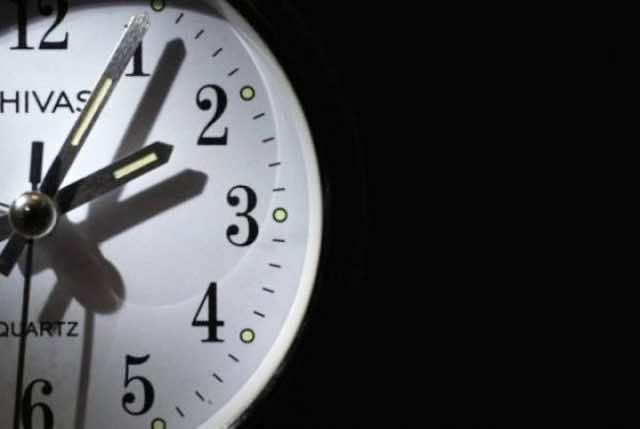
Rabat – With Ramadan around the corner, Morocco’s Ministry of Economy and Finance has announced the country will soon suspend the daylight savings time and return to Greenwich Mean Time (GMT) on April 11.
Every year, Morocco suspends daylight savings time exclusively for the month of Ramadan because it affects the fasting time.
The North African country usually returns to GMT+1 a week after Ramadan.
The time change comes in accordance with the Decree N 2-12-126 issued on Jumada I, 1433 (April 18, 2012).
Morocco adopted the daylight saving measure in 2008 to increase the competitiveness of the national economy through reducing energy consumption and time difference between the kingdom and its regional and international trading partners, such as France.
But the decision angered Moroccans, with many voicing their displeasure with the measure and questioning its effectiveness.
In 2015, a group of Moroccan citizens launched a petition urging the government to consider ending the daylight savings switch due to its negative impacts on health.
A study by the EU Parliament in October 2017 stated: “While daylight-savings time benefits the transport industry, helps outdoor leisure activities, and reduces energy consumption, it is associated with disruptions to the human biorhythm.”
As a government policy, daylight savings dates back to the First World War in the UK, where it was adopted to give factories more daylight hours to support war efforts.
According to astronomical calculations, Morocco is set to celebrate the first day of Ramadan on April 14.