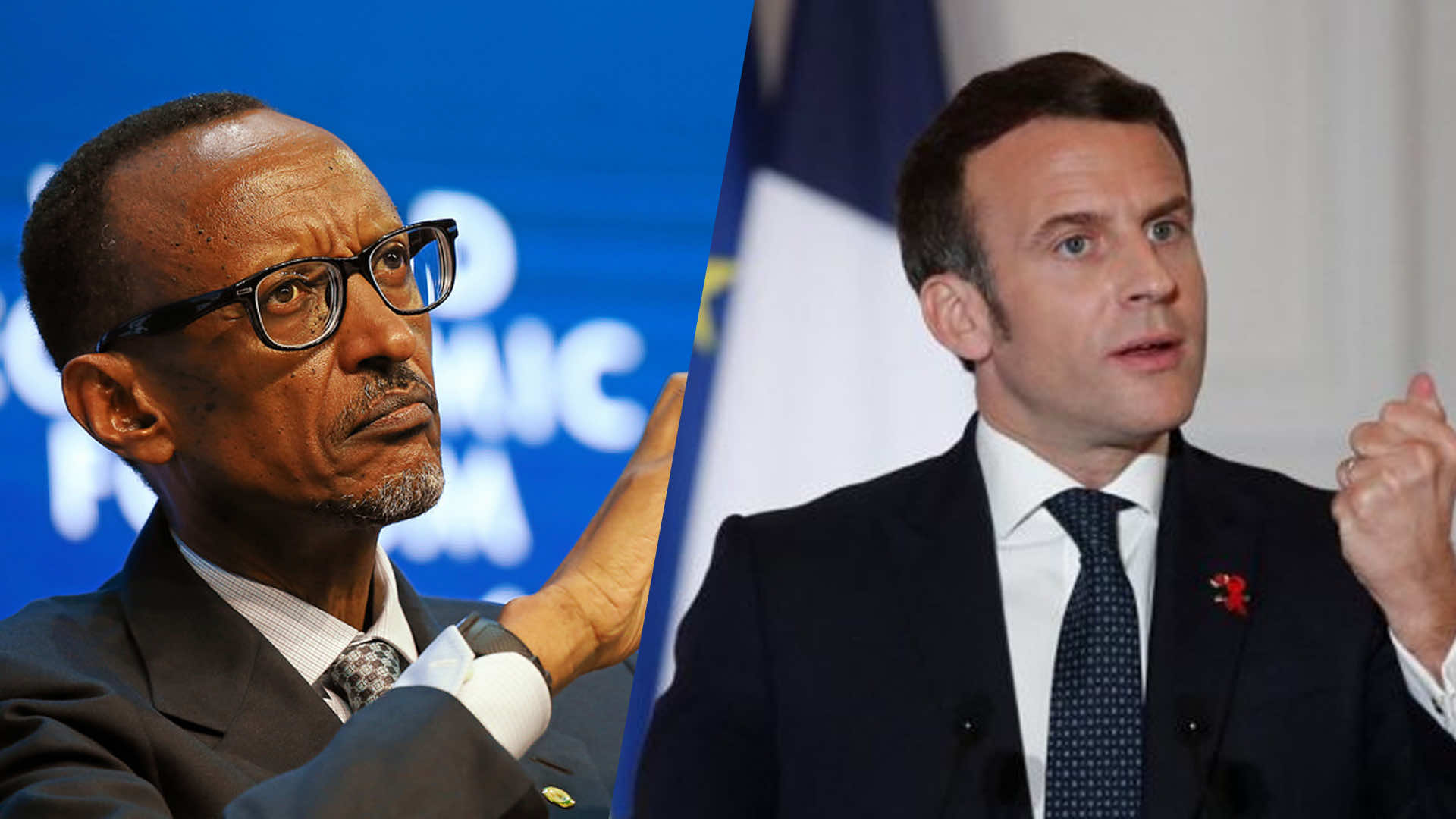
As Rwanda marked on Wednesday the 27th anniversary of the genocide that claimed at least 800,000 lives in 1994, President Paul Kagame welcomed the newly published, French government-commisioned report on France’s involvement.
The report, Kagame said, marks an important and much-welcome change of attitude in France’s political discourse. “It shows a desire even among leaders in France to move forward with a good understanding of what happened. We welcome that,” he stated, according to Le Monde.
President Emmanuel Macron commissioned the report two years ago in hopes of “shedding light” on one of France’s most troubled legacies in Africa and initiating an “irreversible” diplomatic rapprochement with Rwanda.
Echoing Macron’s hopes of normalizing France-Rwanda relations, President Kagame suggested the report could be the long-overdue first step in breaking the decades-long cycle of French government-sponsored silence and avoidance that has stained diplomatic relations between the two countries.
But the Rwandan president appeared to take issue with the fact that, as the Macron-commissioned report copiously demonstrated, France’s geopolitical ambitions led its leaders to turn a blind eye to the indescribable killings in Rwanda.
“The report shows that President Mitterrand’s closest advisors knew that a genocide against the Tutsis was being planned by their allies in Rwanda,” he said.
“Despite this knowledge, the president decided to continue to support them because he felt it was necessary for France’s geopolitical position. The lives of Rwandans were only pawns in the geopolitical game.”
Read also: Kagame: Europe is Responsible for Migration Crisis
What Kagame finds even more deplorable is that, years after the killings ended, successive French governments continued the policy of guilty silence or oversight to cover up France’s involvement in the Rwandan genocide.
“The effort over several decades by some French officials to cover their responsibilities has caused significant damage,” President Kagame said. But he added his government’s readiness to embrace France’s newfound willingness to come to terms with its troubled imperial legacy. “The important thing is to continue working together to document the truth.”
In France, meanwhile, the official consensus — and hope — is that Paris and Kigali can finally start an open, honest conversation about rethinking their relations.
In a contrition-themed opinion article in Le Monde, Alain Juppe, a former French foreign affairs minister, acknowledged that France’s miscalculations played a major role in the Rwandan tragedy. For Juppe, the genocide in Rwanda laid bare the international community’s “cowardice” when it comes to acting swiftly to prevent horrific incidents.
“We did not realize that we were abandoning hundreds of thousands of Tutsis to their deaths…. We did not imagine that our forces could have, with the support of Belgian paratroopers, Italian commandos, American marines, all associated with the blue helmets, opposed the killers, and protected the victims,” he wrote.
The tip of the iceberg
However, critics have maintained that the report was not as damning as it should have been of France’s political and military involvement in Rwanda in the 1990s. The main reproach is against the report’s insistence that while France bears “heavy and damning responsibilities,” it was “not complicit” in the genocide.
For critics, the “not complict” narrative is a diversion and an unaccpetable understatement of Paris’s profound involvement in Rwanda before and during the genocide. The argument is that France could have acted in time to prevent the genocide but it chose to avert its gaze while covertly supporting the Rwandan regime at the time.
Francois Robinet, a history professor at the Versailles Saint-Quentin-en-Yvelines University, wrote in Jeune Afrique that the French report only revealed the tip of the iceberg when it comes to France’s legacy in Rwanda. Robinet spoke of the report’s “incomprehensible silences,” suggesting that it left out many important details that need to be discussed or explored in future endeavors.
Yann Gwet, a Kigali-based political commentator, has taken the same view.
Also writing in Jeune Afrique, Gwet argued that the French government-commissioned report is far from the daring, historic document Paris had promised. For him, the much-celebrated report only recycled what most Rwnandans, scholars, and concerned observers already knew.
More still, he said, the document conveniently steered clear of exploring the most incriminating allegations weighing on France’s political conscience. For many Rwandans who survived the atrocities of the genocide, “the question is not” about whether or not France was complicit, he wrote. “But rather, ‘When will the French finally acknowledge what we know’?”