


 Join on WhatsApp
  Join on Telegram
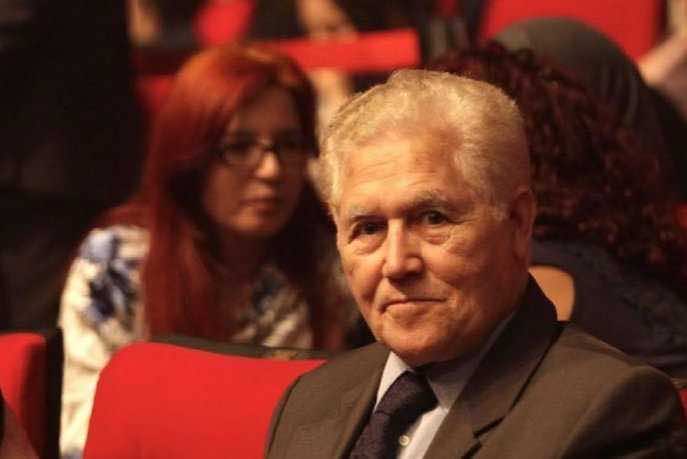
 Rabat – During an interview with Morocco’s Al Aoula media in 2005, Moroccan philosopher and author Abdallah Laroui said, “Morocco is an encircled island.” Nearly 16 years later, the point still remains true.
The interviewer asked Laroui about Morocco’s position regarding regional issues in the Arab world.
“Even though we live three or four thousand kilometers away, we take part in the problems of the Arab world,” Laroui responded.
Morocco faces unique pressures from its immediate neighbors of Spain, Algeria, and Mauritania, effectively making it an island encompassed by shark infested waters.
However, some historians disagree with this interpretation of Laroui’s infamous statement.
Taha Lahmidani, a professor of political science at Rabat’s Mohammed V University, told MWN that he interprets Laroui’s reference of an island to refer to Morocco’s unique internal challenges.
“When Laroui says that Morocco is surrounded, his aim is not to focus on those who encircle Morocco (even if this is present with him), but focus on the inner house (the island) that must pay attention to changes and calls for reform, and also to the deep internal uprisings and cultural revolutions,” said Professor Lahmidani.
In addition, the professor cites a possible explanation by Laroui for his use of the term “island.”
“That is why I emphasized the island phenomenon. Morocco is a cordoned off island within which the soul cannot be allowed to risk instability,” Laroui said, after speaking on the dangers of political instability within a nation.
Although some interpret the description of Morocco as an encircled island, Professor Lahmidani agrees that other interpretations are equally valid in their assessments. As Morocco is situated between two oceans and a variety of political actors, it must maneuver carefully domestically and abroad if it wishes to continue the current trajectory of self-sufficiency.
In April this year, Spain accepted the de facto Polisario Front’s President Brahim Ghali into its borders under the guise of an Algerian citizen seeking medical care. Since the decision, Spain and Morocco have engaged in several heated diplomatic conversations surrounding the future of their relations.
After Brahim Ghali appeared for a witness hearing in early June 2021.
Morocco has remained adamant in its quest for achieving international recognition of its sovereignty over the Sahara and many international actors such as the US and an increasing cohort of Arab and African states have jumped on board.
The country has also succeeded in demonstrating its patient, resolute position on Western Sahara by working closely with the UN Security Council and mitigating continued provocations by the Polisario Front in the region.
Foreign influence in the Arab World has perpetuated many of the issues still present today.
“Foreign intervention is the basis of what we have been suffering for years,” said Laroui. At the time of the interview, the US-led joint coalition was involved in Iraq.
But Laroui was hesitant to place total blame on foreign intervention in Arab affairs.
“We, as Moroccans or Arabs, have not done what is required of reform, that is, to create a modern culture that keeps pace with the era in which we live.”
Laroui’s remarks were (almost) prophetic in the sense that Morocco has since made drastic changes to its appearance on the world stage. Before, Morocco was indeed an island, struggling to stay afloat due to the Sahara and other regional disputes.
However, Morocco has gained the support of many major international powers and has achieved greater international assertiveness by promoting stability and responsibility in the MENA region.
Morocco’s growing responsibility
When Laroui described Morocco as an island, he stated that “we [Moroccans] must behave as residents of an island.”
Due to Morocco’s unique geostrategic location between Africa, the Arab world and the West, its foreign policy has always been somewhat of a balancing act between supporting western ideals and subscribing to its identity as a reliable African, Muslim-majority nation.
External influence on Moroccan affairs is nothing new as France and Spain have sought to capitalize on Morocco’s abundance of resources and geostrategic positioning for nearly 500 years. Since the beginning of the Alaouite dynasty, the leaders of Morocco have worked to promote a culture of self-sufficiency.
The colonization of Morocco by France and Spain played a large role in the country’s status as a mediator between the West and the Middle East.
Modern Moroccan society emulates characteristics found in western culture while still holding true to its Arab, Amazigh, African, and Andalusian roots.
By signing former US President Donald Trump’s Abraham Accords and establishing diplomatic relations with Israel, Morocco accepted responsibility for ending the culture of conflict and violence that has plagued the Middle East for centuries.
Other Arab partners such as Bahrain, the UAE, and Sudan also signed the multilateral agreement, which is perhaps a step in the direction of creating a modern Arab culture, as described by Laroui.
Additionally, Morocco played a leading role in UN-led efforts to solve the decade-long political instability in Libya. Together with the 2015 Skhirat Agreement, the series of meetings Morocco hosted throughout 2020 were instrumental in laying the groundwork for the inter-Libyan political dialogue.
The upsurge of Moroccan participation in regional affairs supports Laraoui’s claim that Morocco is surrounded by the problems of the Arab world.
The difference between contemporary issues and the issues of 2005 is that Morocco is now an active participant in establishing regional stability and works as an exemplary liaison between Africa, the Arab world, and the West.
Economic independence
The description of Morocco as an island is not limited to its geopolitical situation and Morocco has worked diligently to establish itself as a global economic leader.
Currently, the 2021 Index of Economic Freedom ranks Morocco at #81 out of 178 countries. The ranking is defined under specific parameters, including open markets, regulatory efficiency, government size, and the rule of law.
Morocco has eight preferential trade agreements with 62 countries, including the most recent admittance to the African Continental Free Trade Area (AfCFTA) in 2021.
The AfCFTA is the largest trade bloc in the world featuring 52 African member states.
Morocco has expressed its desire to be a leading member in the trade agreement by promoting Pan-African investment.
The ambition is in line with the goals of the AfCFTA’s Agenda 2063 which call for the, “concrete manifestation of the pan-African drive for unity, self-determination, freedom, progress, and collective prosperity pursued under Pan-Africanism and African Renaissance.”
Despite economic and political pressures from Morocco’s immediate neighbors such as Spain and Algeria, the country has embraced its status as an island — encircled by the problems of the region but striving to find new avenues for total self-reliance and success in global markets.
Southern comfort
Regionally, Morocco has sought to foster a new culture of strong relations with Mauritania as it continues to assert itself as an amicable leader in regional issues.
In May 2021, Morocco’s Foreign Minister Nasser Bourita met with his Mauritanian counterpart in Rabat to reassure the world that Morocco and Mauritania expect relations to flourish in the coming years.
Since the six-week Guergerat border crisis of October and November 2020, Mauritania has been vocal on its displeasure with Polisario’s self-styled Sahrawi Arab Democratic Republic (SADR).
Agents of the self-proclaimed sovereign state blocked the border between Morocco and Mauritania, which led to a sharp increase in the prices of commercial goods in Mauritania.
Political analysts await the official Mauritanian recognition of Morocco’s sovereignty over the Sahara, although current economic and diplomatic trends point towards an official declaration by Mauritania in the near future.
Morocco continues to gain international support for its sovereignty over the Western Sahara territory by proving itself as a level-headed international ally that aims to work with the global community towards a solution. However, Morocco’s neighbor to the north has now elevated regional issues to the most extreme level in decades, and it remains to be seen the unprecedented tension between the two neighbors will end in a complete severing of long-standing ties.


