 Join on WhatsApp
 Join on Telegram
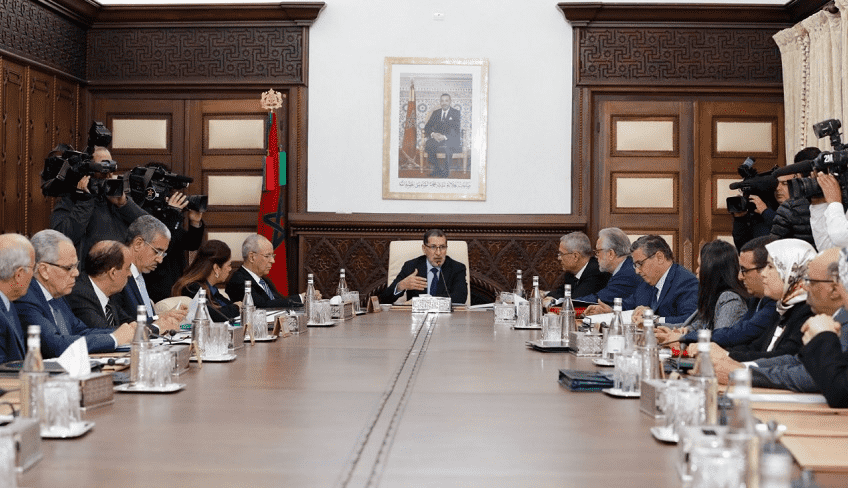
Rabat – The Moroccan government issued a second communique on Tuesday, July 20, deploring the “persistent false, massive, and malicious media campaign” against the country.
The new statement comes in response to allegations, continuously relayed by French media, that Morocco is linked to Israeli espionage software that was allegedly used to target high-profile public figures, including Emanuel Macron and King Mohammed VI.
In response to the allegations as part of the “Pegasus Project,” the government of Morocco said it categorically “rejects all false and unfounded” allegations promoted by Amnesty International and the Forbidden Stories consortium, as well as their supporters.
The project is the product of 17 media organizations who used a list of 50,000 names that are alleged targets of Israeli spyware. They claim the list consists of potential targets of spyware by Israeli firm NSO. The media outlets involved in the project attempted to verify this list by testing some of the devices on the list for traces of the spyware.
Based on the small sample tested by the Pegasus Project, the group concluded that the list did constitute a list of targets of the NSO software. They then proceeded to build a number of theories as to why the software was used in the first place.
Without evidence, the group has posited that Morocco has used the software to spy on French President Macron in 2019, as well as a list of journalists and foreign officials. More incongruous, however, are accusations that Morocco’s security services are monitoring the phone of King Mohammed VI and his closest advisors and associates.
French news organizations in particular have presented several theories for the alleged infiltration of some of Morocco’s most senior officials, including the current as well as former prime ministers. Without evidence, French outlet Le Monde has theorized that Morocco’s security apparatus was monitoring the king’s inner circle in relation to his separation with Lalla Salma Bennani in 2019.
While the involved media organizations have presented a wide array of theories, based purely on a list of phone numbers, no additional evidence has emerged to support these theories. In the face of widespread speculation, Morocco’s government has denied it ever used the NSO spyware.
The government warned that the NGOs continue to share their data without providing any tangible and material evidence to support their “surrealist stories.”
“Morocco is again the target of this kind of heinous attack,” the government said, emphasizing that it will continue its momentum to strengthen its economy and build on its social, economic and diplomatic achievements.
“Strong in its rights and convinced of the merits of its position, the Kingdom has opted for a judicial process, in Morocco and internationally against any party endorsing these fallacious allegations,” the government argued.
Yesterday’s statement came just a few weeks after Morocco t released a communiqué where it questioned the veracity of Forbidden Stories’ reports.
The reports, which continue to make headlines, accuse Morocco, among other countries, of using NSO Group’s Pegasus spyware to spy on journalists, political activists, and public figures by exploiting a security flaw in iPhone software.
Morocco accused foreign newspapers affiliated with the Forbidden Stories NGO of using “fake materials.”