Rabat – Muslims around the world celebrate the sacrificial holiday, Eid al-Adha, by praying, gathering with family, and in some countries, slaughtering an animal. In Morocco, the holiday is extremely traditional as Moroccans purchase an animal to slaughter at home.
Due to the traditions and deep, cultural roots of the holiday in the kingdom, there are countless recipes and delectable dishes that can only be perfected in Morocco.
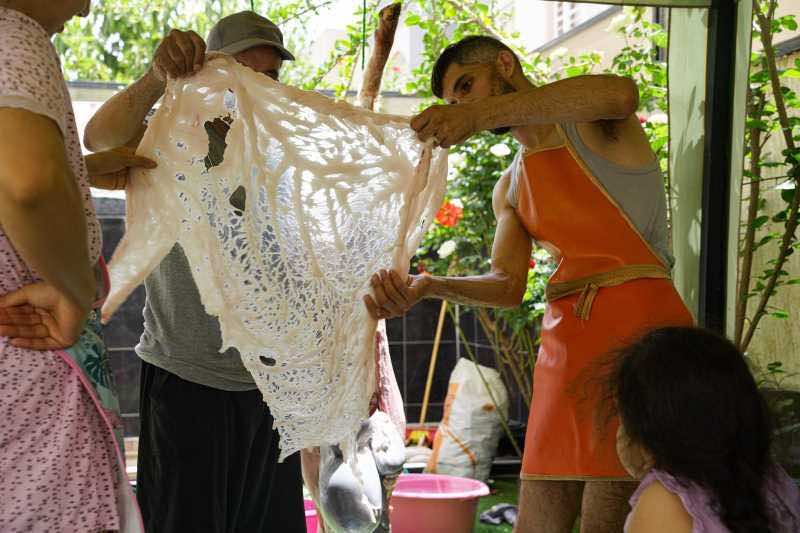
One of the most unique Eid al-Adha dishes in Morocco is lamb liver wrapped in caul fat, also known as boulfaf.
The caul fat is found in animals such as sheep, cows, pigs, and goats. It is a translucent fatty lining that surrounds the internal digestive organs.
It takes a skillful butcher to expertly remove the lining from the animal during the butchering process. As Moroccans usually slaughter and butcher the animal at home, the person wielding the knife must pay special attention to each organ to ensure that all of the lining is removed in one piece.
After being separated from the animal, the boulfaf must sun dry for at least an hour.
For those that do not have a professional drying rack for such an occasion, you can simply stretch out the fatty membrane on a clean surface or hang it on a clothesline.
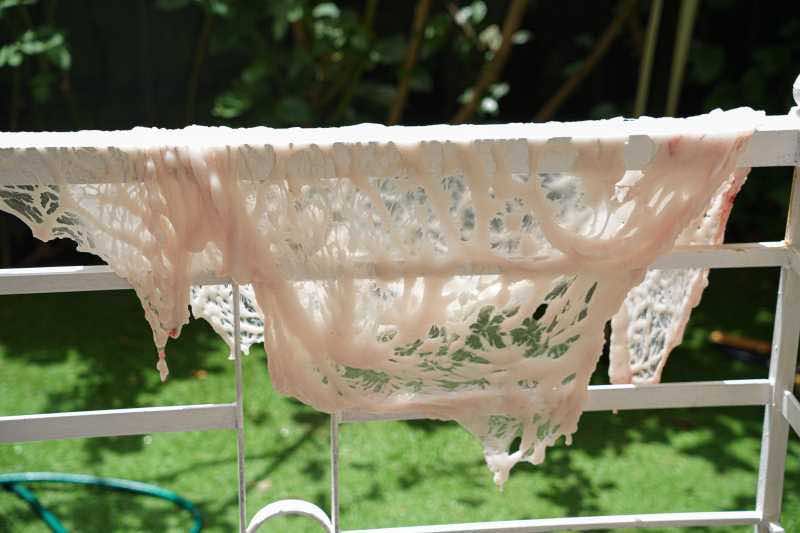
Once the clear, blanket-sized fat has become white and crispy, it’s ready to be paired with the liver meat. One final knife job, cutting the crispy boulfaf into malleable strips, is all it takes before transferring the fat to the barbecue.
Eid al-Adha in Morocco is incomplete without charcoal grilling and mounds of meat. Once the boulfaf is ready, the cook will begin wrapping liver-filled skewers with the 3 cm thick fat strips.
After loading the skewer with meat and boulfaf, a quick cook over piping hot coals will leave you with a charred meat skewer, dripping in fatty deliciousness.
Although other cultures may utilize the caul fat in traditional dishes, no one prepares a boulfaf liver skewer quite like a Moroccan.