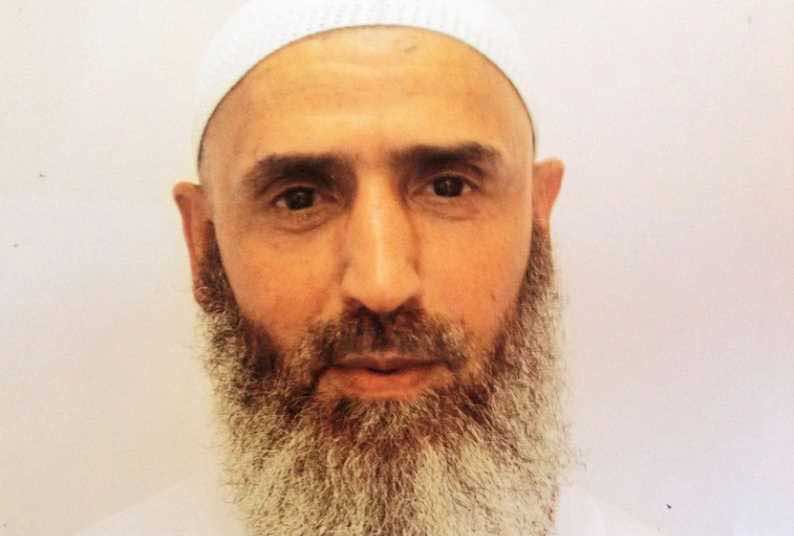
Rabat – Abdul Latif Nasser, a Moroccan man who was held in Guantanamo Bay prison was transferred to the Moroccan government with security assurances from Rabat.
Nasser, 56, had been detained in the controversial facility since 2002 without charges, after being caught running away from American bombs in Afghanistan.
Reports claim that he was brought back to the kingdom on Monday, and that his family hopes to get him a work opportunity in his brother’s pool cleaning business.
Nasser was scheduled to be released in 2016, after a report by the Periodic Review Board (PRB) deemed his detention was no longer necessary to protect the national security interests of the United States.
His transfer to the Moroccan government was halted by previous President Donald Trump, who stopped the process in 2016.
State Department Spokesperson Ned Price commented on the release, praising Morocco’s relationship with the US and the Kingdom’s commitment to counter-terrorism operations, in an official statement.
“We appreciate Morocco’s efforts as a stable security-exporting partner, including its ongoing leadership of the Global Counterterrorism Forum and its sustaining role in the Global Coalition to Defeat ISIS,” the statement added.
The statement comes after Price faced criticisms for his comments regarding the Moroccan judicial system and Soulaimane Raissouni’s sentence.
The release is the first sign of an effort and commitment to close down Guantanamo Bay by the Biden administration, according to the New York Times.
The Biden administration announced earlier this year its commitment to close down Guantanamo Bay by the end of his first year in office.
The promise to close down the facility was made by Barack Obama, who pledged to finish the process by the end of his first year in office in 2009, but the prison remains open today.
Secretary of State Antony Blinken said that the Biden administration is trying to take a case-by-case approach regarding the prisoners in Guantanamo. Prisoners who have been deemed innocent will be transferred to their home country’s governments.
The administration revived the PRB and the Obama-era policy of evaluating prisoners to determine the risk level of releasing them.
All five decisions made by the board so far supported the transfer of the prisoners, including the oldest man in the prison, a 73-year old Pakistani man.
Nasser had spoken out against his detention last year, criticizing the US for continuing to imprison him despite the lack of a fair trial, and the fact that he was approved for release by the board years ago.