 Join on WhatsApp
 Join on Telegram
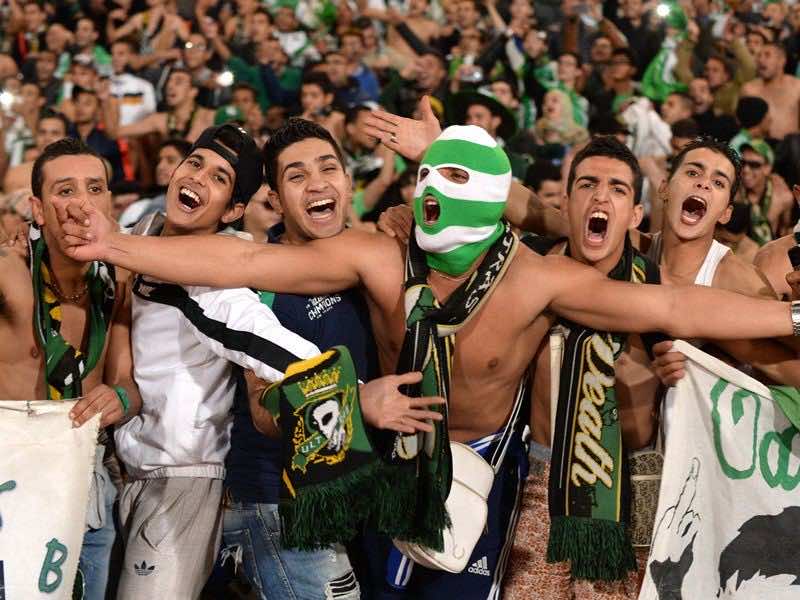
Denver – One of Morocco’s most iconic football clubs, the Casablanca-based Raja Club Athletic, is now using English as its primary language of communication on social media in lieu of French.
In a sign of changing times, the switch places Raja in line with other teams in the Arab world already using English as their primary language online, including Egypt’s Zamalek and Al Ahly.
Raja’s technical staff reported the switch was primarily in response to fans. After commissioning an analysis of its fans’ online engagement, the Moroccan club discovered that English and Arabic were by far the most commonly used languages among fans.
The related conclusion, as suggested by the club’s findings, is that French, which had long been Raja’s primary language on social media, is not as attractive and content- and engagement-generating as English or Arabic.
Experts also speculate that COVID was a huge factor in the transition to English. A study by the British Council in Morocco indicated that the global pandemic prompted many young Moroccans to use English to a higher degree, to keep up with global news primarily distributed in English.
Other pandemic-related activities such as increased social media and streaming sites such as Netflix may have also influenced the increase in English usage in the region, according to some reports.
English as a social equalizer
But there is also the notion that the transition from French is a reflection of a deeper factor in Morocco’s socio-economic divide. With the legacy of French colonization still fresh in the Moroccan imaginary, many in the North African country associate French with the language of colonization and cultural conquest.
For that same reason, the Moroccan political and intellectual elite, most of whom speak fluent and Paris-accented French, are poorly looked upon by most Moroccans who usually accuse them of exhibiting a sense of aloofness, of detachment from Moroccan realities, of an ill-advised sense of superiority.
In this sense, fluency in English, which is globally more coveted than French, is perceived by the new generation of Moroccans as a social equalizer, a means of taking their revenge on the self-entitled Francophone elite.
In an interview with Le Point, young Moroccans described French as “the language of the other, of those who despise us.” With this new generation of Netflix-watching and English-enthusiast Moroccans, French represents a mere relic of an inglorious past Morocco needs to transcend.
Like Raja Athletic Club, many associations, including the Royal Moroccan Football Federation, have turned their back on French to embrace English as their language for branding and social media engagement.
And so, with Morocco becoming an increasingly globalized country, French appears to no longer be prestigious and inspiring enough for the new generation of Moroccans. This is especially true for a maturing cohort of future Moroccan elite who dream more of an anglo-saxon education, and for whom France is often a second or third choice – and not the choice – in a sea of global destinations for college education and similar ventures.