


 Join on WhatsApp
  Join on Telegram
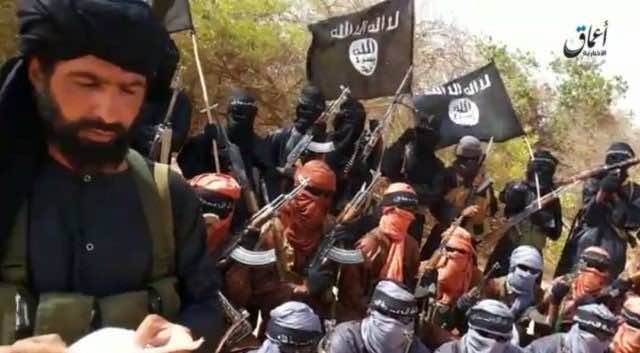
 Denver – Washington warmly reacted to the death of the Islamic State in the Greater Sahara’s leader Adnan Abu Walid Al-Sahrawi in a press release on Friday.
Ned Price, the spokesman of the US Department of State, said the US “welcomed” French forces’ killing of the Al-Sahrawi and applauded France’s “continued commitment” to counter-terrorism operations in the Sahel region.
France conducted a drone operation last month that resulted in the death of the terrorist leader. Officials labeled the hit a “decisive blow” to the group’s operations in the Sahel.
Price recalled Al-Sahrawi’s involvement in a long series of violent, lethal attacks in the Sahel. He highlighted the ambush of a joint US-Nigerien patrol that resulted in eight US and Nigerien casualties, saying this was proof of the destruction Al-Sahrawi ordered while he led an ISIS-affiliated group in the fragile Sahel region.
Born in Laayoune, a young Al-Sahrawi moved to Algeria, where he trained and fought with the Polisario Front’s armed units, before branching off into radical jihadist groups.
During his tenure as a terror leader, Al-Sahrawi was reported to have threatened the security of many countries in the region, including Morocco. In an audio recording sent to Al-Jazeera, Al-Sahrawi called on jihadists to begin “targeting western tourists present at different resorts throughout Morocco.”
He also urged his units and other terrorist groups in the region to attack Moroccan military forces operating within the greater Sahel region. Some sources have described Al-Sahrawi as a Polisario “mercenary” that was used to further destabilize the region.
According to Geopolitical analysts from the Africa Center for Strategic Studies, there continues to be a threat of jihadist groups using the Polisario militia as an entrance into Southern Morocco.
“Supporting Polisario’s attempt to gain Western Sahara’s independence from Morocco or, at the very least, exploiting the chaos that could arise from the dispute, [jihadist groups] would get another shot at reasserting relevance in the region through a nationalist cause,” the US State Department-affiliated center concluded in a “spotlight” paper in June 2016.


