
Meknes – The European Union’s High Representative for Foreign Affairs and Security Policy, Josep Borrell, said on Saturday, September 25, that the West cannot effectively address Iran’s interference in the internal affairs of other countries without returning to the nuclear deal as a first step.
“There is no alternative to the Vienna talks for nuclear negotiations with Iran,” Borrell stressed. The EU diplomat then explained that the first step to tackling Iran-related challenges is to avoid a “nuclear Iran,” and that the rest of the issues can follow once that first step is achieved.
Borrell expressed concerns over other issues about Iran’s ballistic missiles and drones widely used by the Houthi group in targeting civilian facilities inside the Kingdom of Saudi Arabia and threatening the safety of shipping in international waterways.
He said, “We are certainly concerned about many other issues, but we cannot solve all the problems at once.” The EU’s chief diplomat added that “talks are currently underway to revive the nuclear deal. And this is not the end.” There are “many of the issues that will require further discussions,” he added.
The Iran Nuclear Deal
The widely known Iran Nuclear deal was concluded in July 2015, when Iran and the P5+1 reached the Joint Comprehensive Plan of Action (JCPOA).
Former US president, Barack Obama, reached a deal with Iran after a long period of intensified diplomatic tensions.
As part of the “historic deal,” which was set to curb Iran’s ability to possess mass destruction weapons, the US and its allies lifted a battery of economic sanctions that had long been imposed on Iran.
The deal basically determined a certain percentage of uranium production by Iran – 3.67% – with the idea that this percentage would keep the country’s uranium enrichment far below the level needed for defense needs.
Tehran also agreed to allow access to inspectors from the International Atomic Energy Agency (IAEA), the UN’s nuclear watchdog agency, to inspect its nuclear facilities, among other facilities.
In January 2016, the IAEA investigation announced Iran had respected all terms of the deal, leading the US and its partner countries to fully lift the sanctions that they had slapped on Iran.
US withdrawal from the deal
But the former US president, Donald Trump, unilaterally withdrew from the Iran deal in May 2018. Claiming that Tehran had been “cheating” on the deal, the Trump administration applied intense economic sanctions on Tehran to force it into negotiating a “tougher” deal.
Participants in the JCPOA criticized as “inconstant” the unilateral move by the Trump administration.
Trump, however, considered the curbing Iran’s development of its nuclear capabilities could not be achieved under a “decaying and rotten structure of the current agreement.”
However, the Trump administration’s withdrawal did not mean that the deal was over, because the P5+1 could keep their sanctions applicable. Hassan Rouhani, the Iranian president back then, decided not to adhere to the deal.
Talks to restore the deal
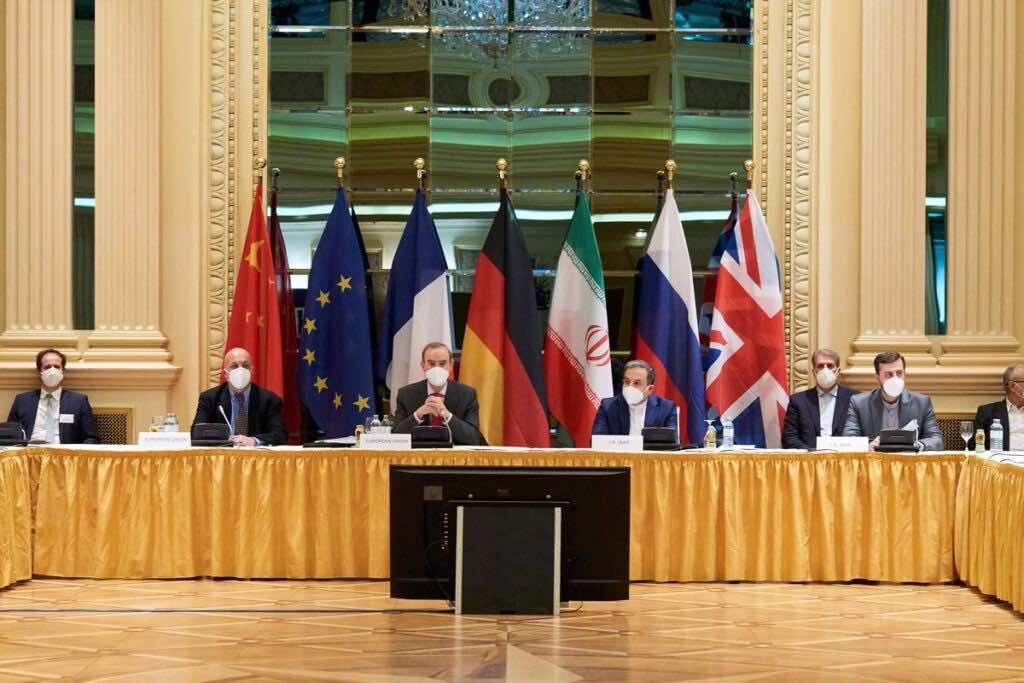
There have been talks in recent months to restore the Iran nuclear deal, with the most recent ones taking place in Vienna. With other world powers brokering indirect talks between Iranian and American officials, the discussions appear to have experienced some notable progress in the last few meetings.
This Saturday, for instance, the Iranian government announced that it would be returning to the talks soon with expectations of a deal similar to the 2015 agreement.
With President Biden’s pledge of “relentless diplomacy,” many expect Washington and Tehran to agree on another, perhaps slightly reviewed, iteration of the 2015 JCPOA.