 Join on WhatsApp
 Join on Telegram
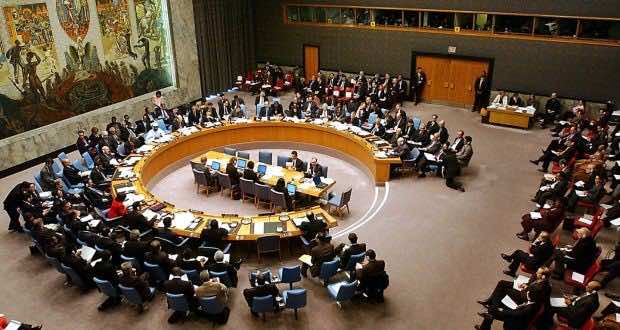
Rabat – The UN Security Council has adopted Resolution 2602, extending the mandate of the MINURSO, the UN mission operating in Western Sahara for another year.
MINURSO’s previous one-year mandate was set to expire on October 31.
Most Security Council members voted for the resolution, with only Russia and Tunisia abstaining from voting.
Today’s vote came after several days of delay prompted by an internal crisis inside the voting room due to an alleged protest from Russia against the resolution.
Russia is known for its diplomatic proximity to the Algerian regime, which has long refused to engage in the political process to find a political solution to the conflict over Western Sahara.
Russia’s alleged refusal is also due to its open tension with the US, the penholder of the resolution.
The resolution that the Security Council voted for today contains similar language to the document’s draft, obtained by Morocco World News last week.
Resolution calls for Algeria’s participation
It also retains the same language in resolutions adopted in recent years, deeming Algeria’s presence and engagement in the political process as necessary and important to find a mutually acceptable and an agreed upon solution to the conflict over Western Sahara.
The resolution adopted by the UN Security Council today mentions Algeria five times, while Morocco is mentioned 7 times. The resolution continues the UNSC’s repeated calls for a “realistic, practicable, enduring and mutually acceptable political solution.” Furthermore the resolution emphasizes that such a solution ought to come through compromise.
Algeria has long claimed itself as an observer, claiming that a solution to the conflict should only be made between Morocco and Algeria’s proxy militia Polisario Front.
Read also: Exclusive: UNSC Draft Resolution Rejects Polisario, Algeria Western Sahara Narrative
It became clear that such a demand is not in any way possible, as one of the first paragraphs of the resolution names all parties, emphasizing the need for resumption of consultation between Morocco, Algeria, Mauritania, and the separatist group of Polisario.
Paragraph 6 of the resolution’s states that the Security Council encourages the resumption of “consultations between the Personal Envoy and Morocco, the Frente POLISARIO, Algeria and Mauritania in this regard to build on the progress achieved.”
New political dialogue
The resolution established that the talks between the parties to the conflict should take the same format of roundtable discussions initiated by the former UNSG envoy for Western Sahara, Horst Kohler. The German diplomat resigned as the Secretary General’s Western Sahara Envoy in May 2019 due to health issues.
The position for an envoy remained vacant until recent months when the UN chief Antonio Guterres appointed Swedish-Italian Staffan de Mistura to replace him.
Paying tribute to Kohler, the Security Council welcomed the appointment of de Mistura, urging for the constructive resumption of the political process to build on the “progress of the former Personal Envoy.”
For the Security Council resolution, the roundtables held in 2018 and 2019 created momentum in the political process in a “serious and respectful manner” to identify elements of convergence.
The resolution is a setback for Algeria whose officials have made multiple statements in recent weeks in which they said they won’t take part in the round-tables, claiming that they were “obsolete.”
Importantly the resolution calls for negotiations “without preconditions,” a tenet the Polisario has already cast aside by demanding a full Moroccan withdrawal before talks could resume. Furthermore, the document asks for the involved parties to act “in good faith,” in order to achieve the desired “just, lasting, and mutually acceptable political solution.”
Read also: Western Sahara: Why Christopher Ross is Wrong About Morocco
The new resolution included multiple paragraphs that consecutively established that Algeria’s involvement in the process is inevitable.
The resolution says it is “reiterating its call upon Morocco, the Frente POLISARIO, Algeria and Mauritania to cooperate more fully with each other, including through building additional trust, and with the United Nations, as well as to strengthen their involvement in the political process and to achieve progress towards a political solution.”
Regional implications
The Security Council recognized that a solution to the conflict is necessary for regional peace and prosperity.
The resolution says it is “recognizing that achieving a political solution to this long-standing dispute and enhanced cooperation between the Member States of the Maghreb Arab Union would contribute to stability and security, in turn leading to jobs, growth and opportunities for all the peoples in the Sahel region.”
Despite the numerous call for a shared responsibility to address challenges in the Sahel, Algeria’s regime refuses to cooperate with Morocco against the scourge of terrorism in the region.
Read also: Moroccan FM Bourita Receives MINURSO Chief in Rabat
Sahel is often described as a breeding ground of extremist organizations, who are active in the region.
Moroccan security officials have long called on Algeria to engage in a security mechanism to address the challenges in the region. The Algerian regime, however, repeatedly turned a deaf ear to Morocco’s calls for security cooperation and dialogue calls to achieve a secured region and also help end the political stalemate between the two countries.
Algeria’s regime recently decided to cut diplomatic relations with Morocco and closed its airspace.
Breach of ceasefire
The resolution mentioned the breaching of ceasefire in the region without providing details other than suggesting that it took note of the commitments provided by the separatist group to former envoy Kohler.
The separatist group repeatedly violated the ceasefire agreement with Morocco, causing deep concerns among the UN.
Polisario continues to tout a “war” against Morocco, threatening further escalation of maneuvers. The UNSG’s annual report on Western Sahara highlighted how Polisario continues to obstruct UN monitoring and deny MINURSO access to areas beyond the sand wall.
The Polisario Front intensified threats last year after its violations in the Guerguerat region in October 2020.
Polisario sent its militia to the region to carry out illegal protests in the demilitarized zone by blockading civil and commercial traffic. The situation caused uproar among affected countries and truck drivers.
After repeated appeals to the UN, Morocco lifted the blockade without causing any injuries or casualties, through the intervention of troops from the North African country to restore peace in the region.
Morocco’s intervention came after several warnings to inform the UN of the Polisario violations of its resolutions.
Tindouf census
Similar to what was revealed to MWN in the exclusive draft resolution last week, the Security Council has indeed put pressure on Algeria and Polisario to allow a census in its Tindouf camps amid dire conditions that Sahrawis face in the sprawling camps.
Estimates of the number of people living in the camp put its population at 90,000. Algeria and the Polisario Front, however, refuse to allow an official registration despite repeated reports and recommendations from the UN.
Former leading members from the Polisario Front emphasized the reason why the Polisario Front and Algeria would not allow a census in the region. Former Polisario member Hamada El Bihi said that only 20% of the camps’ population are in fact of Sahrawi origin.
He argued that 80% of the population in the camps consists of Tuareg people stemming from countries across the Sahara desert, including Niger, Chad, Mali, Algeria, and Libya.
Mustapha Salma Ould Sidi Mouloud, a former Polisario police chief, made similar remarks recently.
With a renewed call for a census of Tindouf’s population and repeated mentions of Algeria as a logical party to the conflict, the new resolution renewing MINURSO’s mandate is likely to be poorly received in Algiers.
The efforts by Polisario to create a new flashpoint in the conflict, through its Guerguerat blockade, appear to have failed as the resolution does not mention Guerguerat once. The document clearly demands a renewed attitude of compromise and dialogue, something both Polisario and Algerian have opposed with frequent recent statements that set unrealistic conditions for talks and continue to frustrate peace-making efforts.
The newly adopted Resolution 2602 appears to recognize this by “expressing concern about the violations of existing agreements and reiterating the importance of full adherence to these commitments, and taking note of the commitments provided by the Frente POLISARIO to the former Personal Envoy.”