


Marrakech – When a five-year blueprint arrives freighted with nearly 900 projects and €175 billion in projected outlays – some 70% of it earmarked for private capital – the room it fills tends to reveal who has read the tea leaves and who has not. At the Consultative Group convened in Abidjan on July 8-9 to marshal financing for Côte d’Ivoire’s 2026-2030 National Development Plan (NDP), the Moroccan contingent left little doubt as to which camp it occupies.
More than 100 enterprises and 260 executives registered under the banner of the General Confederation of Moroccan Enterprises (CGEM), positioning themselves upstream of the plan’s tender pipeline and, in the words of Morocco’s envoy to Abidjan, staking out “pole position among Côte d’Ivoire’s partners.”
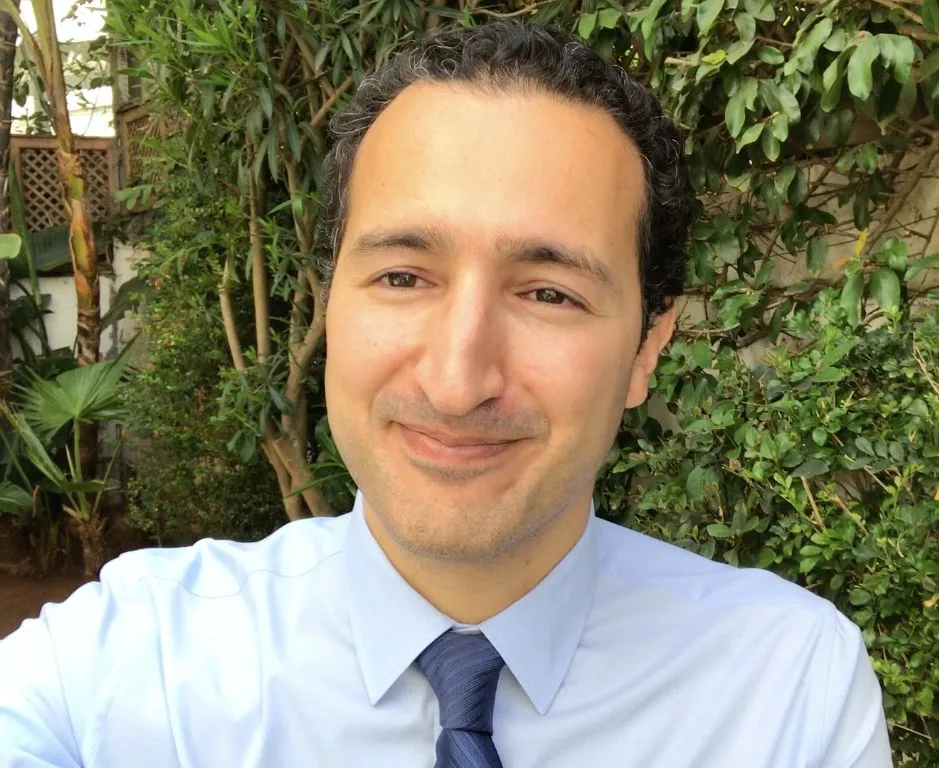
That envoy, Othman El Ferdaous, ambassador of Morocco to Côte d’Ivoire, sat down with Morocco World News (MWN) on the sidelines of the Assises to lay out a thesis at once audacious and meticulously argued. The kingdom’s next great accumulation of wealth will be transacted not on the Atlantic seaboard but along the arteries of West Africa, he suggested, noting that the wiring is being soldered now – project by project.
Abidjan as launchpad
“After the 2030 World Cup, Morocco’s next growth engine will be West African, and it is being built today by connecting pan-African value chains,” El Ferdaous told MWN, framing Côte d’Ivoire less as a market to be serviced than as a launchpad to be co-owned.
The ambassador’s argument turns on demography as destiny: “There will be more births in Nigeria than in the entire OECD over the coming decades,” he observed, adding that “the Moroccan economy must absolutely hitch itself to these growth highways, and Côte d’Ivoire offers Morocco an extraordinary friendshoring platform.”
The Ivorian fundamentals lend the thesis ballast rather than mere aspiration. El Ferdaous rattled off a track record few emerging economies can rival – “7% growth for 15 years, a solid trade surplus, a leading role in WAEMU, and a stable currency” – before landing on the detail that most animates creditors. Since June, Côte d’Ivoire is the only sub-Saharan sovereign whose debt-distress risk has been downgraded to “low” in the joint IMF-World Bank assessment.
For the Moroccan capital, El Ferdaous explains, this is vindication of a bet placed years ago. “Moroccan entrepreneurs see this as confirmation of the strategic choice made long ago by His Majesty King Mohammed VI: an Africa that takes charge of itself and puts its trust in Africa.”
If that reads as diplomatic cadence, the ambassador’s diagnostic of development is anything but boilerplate. Prosperity, he ventures, “is not measured solely by growth in GDP per capita, but by how densely the input-output table of intersectoral exchanges is filled in.” This is a technocrat’s insistence that the texture of an economy, its lattice of upstream and downstream linkages, matters more than any headline figure. For El Ferdaous, the NDP is the instrument by which “both our countries reach upper-middle-income status.”
A delegation that spans the whole plan
The delegation he described was no reconnaissance party. Marshaled by CGEM President Mehdi Tazi, it spanned the entire spectrum of the plan’s ambitions: finance (CDG, Inforisk, Tamwilcom), energy (Nareva, Taqa, ONHYM, Green of Africa, Akwa), infrastructure (ONCF, Autoroutes du Maroc, the TMSA ecosystem, TGCC, SGTM), healthcare (Akdital, Sothema, Laprophan), agro-industry (Les Domaines Agricoles, Diana Holding, Anouar Invest), mining and industry (Managem, CIMAF), electronic payments (HPS, M2M Group, N+One Datacenters), engineering (JESA, Novec, CID Maroc, Tanger Med Engineering), alongside education and sport through UIR Rabat and Tibu Africa.
“These companies are coming to sow the seeds of their post-2030 growth,” El Ferdaous put it, casting the trip as an act of horticulture rather than transaction. What Abidjan wants in return, he noted, is structural intimacy: “We want Ivorian-Moroccan JVs and joint enterprises – a language Moroccan entrepreneurs understand, and a responsibility they accept,” particularly given that public-private partnerships are “far more developed in Côte d’Ivoire than in Morocco.”
The ambassador’s confidence rests on a substantial installed base. Speaking at the Assises’ Investors’ Day beside CGECI chief Ahmed Cissé and MEDEF vice-president Philippe Labonne, Tazi reminded the room that Côte d’Ivoire remains among the foremost destinations for Moroccan capital on the continent, absorbing MAD 1.24 billion ($124 million) in direct investment in 2024 alone – a footprint already spanning banking, telecoms, fertilizers and food security, real estate, pharmaceuticals, offshoring, and the sugar industry.
On the margins of the plenary, Tazi conferred with African Development Bank (AfDB) President Sidi Ould Tah on the lender’s recalibrated financial architecture and with IFC’s West Africa director Nathalie Kouassi Akon on mobilizing private flows, while agreeing with Cissé to reanimate the Morocco-Côte d’Ivoire Groupe d’Impulsion Économique and realign it to the NDP’s priorities. In short, the scaffolding is being erected in parallel with the pitch.
Refusing the old division of labor
Where El Ferdaous grows most emphatic is on “co-industrialization” – a concept he refuses to leave abstract. “It means refusing an inherited division of labor in which Africa exports raw materials and imports processed goods – as Morocco itself did with phosphates,” he argued, indicting a colonial-era template that continental economists have long lamented.
His illustrations are damning in their tidiness: “Three-quarters of African cotton leaves for Asia and comes back as clothing; cocoa leaves as beans and comes back as chocolate, spreads and biscuits; rubber leaves raw and comes back as latex and tires.” The remedy, he submits, is joint ownership of the production apparatus itself. “We must process together and own the production assets together, so that expertise flows freely within the value chains thus created.”
The mechanics are where a lesser analyst would wave his hands; the diplomat instead parses the arithmetic of trade preferences with a customs officer’s precision. Perform “the first stages of processing in Côte d’Ivoire, incorporating two-thirds of the value there,” he explained, then execute “complementary operations in Morocco to cross the 35% local-processing threshold that activates the rules of origin under our free trade agreements with the USA, or the 40% threshold with the EU, the United Arab Emirates, or Turkey.”
The prize is arithmetic made geopolitical: a good finished on Moroccan soil with pre-processed Ivorian inputs unlocks, he reckons, “an overseas market of 1.1 billion consumers with high purchasing power.”
From this, he distills a two-axis playbook for the Moroccan private sector. The first is a “dual specialization” – serving mature Euro-American markets and the volume markets of the AfCFTA in tandem; “a company that processes fats and oils should export food products to Africa while exporting cosmetics to Europe.” The second is vertical mastery, integrating “upstream into agriculture and mining while mastering the downstream,” so as to capture in sequence the sourcing premium, the processing premium, and the brand premium that accrues nearest the consumer.
A royal vision, and a warning to laggards
The ambassador’s peroration circles back to the throne. Twice, he anchors the commercial logic in royal doctrine, casting the corporate scramble for Abidjan as the executive arm of a sovereign design. Moroccan firms with continental reach “can serve the fast-growing needs of the African middle class through brands, distribution networks and price points adapted to those markets,” he argues.
And the scale itself is prescribed from above, he insists, noting: “His Majesty’s vision is crystal clear: bring forth pan-African groups to conquer the world together.” The verb is telling. This is not a defensive crouch against continental competition but an offensive posture aimed squarely at global markets, with West Africa as the staging ground rather than the destination.
The ambassador reserves his sharpest register for the laggards. “Those of you who have not put Côte d’Ivoire on your roadmap for the next 12 months are running a serious risk: that of locking yourselves into a one-way specialization,” he cautioned, exhorting operators to “think market share and supply chains rather than margins” and to plan “for a lasting presence rather than one-off deals, for there is a learning curve and the game is well worth the candle.”
As for what follows the fanfare of the Consultative Group, El Ferdaous is briskly unsentimental. The task ahead, he insisted, is “turning projects into agreements, agreements into worksites, and worksites into jobs,” policed by regular checkpoints “to measure, correct and accelerate.” His closing axiom doubles as a rebuke to the ceremonial reflexes of statecraft: “Economic diplomacy is judged by what gets done, not by press releases or good intentions.”




