
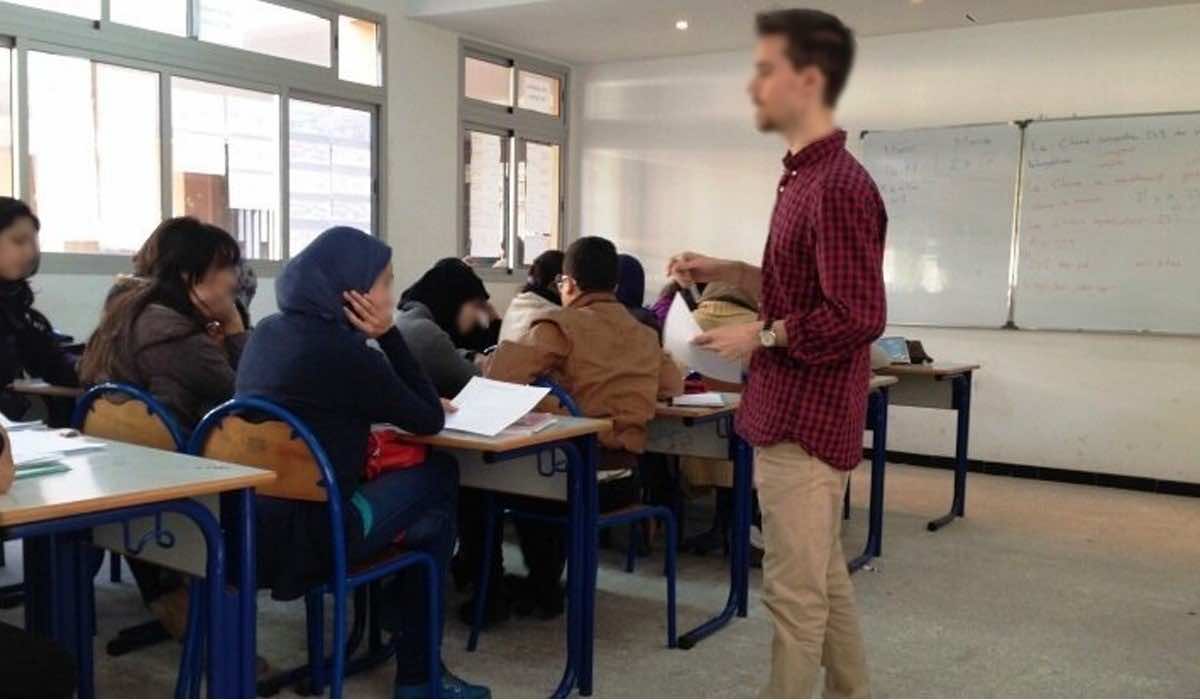
A recent evaluation of the Program International Student Assessment (PISA) 2018 has revealed that teachers in Morocco are poorly qualified.
Morocco’s Higher Council of Education, Training, and Scientific Research released on February 9 the results of the PISA 2018 report.
The study found that only 10% of teachers have a master’s degree, and only 65% have a teaching certification certificate issued by the authorities responsible for education and training, compared to 42% and 82% respectively in the Organization for Economic Cooperation and Development (OECD) countries.
Concerning Moroccan teachers’ training, the survey found that only 22% of teachers have finished a one-year or longer training program.
Compared to 53% in the OECD, only 29% of Moroccan teachers participated in an official professional development program as part of in-service training in the three months prior to the survey.
Amina Benbiga, head of the Learning Assessment project at the National Evaluation Authority (INE), said that “Morocco is one of the countries and economies where teachers are the least qualified, if we refer to the level of education, the duration of initial training and professional development.”
Not only does the survey refer to human resources as an obstacle for students’ learning and development, it also cites learning conditions.
“Many Moroccan children study in classes that exceed 30 students, and this observation is more critical in the public sector,” Benbiga added.
The survey also highlighted the lack of ICT resources in Moroccan schools, with only 24% of Moroccan students enrolled in schools with no computers, compared to an average of 1% in OECD countries.
Read also: Study Found Overwhelming Gap Between Public and Private Schools
It also revealed that 38% of computers available to Moroccan students are connected to the Internet, compared to an average of 96% in OECD countries.
Compared to OECD countries, where each teacher has access to a computer, nearly 21 teachers have to share a single computer connected to the internet in Morocco.
According to Benbiga, the lack or inadequacy of human, material or educational resources is more noticeable in public establishments with socio-economically disadvantaged pupils, compared to those in the private sector.
This survey’s results “show that Moroccan schools do not prepare 15-year-old pupils to continue their studies, nor for their future,” she explained.