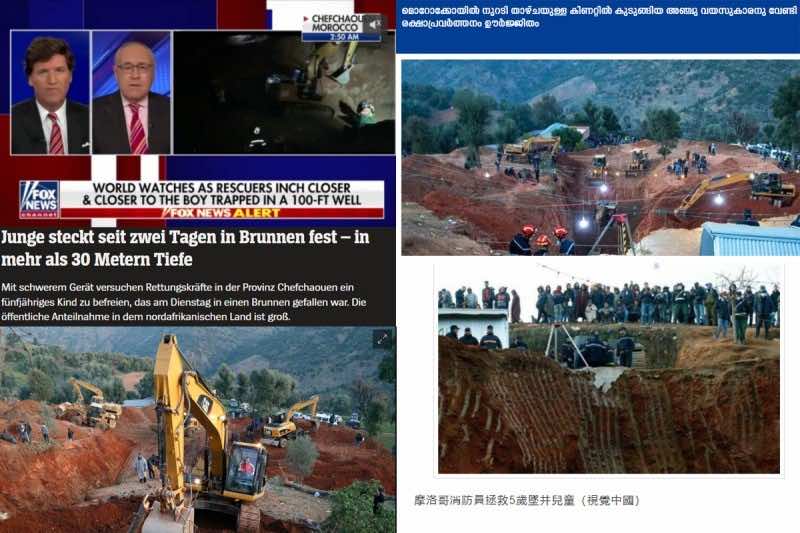
Rabat – In the wake of the tragic story of a five-year-old boy that captivated attention in Morocco and around the world, Morocco’s National Journalism Council is calling on media outlets to respect journalistic ethics in covering sensitive stories such as the rescue operation to save five-year-old Rayan Awram, according to a press release.
The council said it followed with great concern the unethical practices of news organizations as they covered the rescue operation, noting that many reports about the tragic event were in direct violation of journalism’s ethical code.
According to the Council’s press release, some digital news outlets set aside all humanistic principles included in the ethics chart and took advantage of a humanitarian tragedy to make profits and turn the tragedy into a spectacle to boost online visibility.
Photographing a blood-stained Rayan at the bottom of the well where he had been stuck for days constituted a blatant disregard for reporting ethics, the statement argued, adding that such images could only bring additional pain and psychological harm to the boy’s family.
Some news websites filmed and interrogated minors while under emotional strain and traumatized from witnessing the tragedy, the statement recalled, noting that such behavior is also a major violation of journalism’s code of ethics.
All these “unethical practices” turned a blind eye to ethical conventions regarding journalists’ responsibilities to society, the statement went on to argue.
Another major breach of journalism ethics during the reporting of the rescue operation was the proliferation of unverified news by many digital news organizations. According to the Council’s statement, the rush to publish images and stories — even if unverified or fake — on the rescue operation was driven by the urge to maintain or boost a high level of online visibility and generate profits.
While efforts to pull out Rayan of the well proved successful, the boy had already died by the time rescuers reached him. According to the Council’s statement, some outlets extended their inconsiderate reporting of the tragic story by immediately interviewing Rayan’s family.
Filming and interviewing the grieved family to bolster their online viewership, these news outlets exploited the family’s plight and emotional distress calamity, the Council said. Asking inappropriate questions, it added, they turned news reporting into a cynical spectacle for money-making and online visibility or presence.
The journalism council concluded its statement by urging news outlets to adhere to journalism’s ethical code, which underscores that humanitarian coverage should be done with utmost care and sensibility to respect the privacy and humanity of the distressed or grieved subjects of the story.
Read Also: A Timeline of Rayan’s Rescue Operation