 Join on WhatsApp
 Join on Telegram
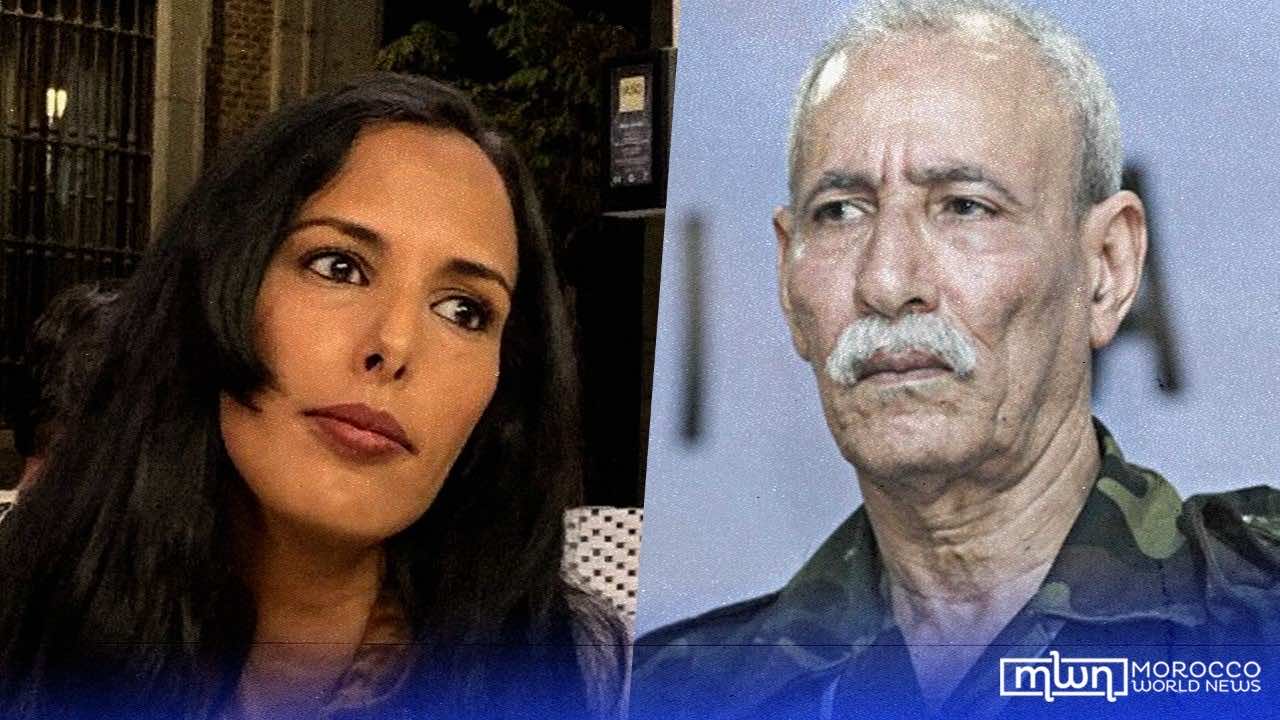
Rabat – Sahrawi refugee and activist Khadijatou Mahmoud continues her justice-seeking campaign against Polisario leader Brahim Ghali, who she has accused of rape and sexual assault.
In a new interview with the French version of the Israeli news outlet I24News, the Sahrawi activist spoke out again about her cause and called for justice amid a lack of actions from Spain’s judiciary.
In the interview, Mahmoud declared: “I am one of the victims of Brahim Ghali.”
The Sahrawi activist referred to her rape case several times throughout the interview. She accused Ghali of raping her in 2010 at the embassy of the self-proclaimed Sahrawi Arab Democratic Republic (SADR) in Algiers, where he served as an “ambassador.”
Mahmoud filed a complaint in Spain against the Polisario leader in 2013.
The activist took to Twitter to share her interview with I24News, captioning: “For decades the Polisario Front has been getting away with the brutal oppression of my people under the world’s radar. No longer. I am proud and thankful for the opportunity to share my story in this important documentary exposing the crimes of the Polisario Front against me and my people.”
Mahmoud has been using the hashtags #stop_polisario and #Justice4Jadiyetu on Twitter to raise awareness about inhumane conditions in Tindouf camps and to mobilize an international public.
Khadijatou Mahmoud is the umpteenth person to speak up about rape, violence, sexual assault, and abuse at the hands of senior officials of the Polisario Front.
Ghali is subject to several legal complaints by Sahrawis for crimes including murder, illegal detention, terrorism, torture, and forced disappearances.
The family of a disappeared ex-security official in the Tindouf camps, El Khalil Ahmed, continues to urge Polisario to reveal the fate of their relative, who has been missing since 2009.
The family of El Khalil has frequently expressed regret and shock for having no information on their loved one since 2009.
El Khalil joined Polisario in 1977 and monitored human rights in the Tindouf camps before his disappearance.
Many Spanish citizens were also among the victims of the Polisario Front.
In January 2018, Spanish King Felipe VI received the president of the Canarian Association of Terrorism Victims (Acavite), who informed him of the attacks that the Polisario Front committed against Spanish citizens.
Polisario members committed terror attacks against Spaniards at the Phosbucraa industrial site near Morocco’s southern city of Laayoune in 1974.
Despite the Polisario Front leader’s well-documented involvement in several first-degree crimes, Spain’s high court ruled against indicting him in April 2021, allowing the separatist leader to leave Spanish territory despite Spain’s government facing heavy criticism from activists and Ghali’s victims or their families.
The Polisario chief had traveled to Spain for hospitalization after COVID-19 complications. He accessed Spanish territory using a fake identity and passport under the name of “Mohammed Ben Battouch,” and he went on to spend a few months at the San Pedro de Logrono hospital in northern Spain.
Spain’s sheltering of the Polisario Front leader resulted in an unprecedented crisis with Morocco. The North African country condemned Spain’s decision, describing it as a betrayal of diplomatic reciprocity, as well as an indelible stain on the long-standing partnership between Madrid and Rabat.
Human rights activists also strongly condemned Spain’s sheltering and support of the Polisario leader.
For all the popular backlash directed at Spain for hosting and caring for a “war criminal,” Ghali was able to leave Spain in June after the country’s high court claimed there was not enough evidence to sentence him.
Amid Spain’s denial that Ghali had entered its territory using a fake identity, staff at the Logrono hospital disclosed in January 2022 that the Polisario leader had indeed presented a false passport for admission.