


 Join on WhatsApp
  Join on Telegram
 Rabat – As the Ukraine crisis causes a disruption to most exports from Ukraine and Russia, Morocco’s OCP finds itself in an advantageous position as Russia pauses its fertilizer exports.
On Friday, March 4 2022, the Russian Ministry of Industry and Trade announced that national fertilizer manufacturers would be temporarily suspending their exports, in light of the ongoing war in Ukraine.
Phosphate prices have already been trending upwards since April 2020, going from $70 (685 MAD) on that date, to a peak of $176 (MAD 1694) in December 2021.
While the halt in Russian exports will definitely cause prices to climb again, this could present an opportunity for Morocco’s OCP to improve its place on the international market.
Russia represents 13% of the world’s trade of intermediate fertilizer material, and 16% of finished fertilizer products. In addition, although it only has 2.5% of the world’s ammonia supply, it accounts for 40% of the world’s ammonium nitrate trade.
Russia and Belarus also supply the world with about 40% of its supply of potash, a key ingredient in fertilizers.
The crisis in Ukraine is unsurprisingly going to be extremely disruptive to the market and global supply chains. Brazil for example imports around 60% of Russian nitrogen fertilizers, and therefore must find alternatives.
Now as this disruption occurs, big American and Chinese producers would have to scale down their production for foreign markets and focus instead on supplying their domestic markets.
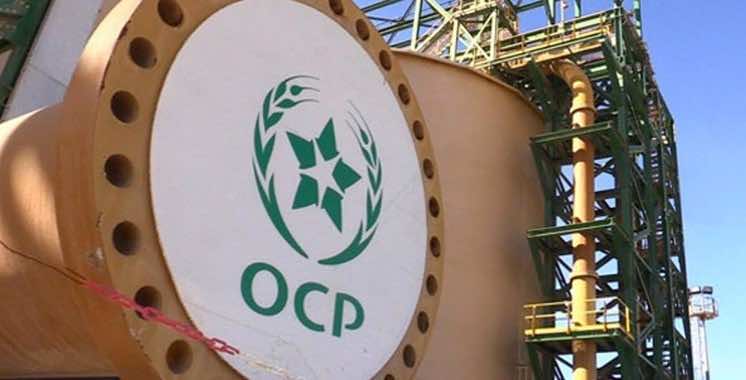
As the world’s largest exporter of phosphates and the possessor of the world’s by far largest reserves, Morocco and its state owned OCP group stand to benefit tremendously from the rise in prices of the raw material and fertilizer.
Morocco’s phosphate reserves are estimated to be around 50 billion tons, far ahead of China’s second place at 3.2 billion tons, and comprising more than 70% of the world’s accounted-for reserves.
Fertilizers are also expected to grow faster, with ammonium nitrate and ammonium phosphate reaching prices of more than 800 euros per metric ton.
The two products represent the OCP’s biggest assets, especially in its export and worldwide business.
Morocco’s state-owned OCP is the world’s largest exporter of crude phosphate, which positions it well to benefit from the rise in prices of the material.
In addition, OCP enjoys a healthy and steadily growing fertilizer business, which has helped it become the key player in the African fertilizer market and even pose serious competition to global giants such as Mosaic, America’s leading manufacturer.
Read Also: OCP’s African Dominance Makes Morocco A Global Leader in Food Security
However, the war in Ukraine can also pose obstacles, as rising gas and ammonia prices can make the process of mining and processing phosphates much more difficult and costly.
To this end, OCP has been continuously working to make its operations more efficient and neutralize the rising costs of gas and other operational costs.
Additionally, Russia’s exports of ammonia to Morocco are likely important for OCP’s operations. More than 12% of Russia’s $1.2 billion in exports to Morocco are ammonia shipments.
OCP revenues have already improved over the last year, with the company recording a net revenue of MAD 57 billion ($5.8 billion) in December of 2021, which is a 38% increase from the same time period in 2020, despite COVID-19 leaving world markets and supply chains in a tumultuous state.
The rise in phosphate and fertilizer prices, as well as the suspension of Russian exports, can however lead to an overall negative effect on the world’s agricultural output. If the supply and consumption of fertilizers drop, we could see a drop in agricultural yields, which could affect regions already suffering from food insecurity and see food prices soar.


