 Join on WhatsApp
 Join on Telegram
Because of the geographical and socio-cultural relationship between the two nations, Moroccan-Spanish connections date back to ancient times.
Throughout the centuries, these two countries have experienced numerous forms of cultural interaction, including wars, trade, and immigration, all of which have shaped the historical and political relations between them.
Today, these relations are governed by the remnants of the past, as well as a complex web of converging and diverging interests.
The starting point
Morocco and Spain have a long history of brutal battles and conflicts that dates back to 146 BC when the Romans toppled the Carthaginian civilization and seized the stable kingdom of Numidia in northern Morocco.
After the “Islamic Conquest” of North Africa (from 647 AD to 709 AD), the Almoravid and Almohad dynasties conquered the Iberian peninsula and established the Andalusian nation, joining together what is now Spain and Portugal with much of the Maghreb. The nation of Al Andalus started to decline in the 15th century, allowing Christian Castilian kingdoms to expel Arabs, Muslims, and Jews from Spain at the end of the century.
The Muslim expulsion from Spain led to the Mediterranean Sea becoming a hotbed of piracy targeting Spanish ships until the beginning of the 19th century when maritime agreements with Western nations and the decline of the Ottoman Empire ended the era of the Barbary pirates.
Then, during the contemporary age of colonialism, the Spanish Europeans resumed their colonization of Morocco. This partition of Morocco by France and Spain served to divide what was once a significant powerful state on Europe’s borders.
Despite Spain’s occupation of portions of Morocco’s northern areas, diplomatic and legal connections developed during the 18th century, resulting in the signing of two accords, the most important of which defined a fishing center and expanded the limits of Ceuta, Melilla, Ankur, and Bades in 1767 and 1799, respectively.
Because of this 1799 Treaty and Spain’s occupation of the geographical islands located in the mouth of the Mulwaya River in 1848, Morocco and Spain fought each other in the Tetouan War between 1859 and 1860.
The Tetouan War ended with Morocco’s defeat against Spain due to a number of factors, including the Moroccan military’s weakness and Britain’s intervention as a mediator to bring the war to a halt in favor of Spain.
As well as the occupation of Tetouan by Spain, the British-moderated end of the war forced Morocco into signing an armistice treaty with conditions that were considered among the most severe imposed on Morocco during the 19th century.
Until independence, Morocco would be partitioned by Spain in its north and south, divided by the French protectorate. This partition of Morocco by France and Spain served to divide what once was a powerful kingdom on Europe’s doorsteps.
Post-independence, Morocco and Spain signed a number of bilateral commercial agreements, the most notable being the 1993 deal, which had immediate implications on the ground as Spain became Morocco’s second-largest economic investor after France.
But before these commercial deals came the Green March in 1975. Organized at the behest of and under the guidance of Morocco’s late King Hassan II, the historic march marked the end of 75 years of Spanish colonization and occupation of Morocco’s southern provinces, ending the colonial partition of the western parts of the historic Moroccan state.
Recent developments
Moroccan-Spanish relations have improved dramatically in recent years. Under consecutive governments led by the Spanish Socialist Workers’ Party, the vastly improved Spanish-Moroccan relations translated into positive economic and cultural partnerships. Marking this momentous shift in bilateral relations were the multiplication of reciprocal diplomatic visits and Spain’s acceptance of many Moroccan immigrants.
However, a number of storms continued to hang over bilateral ties between the two nations, with diplomatic disagreements over the Sahara and the Spanish enclaves of Ceuta and Melilla remaining the two major stumbling blocks to real progress in the bilateral relationship.
In April 2021, tensions between Morocco and Spain heightened after the Spanish government allowed Polisario leader Brahim Ghali to enter Spanish territory under the false identity of Mohamed Ben Battouche in order to evade prosecution.
Morocco described Spain’s hosting of Ghali as a “betrayal” and an intolerable “breach of trust,” prompting a spiral of escalations in tensions between the two neighbors.
Timeline of important recent events
June 2002
The “Leila Island” conflict erupted in 2002 after 12 auxiliary forces reached the disputed uninhabited island and flew the national flag, prompting Spain to send two submarines, a helicopter, and 75 soldiers to retaliate.
Colin Powell, the former US Secretary of State, intervened to help calm brewing tensions.
November 2007
The former King of Spain Juan Carlos’ visit to Ceuta enraged Rabat, prompting it to reassert its claim to sovereignty over the two towns located on the African continent.
The Spanish government has avoided discussing the fate of the two enclaves since then, in order to prevent sparking a renewed crisis.
January 2011
After the European Parliament’s decision in 2011 not to renew the EU-Morocco marine fishing agreement, Spain requested financial compensation, prompting a renegotiation of the agreement by the maritime merchants’ lobby, which is seen as benefiting Morocco and increasing the Spanish fishing sector’s woes.
With the marine fisheries agreement, more than a hundred Spanish fishing vessels, mostly from Andalusia and the Canary Islands, were allowed to fish in Moroccan waters.
December 2020
A fresh crisis erupted over the colonial enclaves in Ceuta and Melilla 13 years after the previous crisis, following a statement by the former Moroccan Prime Minister Saad Eddine El Othmani on Saudi television channel, Al-Sharq.
“Ceuta and Melilla are among the points on which it is necessary to open discussion,” El Othmani stated. “This file has been suspended for five to six centuries, but it will be reopened one day.”
After this statement, the Moroccan ambassador to Madrid, Karima Benyaich, was summoned by the Spanish Ministry of Foreign Affairs for clarification.
May 2021
After entering Spain under a false name to be treated for COVID-related complications, the separatist leader Ibrahim Ghali sparked a fresh conflict between Morocco and Spain. Morocco did not receive prior notification of Spain’s decision to allow Ghali into the country. Moroccan intelligence however uncovered the move, creating a severe diplomatic rift between the two countries.
Spain attempted to defend its actions by citing humanitarian concerns, yet Moroccan officials highlighted that the Spanish government could have simply notified Rabat regarding its decision to host the separatist leader.
Following Ghali’s hospitalization in Spain, tensions between Madrid and Rabat escalated, with Morocco appearing to relax its border controls with the Spanish enclave of Ceuta, allowing thousands of migrants to cross into Spain’s enclave in northern Morocco.
The start of a new era?
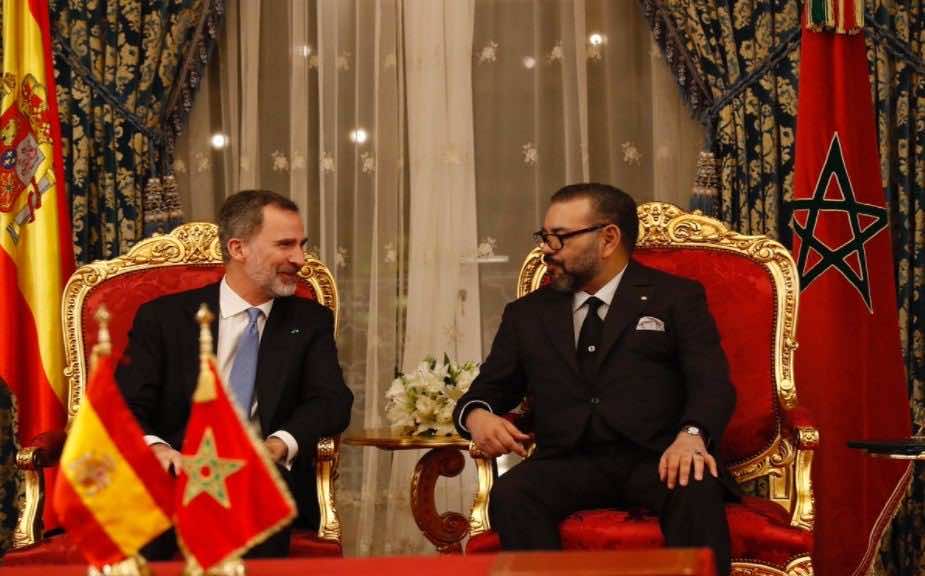
Moroccan-Spanish relations have taken a big turn following a shift in Madrid’s stance on the Sahara dossier, with the Spanish government officially stating this week its support for Morocco’s peace plan for the first time, thereby putting an end to a major diplomatic spat between the two nations.
On March 18, 2022, Spanish Prime Minister Pedro Sanchez announced Spain’s official support for Morocco’s Autonomy Plan, calling it “the most serious and credible framework” for resolving the Western Sahara conflict.
As a result of this major diplomatic step, Morocco and Spain have likely entered a new phase of bilateral ties. Speaking at a press conference on March 18, Spain’s Foreign Minister Jose Manuel Albares said “Today, we begin a new phase of relations with Morocco and close definitively a crisis with a strategic partner.”
Due to Morocco’s patience and resilient diplomacy, it appears to have succeeded in finally putting an end to the artificial conflict with Spain about the Sahara.
While Spain’s endorsement of Morocco’s Autonomy Plan is only the first step in a long road to the final, lasting resolution of the Sahara question, it speaks volumes about the effectiveness of Moroccan diplomacy in supporting the country’s territorial integrity.