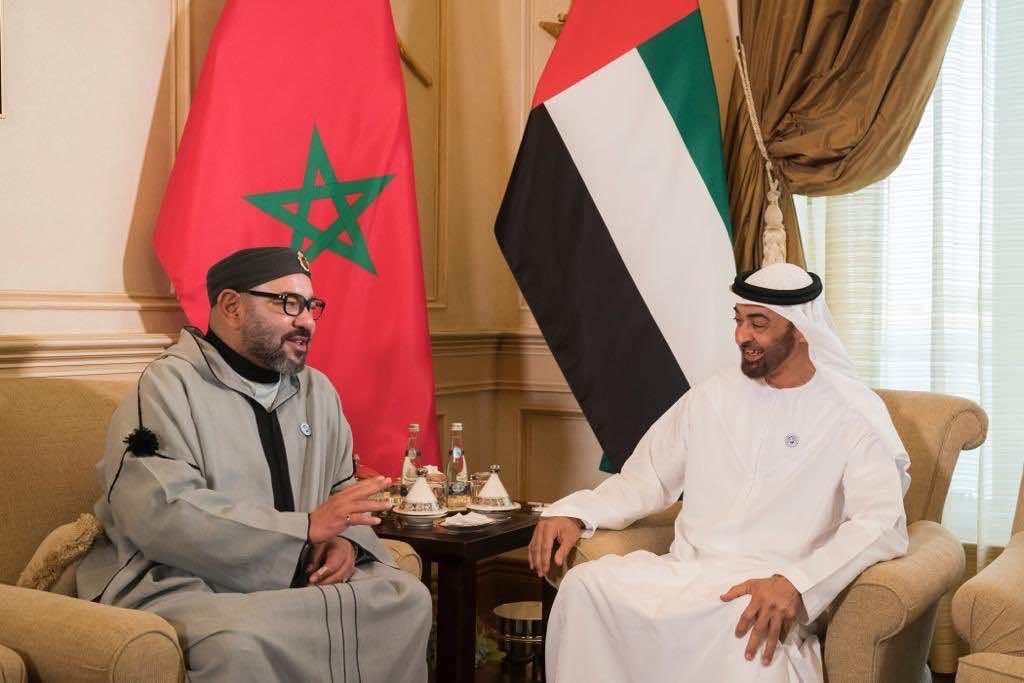
Casablanca – On Monday this week, the United Arab Emirates’ Minister of Industry and Advanced Technology, Sultan Bin Ahmed Jaber, represented his country in Rabat as the guest of honor of the 15th Energy Conference of the MENA region.
In both his speech at the inauguration of the conference and his subsequent meetings with high-ranking officials of the Moroccan government, Bin Ahmed Jaber spoke emphatically of the “brotherly” and strong reciprocity-driven relationship between the UAE and Rabat. 
As the Emirati government later suggested in a tweet about Bin Ahmed Jaber’s Moroccan visit, Morocco and the United Arab Emirates are two countries with a long history of cooperation and support that has been passed down through generations.
Historical background
While bilateral ties have remarkably deepened since the two countries signed a memorandum of understanding for the establishment of a Joint Committee for Consular Affairs in March 2015, Moroccan-UAE relations trace back to the 1970s when King Hassan II sent an official invitation to Sheikh Zayed bin Sultan Al Nahyan.
It was that royal invitation that prompted the UAE’s then president to inaugurate the Sidi Mohamed ben Abdellah Dam, and culminated in his first official visit to Morocco as President of the UAE in 1974.
In 1972, Morocco was one of the first countries to endorse the UAE’s unification. As a result, the United Arab Emirates established an embassy in Rabat on June 21, 1972. Since then, relations between the two countries have grown stronger in all areas, including politics, economics, military, security, media, tourism, and culture.
Commenting on the formalization of the diplomatic ties between Rabat and Abu Dhabi, the late King Hassan II said that Emirati-Moroccan relations go “beyond fraternal and human bonds.” Intead, he argued, “it is a relationship between two twins, separated solely by geographical distance.”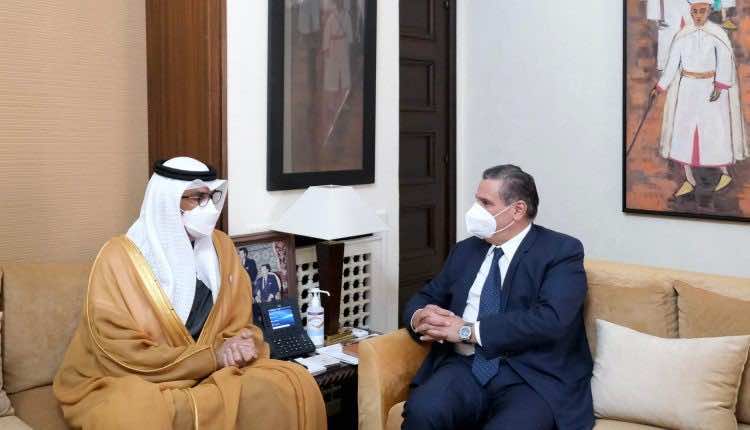
A little over a decade after the establishment of formal diplomatic relations, the two countries created the UAE-Moroccan Joint Committee on May 16, 1985, in Rabat. With an eye on sustaining the “brotherly relations,” the Joint Committee met for the first time in Abu Dhabi from November 22 to 24, 1988, under the chairmanship of the two nations’ foreign ministers.
The Joint Higher Committee met for the seventh time on May 21-22, 2018, in Abu Dhabi — again under the leadership of the two countries’ foreign ministers.
Partnership evolves amid emerging challenges
As countries in the MENA region grapple with common challenges in the post-COVID era, King Mohammed VI and the UAE’s Sheikh Khalifa bin Zayed Al Nahyan have repeatedly expressed their commitment to carry the torch of regional leadership and Emirati-Moroccan brotherly partnership.
In so doing, the two countries’ leaders have effectively indicated their readiness to perpetuate and even further cement the spirit of solidarity and brotherhood that marked the establishment of bilateral ties under the auspices of the late King Hassan II and Sheikh Zayed bin Sultan Al Nahyan.
Over the past decade, high directives from Sheikh Khalifa bin Zayed Al Nahyan and King Mohammed VI have resulted in continuing expansion of Emirati-Moroccan ties in all political, economic, media, scientific, tourist, security, cultural, and judicial sectors.
As Bin Ahmed Jaber stressed this week while attending the 15th MENA Energy Conference in Rabat, Morocco and the UAE share a common desire to further their cooperation and strengthen the foundations of joint Arab action.
For both the Emirati and Moroccan governments, the increasing exchange of state and official visits in recent years reflects the two nations’ shared goal of elevating bilateral cooperation to the level of an outstanding and multifaceted strategic relationship.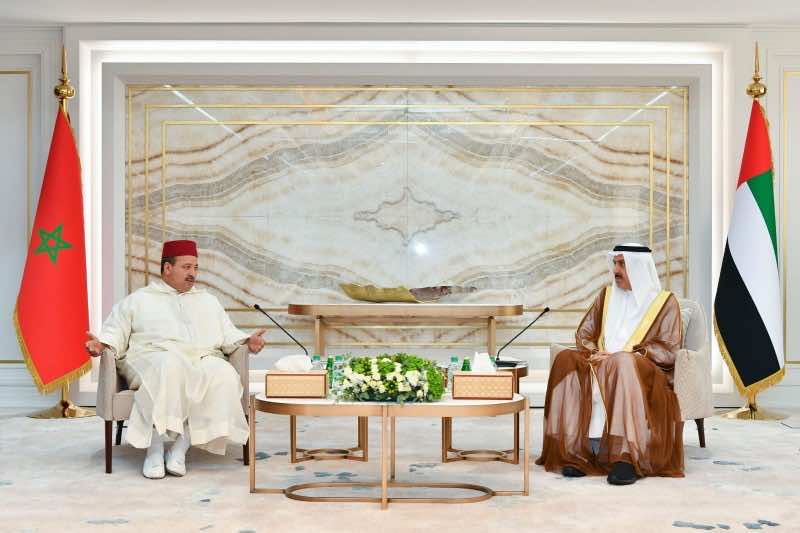
Political relations
Maintaining strong relations with the Gulf countries has long been an integral part of Morocco’s vision for regional stability and Arab solidarity, as King Mohammed VI said in his speech at the 2016 Morocco-GCC Summit in Riyadh. “Morocco has always perceived the security and stability of Gulf countries as an intrinsic part of its own security and stability. What hurts you hurts us, and what affects us affects you,” said the Moroccan monarch.
As for its bilateral ties with individual Gulf Council Countries, Morocco has always been on the front line in supporting the UAE’s sovereignty over the three islands seized by Iran (the Greater Tunb, the Tunb Al-Sughra, and Abu Musa). The UAE, for its part, has continued to spearhead strong support for Morocco’s Autonomy Plan as the best route toward a sustainable solution to the Western Sahara conflict.
On November 4, 2020, the UAE provided the strongest indication of its support for Morocco’s territorial integrity by opening a general consulate in Laayoune.
The UAE was also one of the first countries to express firm support for Morocco’s territorial integrity after a contingent of the Royal Moroccan Armed Forces (FAR) intervened in Guerguerat to lift a Polisario blockade that had been obstructing vital commercial traffic between Morocco and Mauritania.
In November 2020, in the immediate aftermath of the FAR’s Guerguerat intervention, the Emirati Ministry of Foreign Affairs said in a statement that it supported Morocco’s efforts to protect its national interests and territorial integrity.
Projects and investments
Beyond political cooperation, the UAE is the top Arab investor in Morocco with a total investment value of $15 billion. Currently, 20 Emirati organizations and companies are active in Morocco’s real estate, tourism, agricultural, industrial, and health sectors.
The Moroccan-Emirati Development Company (SOMED) and Etisalat, the Emirati company which owns 53% of the capital of “Morocco Telecom,” are some of the most important strategic Emirati investments in Morocco in recent years.
Emirati investments account for over half of all foreign capital invested in Moroccan stocks registered on the stock market. Direct Emirati investments in Morocco totaled MAD 2.79 billion ($285.758 million) in 2018, nearly MAD 2.44 billion (almost $240 million) in 2019, and MAD 1.3 billion (a little over $133 million) at the beginning of 2020.
But relations between the UAE and Morocco are not confined to political, economic, security, or military affairs. Humanitarian and social issues have also been at the forefront of the Emirati-Moroccan relationship in recent years.
In addition to investing in highways and dams, the UAE has contributed to various charity projects in the North African country. These include the Sheikh Zayed Hospital in Rabat, the Sheikh Khalifa Hospital in Casablanca, the Hospital for Fighting Cancer in Rabat, the mobile medical unit for eye surgery, and other hospitals.
Cultural links
Cultural exchanges are the other front of the strong and multifaceted friendship between the UAE and Morocco, with Emirati organizations taking part in or co-sponsoring some of Morocco’s most prestigious cultural and artistic events.
The two countries’ cultural partnership took on a whole new dimension in February 2005 with the establishment of an Emirati-Moroccan fund for the revival of the Islamic legacy. In terms of education, Abu Dhabi has hosted a Moroccan educational superstructure in the form of a branch of Mohammed V University in Abu Dhabi and a branch in the Emirate of Ajman since 2009.
The Moroccan desert folk culture — particularly poetry, proverbs, folk stories, as well as rituals and celebrations — all embody the convergence of components of heritage and similar cultural denominators between the Emirates and Morocco.
In addition to the Abu Dhabi National Exhibition Center and the Abu Dhabi Equestrian Club hosting the exhibition “Moroccan Heritage Week” in Abu Dhabi in 2015, the UAE participated in the 10th edition of the Nador International Poetry Festival in the city of Nador in northeastern Morocco.
On February 26, 2016, the Moroccan Ministry of Culture and the Department of Culture and Information of the Government of Sharjah in the United Arab Emirates signed a memorandum of understanding on the building of “Dar Al Shaar” in Tetouan.
While the Emirati and Moroccan governments have been the main promoters of the idea of “brotherhood” regional solidarity, and “common interests” business and individuals from both countries have equally benefited from, and contributed to, the reciprocal and evolving Moroccan-Emirati friendship.
The UAE is home to an estimated 100,000 Moroccans employed in industries such as hotels, banking, design, education, and aviation. With Moroccans constituting one of the largest foreign communities in the UAE and Emirati groups scaling up their investments in Morocco, there is an evidently strong desire in both countries to maintain good relations.
In a November 2018 speech about Sheikh Zayed’s role in laying the groundwork for the strong Moroccan-Emirati friendship, King Mohammed VI said the relationship between the “two sister nations” is founded on loyalty and solidarity.
Most notably, the Moroccan monarch vowed that Rabat and Abu Dhabi will continue to work together to “promote these exemplary relations in the best way to show loyalty to the special relationship that existed between Sheikh Zayed and Hassan II.”