 Join on WhatsApp
 Join on Telegram
Rabat – Slavery has taken many forms throughout human history, spanning almost all known civilizations and falling under different names. Today, modern slavery is defined as the highest crime against humanity.
According to converging data from 2021, almost 40 million people are victims of modern slavery. 26% of these victims are children, and almost 50% of modern slavery involves forced labor.
The most common form of modern slavery is known as human trafficking. In 2019, human trafficking networks ran a global illicit industry valued at $150 billion, according to some estimates.
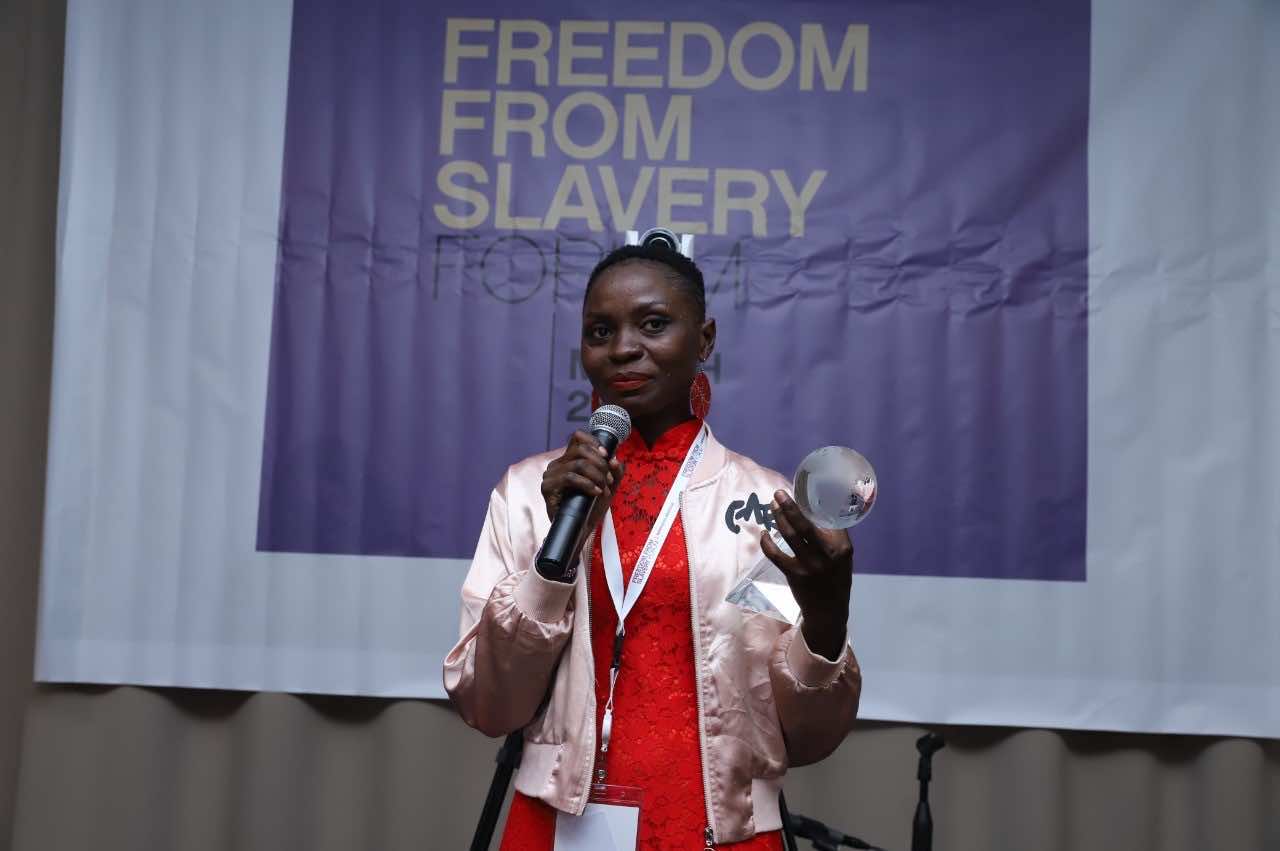
Morocco World News spoke to one of the human trafficking survivors, Grace Mwangangi, who shared details of the emotional and physical trauma she experienced as a human trafficking victim.
A survivor of human trafficking who was trafficked to India in 2019, Grace Mwangangi is originally from Kenya.
After dropping out of school at only 16, Grace was forced to live under the atrocities of illicit labor and constant abuse thousands of miles away from her home country. The young woman consented to travel to India under the promise of a better life. She signed up to become a tour guide and a dancer, only to find herself forced into illegal sex work and under constant threat if she ever tried to speak up.
Like millions of other victims, Grace left home chasing the prospect of a better life, and to escape poverty. The human trafficking network that lured her into working for them in India posed to the young woman as a legitimate overseas hiring agency, promising her a well-paid job and telling her she could repay what she owed them once she started working.
“They say you’ll complete paying the debt in two months and after the two months what you’ll be making is yours,” Grace said.
To encourage people to take their offer, the trafficking network promises young girls that they can go back home of their own volition, something that Grace would later on discover is a lie. “They told me that I can go back home wherever I want and that if I wanted to stay and work in India, I could renew my visa.”
Grace would later discover that she could neither return back nor renew her visa after the network forced her to stay illegally in India long after her visa had expired.
Reflecting on her experience of being trapped in India, the young woman told MWN that she was constantly stalked by network members who were “watching her every step,” claiming that they were just ensuring she wouldn’t “run away with their money.”
“They were threatening us that if we try to do anything ‘stupid,’ they will sell us to someone who is going to enslave us, they say they will make our lives worse than it was,” she recalled.
Living under constant threat, the worst part for Grace was the forced illegal sex work as she was exploited and abused by clients. “That was the worst experience of my life. The prostitution, every day with someone you don’t know.”
Human trafficking networks run deep
When asked to describe the human trafficking network she fell victim to, Grace said that the people who trafficked her were also victims of trafficking and had to traffick others if they wished to escape forced labor as sex workers.
“Some of them knew what they were going to do, but then others didn’t, some people found themselves having to traffick other people in order for them to make money,” she said. “You have to survive somehow.”
The roots of modern slavery
Modern slavery falls under many names and organizations ofter have different taxonomies to describe the wide range of criminal activities involved in the act. However, there seems to be little debate as to the underlying reasons behind the proliferation of global human trafficking networks.
In general, the vulnerable fall easy prey to human trafficking networks. In 2007, Human Rights Watch estimated that girls under 16 coming from rural poverty suffered from forced labor more than any other child labor category.
As a human trafficking survivor and activist, Grace reached the same conclusion. “Poverty is one of the things that has made people so vulnerable because we are all trying to make ends meet, and human trafficking networks take advantage of that.”
Human trafficking networks target war-ravaged countries and poor areas knowing that socially vulnerable and low-literacy people are easily swayed.
“Last time I was in India, I heard them say that they want to start trafficking people from villages. They said that the girls now in towns are smart,” Grace explained.
Like other trafficking networks, the one Grace fell victim to targets the most vulnerable in remote villages struggling to make a living. “When you’re not educated, when you are poor, there is a higher chance of you being trafficked.”
Grace’s journey back to freedom
After months of exploiting and subjecting Grace to abuse, the network was on the verge of forcing her to help them recruit other young women from Kenya.
Refusing to condemn others to the same fate, Grace realized it was time to flee. The young woman was fortunate enough to have a friend working in the British news agency BBC.
It was that friend who helped Grace to return home, and who would later propose to her to launch a documentary to share her experience and help raise awareness.
After surviving the ordeals of forced labor, Grace wanted to share her painful experience with other people to prevent them from making the same mistakes.
Grace’s newfound cause of raising awareness faced significant social stigma as the YouTube documentary she created received a considerable amount of negative feedback.
Social stigma is one of the reasons stopping human trafficking victims from reaching out for help. As another activist told MWN, young women speaking up about forced labor as sex workers can be shunned by their families and the whole community.
Grace’s statements echo this stance. During the interview with MWN, she identified social stigma as the primary obstacle standing between abused women and reaching out for the help they desperately need.
Victims “are scared of what the community will think of them,” Grace said. In addition to social stigma, governments’ lax handling of such crimes further encourages perpetrators.
Among the 40 million people suffering from modern slavery, Grace’s story is one of the few bright spots, as only a few survive to tell the horrifying tale of how they lived through years of unrelenting abuse and exploitation.
After the mental, emotional, and physical trauma, Grace decided to dedicate herself to the fight against modern slavery. With the help of an NGO, she returned to school and is currently pursuing a degree in journalism. Now, Grace’s greatest aspiration — and hope — is to inspire young women and raise awareness about the atrocities of modern slavery.
Her message to human trafficking victims is that they need to speak out. “People need to speak out so that what happened to them does not happen to others. When one person starts, the others will follow,” she concluded.
Read Also: Marrakech Hosts Freedom From Slavery Forum