Rabat – French Development Agency (AFD) has signed a memorandum of understanding with Morocco to assist the country in the development of a long-term decarbonization strategy.
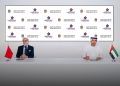
Morocco’s Minister of Energy Transition and Sustainable Development Leila Benali signed the document on Friday in the presence of Remy Rioux, Director General of the French Development Agency (AFD) and Helene Le Gal, France’s Ambassador to Morocco.
The memorandum seeks to consolidate multi-sectoral cooperation between Morocco and France to realize an “ambitious low-carbon transition [in the North African country] that is resilient to the extreme effects of climate change.” It is also expected to help in creating jobs and increasing the country’s productivity and competitiveness.
The decarbonization transition concerns particularly the sectors of energy and electricity production, industry, agriculture, construction, transport, forests, and waste management.
To support this transition, Morocco is set to adopt a long-term quantitative low-carbon strategy that tracks technical and economic progress as well as long-term greenhouse gas (GHG) emissions while taking into consideration the objectives of the New Development Model.
Based on collected data, the North African country can forecast scenarios to make informed policy and sectoral decisions.
Read Also: Morocco, UNIDO Sign Two Declarations on Decarbonization, Green Hydrogen
AFD committed to support this long-term process by providing a series of workshops for Moroccan officials and sectoral partners to develop their knowledge and expertise in modeling decarbonization scenarios and estimating the costs and benefits of proposed mitigation policies and technological measures.
AFD support will be consolidated by a partnership with the United Nations Environment Programme and the “Pathways 2050 Platform,” an initiative launched at COP 22 in Marrakech. The platform seeks to support countries, regions, and cities wishing to develop long-term climate strategies.
In December, Morocco submitted a quantitative low-carbon strategy to the Secretariat of the United Nations Framework Convention on Climate Change in accordance with the provisions of the Paris Agreement, which means that the soon-to-be developed Moroccan decarbonization strategy is not the first initiative in the North African country.
During his visit to Rabat, AFD DG Rioux visited the Atlantic Free Trade Zone in Kenitra and Mohammed VI Polytechnic University’s new campus in Rabat, and held a meeting with Morocco’s Minister of Economy and Finance Nadia Fettah.
The two officials reviewed Morocco-AFD financial cooperation and discussed prospects for consolidating such partnership to meet Moroccan reform objectives and address the current economic crisis resulting from the lingering effects of COVID-19 and the war in Ukraine.
Since 1992, AFD has allocated €7.6 billion in funding and knowledge-sharing to address Morocco’s economic and financial needs.
Read Also: AFD Grants Morocco €150 Million to Support Post-COVID-19 Economy