
 Join on WhatsApp
 Join on Telegram
Rabat – Morocco’s phosphate giant OCP Group will open a phosphate fertilizer manufacturing facility in Brazil, contributing to the stabilization of the market amid a global shortage in fertilizers and their inputs led by the COVID-19 pandemic and worsened by the war in Ukraine.
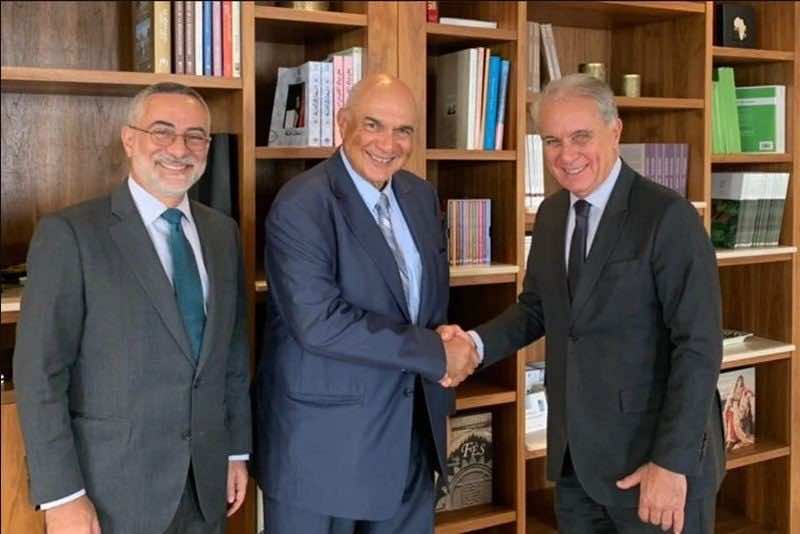
OCP Group President Mostapha Terrab announced the project on Thursday following a meeting with Marcos Mentes, the Brazilian Minister of Agriculture, who is on an official visit to Morocco.
During the meeting, which took place at OCP’s headquarters in Rabat, Terrab discussed the company’s aspirations to invest abroad, prioritizing in particular the Brazilian market. “Having a plant in Brazil would be very valuable,” he said.
The new processing unit in Brazil will manufacture phosphate products from phosphate rock imported from Morocco. The plant will be built in the city of Sao Luis, located in northeastern Brazil.
The president of OCP Fertilizantes in Brazil Olivio Takenaka highlighted that “the project is in progress; we already have the land, six kilometers away from the Port of Itaqui,” adding that the engineering project is nearing completion for government approval.
Takenaka added that they are currently planning a dicalcium phosphate facility for animal food production. Dicalcium phosphate is mainly used as a dietary supplement in cereals, noodle products, and animal food, as it contains high levels of calcium and phosphorus.
Brazil is home to the second-largest herd of cattle in the world, making it the largest beef exporter in the world with more than 15% of global production. In this regard, Montes recalled Brazil’s responsibility and role in maintaining the world’s food security.
OCP Group is a leading global producer of phosphates and their derivatives, holding 70% of the world’s phosphate reserves. According to data from Morocco’s Exchange Office, phosphate exports climbed by 95.8% at the end of February 2022 amid rising worldwide fertilizer prices.
Brazil has planned several visits to different Arab countries, including Jordan, and Egypt, to discuss increasing its fertilizer imports from these countries from 26% to 30 or 35%.
The Russian-Ukrainian war is severely impacting Brazil’s agriculture as the Latin American country depends primarily on Russian and Belarusian fertilizer exports.
Read also: Peru Looking To Rescue Agriculture Inputs with Moroccan Fertilizers