 Join on WhatsApp
 Join on Telegram
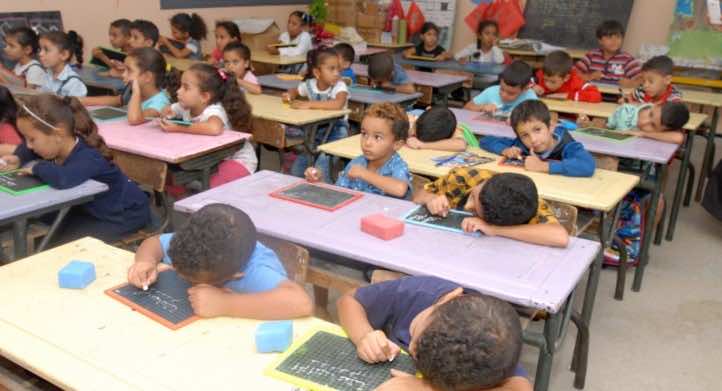
Rabat – An average of 70% of children under the age of 10 are unable to read a simple text in the North Africa and Middle East (MENA) Region, a recent study from the World Bank (WB) reports. In Morocco, the average stands at 64.9%.
Dubbed the “Learning Poverty Report 2022,” the document paints a bleak image of the state of education in the region, arguing that learning poverty – the number of children unable to read and comprehend a simple text by the age of 10 – remained largely unchanged at 63% between 2015 and 2019.
Based on historical data and the impact of the pandemic, the World Bank estimates that the learning poverty average in the MENA region reached 70% in 2022.
Accounting for the impact of the pandemic on the global education system, the WB points out that the COVID-19 pandemic has caused “unprecedented disruptions to schooling.”
While governments were rushing to impose nationwide lockdowns to mitigate the effects of the COVID-19 pandemic, the quality of education deteriorated for 1.6 billion children in 188 countries.
In the years between February 2020 and February 2022, in-person education was fully halted for a global average of 141 days, the report indicates.
In the MENA region, governments reduced the number of in-person education days by an average of 183 days.
Sub-optimal education places millions of children at greater financial risk, the report warns.
Unless governments intervene to make up for the lost school days, the current generation of students is at risk of losing $21 trillion in career earnings, almost 17% of today’s global GDP.
Lower and middle-income countries will bear the majority of the financial burden.
Read Also: Ministry of Education Launches Platform to Reform Public Schools