 Join on WhatsApp
 Join on Telegram
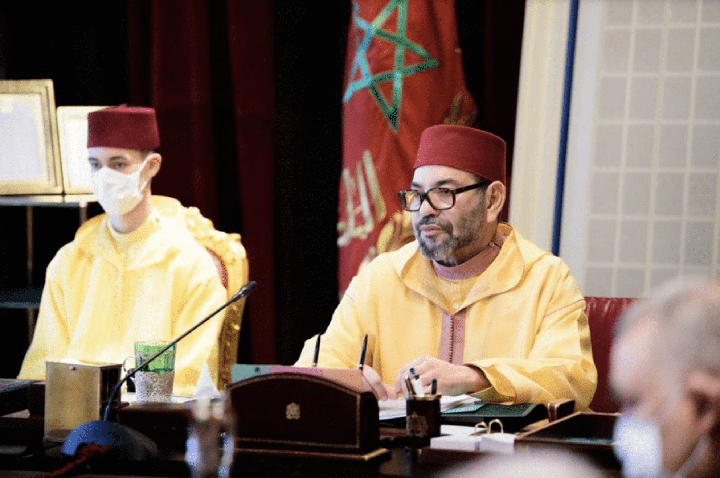
Rabat – King Mohammed VI chaired today a council of ministers, marking the adoption of draft decrees and draft framework bills, including one seeking to introduce reforms to improve Morocco’s national health sector.
Crown Prince Moulay El Hassan attended the council in Rabat, a statement from the Royal Palace spokesperson Abdelhak Lamrini said.
Minister of Health Khalid Ait Taleb gave a presentation on a draft law on the national health system, seeking to improve the sector.
The draft decree reforms consist of the adoption of good governance at the level of the health sector — particularly among hospitals across the country.
The reforms also seek the creation of authorities needed in the sector, including a high authority for health, an agency for medicines and health products, and an agency for blood and blood-derived products.
Under the new draft law, the Ministry of Health aims to develop human resources with a view to motivate human capital in the public sector and to reduce lack of human resources.
The reform seeks to open doors for foreign medical experts and experts from the Moroccan diaspora.
The new plan also aims to upgrade health care services to meet Moroccan expectations in terms of facilitating access to healthcare and improve health services.
The High Commission of Planning (HCP) released a report last week, pointing out serious challenges in the sector in terms of access to health care.
The report put focus on the lack of healthcare services for the benefit of women due to different factors — including COVID-19 crisis.
“The [COVID-19] lockdown has had a major impact on women’s access to health services and is likely to affect them for many years to come,” the HCP report said.
The report found that 27.3% of women did not have access to maternal healthcare while 20.8% could not have access to reproductive health care services in the past few months.
Lack of access to maternal health services is higher in rural areas, the report warned.
In addition to HCP, Morocco’s National Council for Human Rights (CNDH) released a report in which it outlined a set of recommendations to tackle the crisis in the sector.
The report said that health care must be dealt with as an “investment for the nation’s security and prosperity.”
The sector has been suffering from a severe shortage of medical personnel. Only 32,000 doctors and 65,000 nurses are operating in the sector across the country — which needs at least 65,000 health professionals.
Investments
In addition to the health sector, Minister delegate in charge of investment, Mohcine Jazouli, presented a draft framework law formening the Investment charter.
The project comes to improve the impact of investments in creating permanent employment opportunities and reducing disparities between regions for investment attractiveness.
Unemployment continues to constitute one of the prevalent challenges in Morocco.
A report in May from the HCP shows that the unemployment rate slightly fell from 12.5% in the first quarter of 2021 to 12.1% in the first quarter of 2022.
The number of unemployed Moroccans is estimated at 1,466,000, according to HCP’s May report.
The project seeks to direct, boost investment among productive sectors to turn Morocco to a continental and international pole in the field of foreign direct investment and improve the business climate.
Jewish diaspora
The Council of Ministers also marked a presentation from Minister of Interior Abdelouafi Laftit on the Moroccan Jewish Community.
The presentation covered the measures seeking to implement King Mohammed VI’s instructions on the “organization of the Moroccan Jewish community.”
The minister presented the National Council of the Moroccan Jewish Community, overseeing the management of community affairs and the safeguarding of the heritage and the cultural and religious influence of Judaism and its authentic Moroccan values.
The presentation also covered the Commission of Moroccan Jews Abroad.
The commission works to consolidate the links of Moroccan Jews established abroad with their country of origin.
Before Israel became a state in 1948 Morocco was home to as many as 200,000 Jews.
With immigration, however, Morocco currently hosts only 2,000 Jews out of the 15.2 million living across the world, according to the Jewish Agency.