
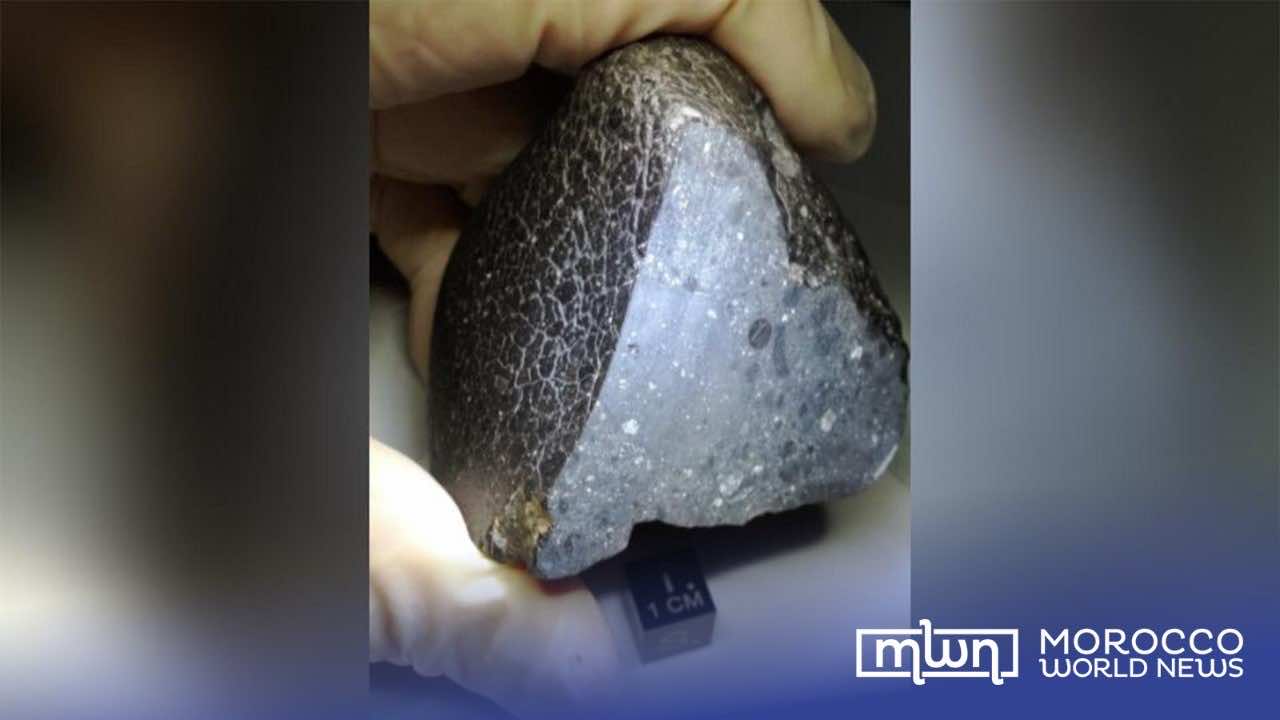
Tantan – New research led by Australia’s Curtin University has determined the exact origins of the Martian meteorite that fell in Morocco’s Tata Province on July 18, 2011, providing critical geological clues concerning Mars’ earliest origins.
Also known as “Black Beauty” or Northwest Africa 7034, the meteorite was ejected between five and ten million years ago from a crater in the north-east of the Terra Cimmeria-Sirenum province in the southern hemisphere of Mars, the research indicated.
“Black Beauty is the only brecciated Martian sample available on Earth, meaning it contains angular fragments of multiple rock types cemented together, which differs from other Martian meteorites that contain single rock types,” said Anthony Lagain, a researcher with the Space Science and Technology Centre at Curtin University.
“For the first time, we know the geological context of the only brecciated Martian sample available on Earth, 10 years before NASA’s Mars Sample Return mission is set to send back samples collected by the Perseverance rover currently exploring the Jezero crater,” Lagain added.
Read also: James Webb Telescope Photos Reveal Deepest Pictures of the Universe Yet
The Northwest Africa 7034 contains the oldest martian igneous material ever dated – around 4.5 billion years old – the research said. Igneous materials are rocks formed from the solidification of magma or lava.
Lagain and his colleagues discovered the source of the ancient Martian meteorite using a supercomputer at the Pawsey Supercomputing Research Centre in the Australian city of Perth. The computer’s algorithm enables the exploration of the geology of planets without leaving home.
“We are also adapting the algorithm that was used to pinpoint Black Beauty’s point of ejection from Mars to unlock other secrets from the Moon and Mercury,” said Professor Gretchen Benedix.
A paper on the findings of the research was published in the Nature Communications journal on July 12, 2022.