


 Join on WhatsApp
  Join on Telegram
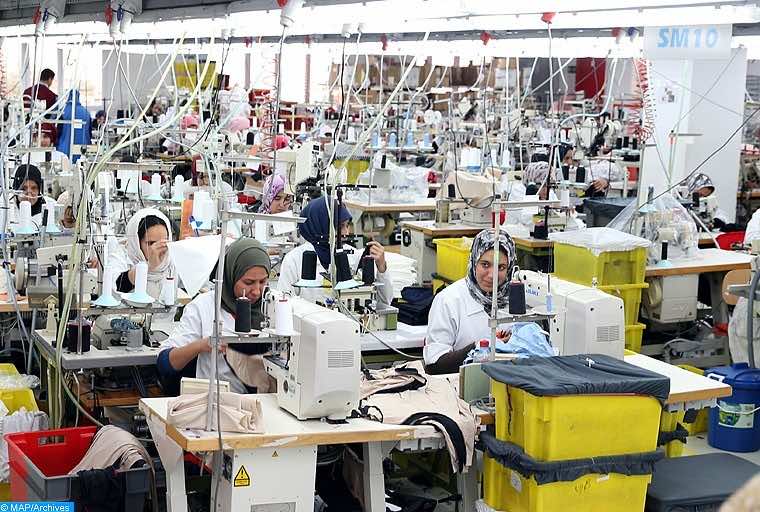
 Rabat – As Morocco plans to increase textile production and double exports, workers from the textile, garment, shoes, and leather (TGSL) industries are joining a regional movement that calls for safe workplaces.
Affiliates of IndustriALL Global Union in Morocco have co-launched the “Garment workers need safe factories” campaign to fight for social protection and better health standards in the textile, garment, and shoe factories. Worker unions from Jordan, Tunisia, Egypt, and Palestine also joined in the protest.
In Morocco, “Social security is mandatory, but workers in the TGSL sector are deprived of it as business owners evade it and the law is not properly applied,” says Araby Hamoud from the National Union of Textile and Leather Workers (SNTTC-UMT).
Speaking at IndustriALL’s social dialogue meeting in Hammamet, Tunisia, the Moroccan trade union leader said that “some workers find themselves without a pension upon retirement and women are deprived of their maternity rights.”
In addition to denouncing current working conditions, the Moroccan trade union leader alongside his peers in the region highlighted the impact of supply chain disruptions during the COVID-19 pandemic on the livelihood of the garment workers, stressing that the pandemic underscored the need for stronger social protection systems.
Referring to the ILO definition of social security, the trade unions called for “child and family benefits, maternity protection, unemployment support, employment injury benefits, sickness benefits, health protection, old-age benefits, disability benefits and survivors’ benefits.”
“During the pandemic, the current model where severance is the only form of social protection, led to wage theft,” IndustriALL’s Director responsible for the Textile and Garment Industry Christina Hajagos-Clausen said in support of the regional campaign.
Read Also: Moroccan Textile Industry Must Adapt to Post-Pandemic World
Adding that “There is no decent work without social protection,” Hajagos-Clausen indicated that the worker’s demands align with the objectives of the ILO Code Practice for Health and Safety and the International Accord on Health and Safety in the Textile and Garment Industry.
Social reforms
As the informal sector employs 77% of the Moroccan labor force, the regularization of workers’ status across industries remains lacking.
However, the Akhannouch-led government vowed in November 2021 to expand medical coverage to three million Moroccans as part of the royal project to extend social protection to all citizens. By May, 800,000 farmers have benefited from social security coverage.
With the support of an €87 million loan (MAD 932 million) from the African Development Bank (AfDB), Morocco is expected to extend its social protection program to eleven million self-employed workers and seven million children and young people.
While Morocco’s social reforms appear to best serve the working class, the government is set to face resistance from some businesses that prefer to recruit cheap and unprotected labor to keep wage costs low.
Still, the government insists on the subscription of millions of Moroccans to the social protection schemes partially to increase public funds that could be invested in infrastructure projects or profitable sectors.
Read Also: Morocco’s Social Security Ambitions to Cover All Citizens


