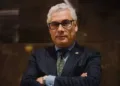
Rabat – Leila Benali, Morocco’s Minister of Energy Transition and Sustainable Development, recently said that her ministry is negotiating two Liquified Natural Gas (LNG) supply contracts that are set to cover Morocco’s needs for the next five to ten years.
Speaking to energy-focused news outlet Attaqa, Benali described Morocco’s entry into the international LNG market as a “historic step” and “leap in the path of developing countries,” noting that the plurality of suppliers and prices in the LNG market is expected to strengthen Morocco’s energy security.
“There are additional contracts that we are working on that will enable us to double our energy sovereignty, with partners who carry the same visions in terms of enhancing energy security for more sustainable development and achieving geopolitical, diplomatic and environmental goals,” the Moroccan minister added.
In April, Morocco announced its plans to enter the LNG market after opening an international tender. Morocco’s decision followed Algeria’s unilateral decision not to renew its partnership contract for the Maghreb-Europe gas (MEG) pipeline.
LNG, is a liquified form of natural gas that allows the fuel to be transported on ships before being turned back into gas form in the receiving country. While natural gas commonly requires a pipeline connection with the gas-producing country, having LNG ports allows countries to buy gas from suppliers around the world.
As Morocco lacks the gas infrastructure required for regasify LNG, the North African country turned to Spain to benefit from coastal-based Iberian regasification plants. Rabat and Madrid, therefore, agreed to transport Moroccan-purchased LNG to Spain where it will be regasified before entering Morocco through the MEG pipeline.
Morocco also re-commissioned the Tahaddart and Ain Beni Mathar plants, with an installed capacity of 850 megawatts and an investment of $1 billion to generate power from imported LNG.
By reinitiating the two energy plants and accessing the LNG market, Morocco seeks to reinforce its energy security, protect the competitiveness of its industrial sector, and advance its gas infrastructure, says Benali.
However, the war in Ukraine has pushed Europe to increase its demand for LNG, mainly from Norway, the US, and Qatar, to offset the demand-supply gap caused by trade embargoes imposed on Russia. The European-led surge in LNG demand is set to further increase gas prices, impacting Morocco’s sustainable access to the energy source, particularly during winter when demand peaks.
Read Also: Morocco Determined to Strengthen Its Gas Infrastructure