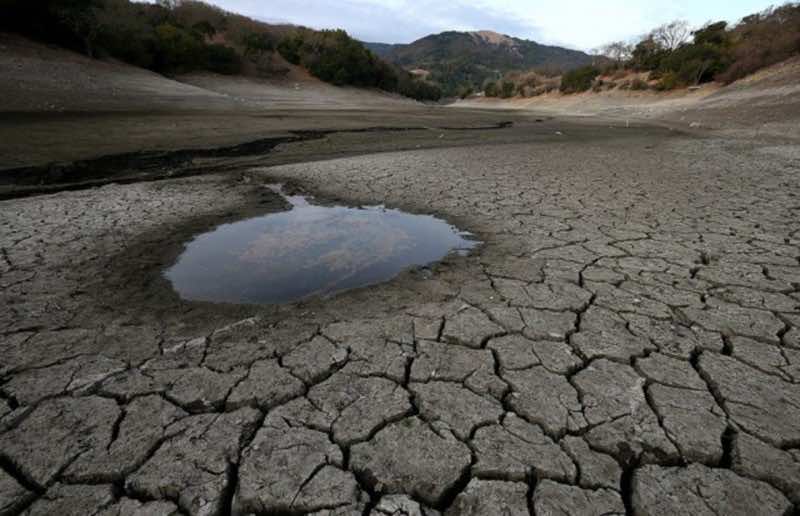
Rabat – As this year’s drought brought Morocco’s water reserves to record low levels, national and local authorities are scaling up water rationing measures to face what many have described Morocco’s most alarming water scarcity challenge in four decades.
RADEEJ, a public utility company operating in El Jadida, a major port city 96 kilometers South of Casablanca, announced on Tuesday the implementation of a number of measures to further ration water usage.
In a statement, RADEEJ detailed that it has reduced the flow of drinking water in the city since July 25 in response to the national state of emergency relating to the use of water resources.
As well as reducing water input, the agency issued a number of public statements and press releases calling on local residents to “show understanding” during the period of implementing these measures.
In many of these statements, the utility agency said it has been working diligently to protect water resources by regularly maintaining the water distribution grid to “identify and reduce” internal leaks.
RADEEJ’s measures align with those of Morocco’s Ministry of Water and Logistics, which launched a nationwide campaign in June this year to preserve water resources, maintaining that the country is “in a state of water emergency.”
The ministry said in a press release: “At a time when water resources are decreasing, domestic water usage is witnessing an increase.”
Read Also: ‘State of Water Emergency:’ Moroccan Water Ministry Launches Water Saving Campaign
Morocco has in recent months launched a number of projects to secure portable water supplies including in major cities like Casablanca and Marrakech.
The National Office for Electricity and Drinking Water (ONEE), another public utilities company, started a program under the name of “the National Program for the Supply of Drinking Water and Irrigation 2020-2027,” with the aim of increasing the storage capacity of Moroccan dams from 18 billion cubic meters to 27 billion.
As of February 2022, Moroccan dams stood at a filling rate of 32%, down from 49% the previous year, according to Morocco’s Ministry of Water and Logistics.