 Join on WhatsApp
 Join on Telegram
Rabat – The Morocco-Nigeria gas pipeline could help Europe stave off future security threats, particularly irregular migration, through achieving development in Africa, a policy brief written by Senior Fellow Jamal Machrough for the Policy Center for the New South said on October 5.
The report, titled “Why Europe has a strategic interest in the realization of the Nigeria-Morocco gas pipeline,” argues that Europe’s need to collaborate with its African partners means that the continent has a vested interest in the achievement of a prosperous Africa.
Addressing Europe’s dealing with the “symptoms” of its security threats rather than addressing the root causes, the brief posits that the elevation of Africa’s socio-economic conditions (which the pipeline could help achieve) would be the most effective solution to threats like irregular migration.
The project is set to create job opportunities and benefit communities, giving Africans less of a reason to migrate north. Meanwhile, it can also help strengthen the capabilities of Europe’s African partners, making them better equipped to combat threats.
In addition, the report says that supporting African populations and growing their material conditions can open up a new consumer market for European companies. With a rapidly growing population, Africa is starting to catch the eyes of global companies as a market with tremendous potential.
The pipeline, which government officials say is proceeding “according to plan,” was mentioned earlier this year by King Mohammed VI as one of the investment projects through which Morocco is hoping to help Africa achieve financial and energy independence.
In his report, Machrouh also tackles other benefits the mega-project could have for Europe, such as lessening its dependency on Russian and Algerian energy sources. The continent is facing an energy crisis this year, as gas prices go up and winter approaches.
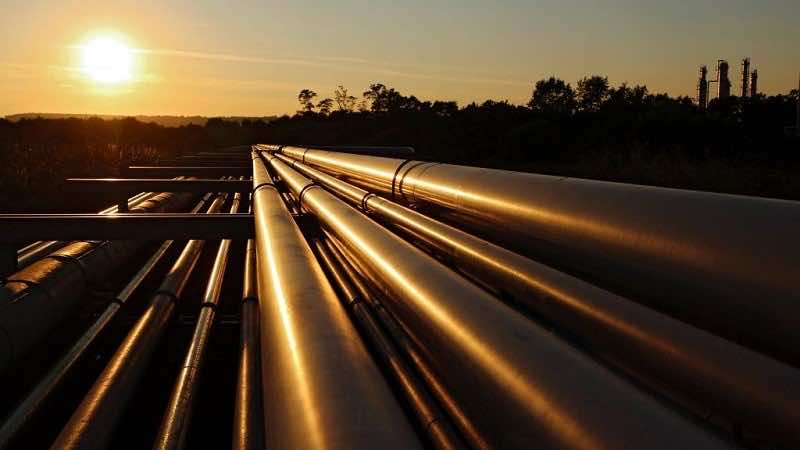
Set to stretch for thousands of kilometers, the pipeline will cross 13 countries from Nigeria to Morocco and Spain, and is projected to provide nearly 400 million people with their energy needs.
Read also: Gigantic Projects: Morocco’s Bet for a Brighter Economic Future