 Join on WhatsApp
 Join on Telegram
Moroccan phosphate giant OCP reported “exceptional” numbers in its recent earnings report for June 30, 2022. The company’s net income more than doubled compared to last year, an increase that was mostly attributed to the rise in fertilizer prices due to the war between Russia and Ukraine.
As that war continues, an opportunity is emerging for OCP and Morocco to maintain the momentum and emerge as not just a regional powerhouse, but a global player.
The state of the market
Historically, the global fertilizer market has been largely dependent on Russian supply. This market that offers the key substance for boosting soil fertility is now facing supply and demand problems caused by a global fertilizer shortage.
Issues regarding shortages threaten further incidences of hunger on an already starving planet.
The UN is warning of a growing crisis in the fertilizer market, due to Russia’s invasion in Ukraine where export restrictions have driven prices up by 300% since the beginning of this war.
Imports of potash and other combined fertilizers from Russia and Belarus have been limited due to EU sanctions that are expected to last until at least the end of the year, which hinders the global fertilizer trade.
Even if Russia could continue to export to countries outside the EU, like India and Brazil, banning Russian banks from the SWIFT international payment system makes it difficult for countries to buy Russian fertilizers.
In terms of exports, Morocco is among the top four exporters of fertilizer products in the world, after Russia, China and Canada. It has a large fertilizer industry with huge production capacities and an international reach, thanks to its large reserves of phosphate, which is the main mineral from which fertilizers are produced.
The impacts of high fertilizer prices
The Food and Agriculture Organization of the United Nations (FAO) has reported that fertilizer and phosphate deficiencies “could have a negative impact on food production and food security.”
At this time of global economic crisis, people need food more, but high fertilizer prices will mean less of it, with repeated bouts of severe weather and war continuing in Ukraine leaving countries unprotected and dependent on foreign imports. European farmers are feeling the same pressure, albeit to a lesser degree compared to developing countries.
Read also: Morocco’s Growing Role as ‘Gatekeeper of the World’s Food Supply’
The price of fertilizers is proportional to the cost of energy as it is an energy-intensive process. For example, Nitrogen production needs natural gas as the main ingredient.
As fertilizer and energy prices continue to soar, farmers struggle to cover their costs, and food prices are expected to rise even more, further amplifying the famine crisis.
A chemical breakdown
To understand Morocco’s position in the world fertilizer market, we must differentiate between the major nutrients that plants need which they absorb through the soil.
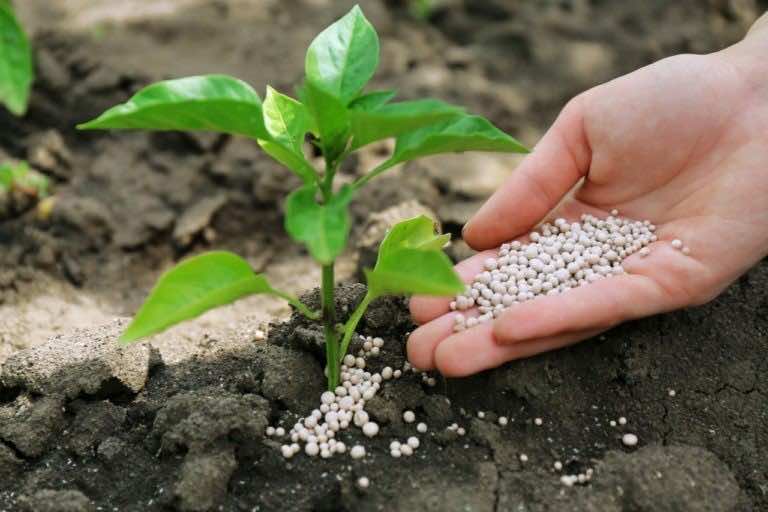
The plant’s root system uses nitrogen (N-fertilizer) as a building block to grow new stems and leaves. N-fertilizer is a necessary component of chlorophyll, which makes the leaves green and helps plants photosynthesize.
Phosphorus (P-fertilizer) is linked to a plant’s ability to use and store energy, including during photosynthesis, as well as to the plant’s ability to grow normally. Potassium (K-fertilizer) is also key to keeping roots healthy and helping plants tolerate stressors such as drought.
Morocco is the second biggest exporter of P-fertilizer after China, largely thanks to its phosphate reserves which comprise 70% of the world’s known reserves. Phosphate is a main element in the manufacturing of phosphorus fertilizers.
Russia’s upper hand
Before considering Morocco’s capabilities, we must recognize Russia’s long-standing position as a leader in the fertilizer market. The dominance Russia has can be explained not only by the quantity of mines within its territory, but also by its world status as the second largest producer of natural gas.
Natural gas is an essential component in the production of phosphorus and nitrogen fertilizers, which is why Russia was the first exporter of nitrogen and the second exporter of potassium in 2021, according to FAO data.
However, with the current crisis and the sanctions against Moscow, several countries that depend on imports of fertilizer products from Russia and Belarus are facing an immediate shortfall.
To overcome this, they will need to secure alternative sources from a very tight global market, which is when producers of fertilizer like Morocco can help.
Morocco’s position
Morocco’s phosphate revenues in the first quarter of 2022 amounted to €2.4 billion (MAD 26 billion). Exports have increased by 77% compared to the same period last year, according to the latest OCP reports.
Morocco is expected to increase its production capacity, potentially reaching seven million tonnes of phosphate fertilizer annually between 2023 and 2026.
The Moroccan economy will benefit from these earnings. OCP dividends are set to increase with their distribution to the Moroccan state reducing the budget deficit. The Moroccan trade deficit will also be reduced thanks to the increase in Moroccan fertilizer exports.
According to the Moroccan Exchange Office, the total amount of Moroccan exports has increased by 32.2%, mainly due to phosphate exports that have doubled compared to 2021.
Exchange reserves will also increase and the Moroccan Dirham will appreciate against currencies of the countries that cooperate with Morocco in the fertilizer market, benefitting the country’s macroeconomic balances.
Cooperation with other countries in the fertilizer market could also lead to more economic cooperation in other areas, thereby creating the potential for more political relations.
Eager customers
Several countries have already expressed an interest in Moroccan fertilizers.
Japan already announced that it would import from the North African country. The Japanese Deputy Minister of Agriculture, Forestry, and Fisheries, Takebe Arata said that his country will cooperate with Morocco to enrich Japanese agricultural production. The process will involve importing large quantities of fertilizer to feed soil during the next fall season.
Moreover, Bangladesh’s government approved the import of 40,000 tonnes of di-ammonium phosphate fertilizer from Morocco on May 18.
After a meeting between President of the OCP Group Mostafa Terrab and Brazilian Minister of Agriculture Marcos Montes, the latter announced that Brazil was considering opening a phosphate processing plant where Morocco could become a major exporter if the plant were to function successfully.
Most notably, OCP Group has been expanding its influence in Africa, especially through its OCP Africa subsidy. Throughout 2022, the company announced multiple fertilizer donation programs, providing smallholder farmers with free and discounted fertilizers.
Capitalizing on Africa’s big population of small farmers and vast arable lands, the company has been particularly emphasizing the importance of dealing directly with farmers and giving them customized products that fit their specific soil. This approach could prove to give it an edge over other international competitors.
Morocco’s challenge now is to increase production whilst navigating the energy and the water crises, so that it can conquer the number one position in the global fertilizer market.
Since Russia’s invasion, OCP has been reporting stronger and stronger numbers. Not only is the Moroccan giant planting a foothold in Africa, it’s now being sought after by farmers in Europe and the US, especially as manufacturers in those regions are cutting production and raising prices.
An increased Moroccan presence in the global fertilizer market can bring a positive impact for the North African country’s economy, as well as global food security, with more competition ultimately making fertilizers easier to access for farmers.