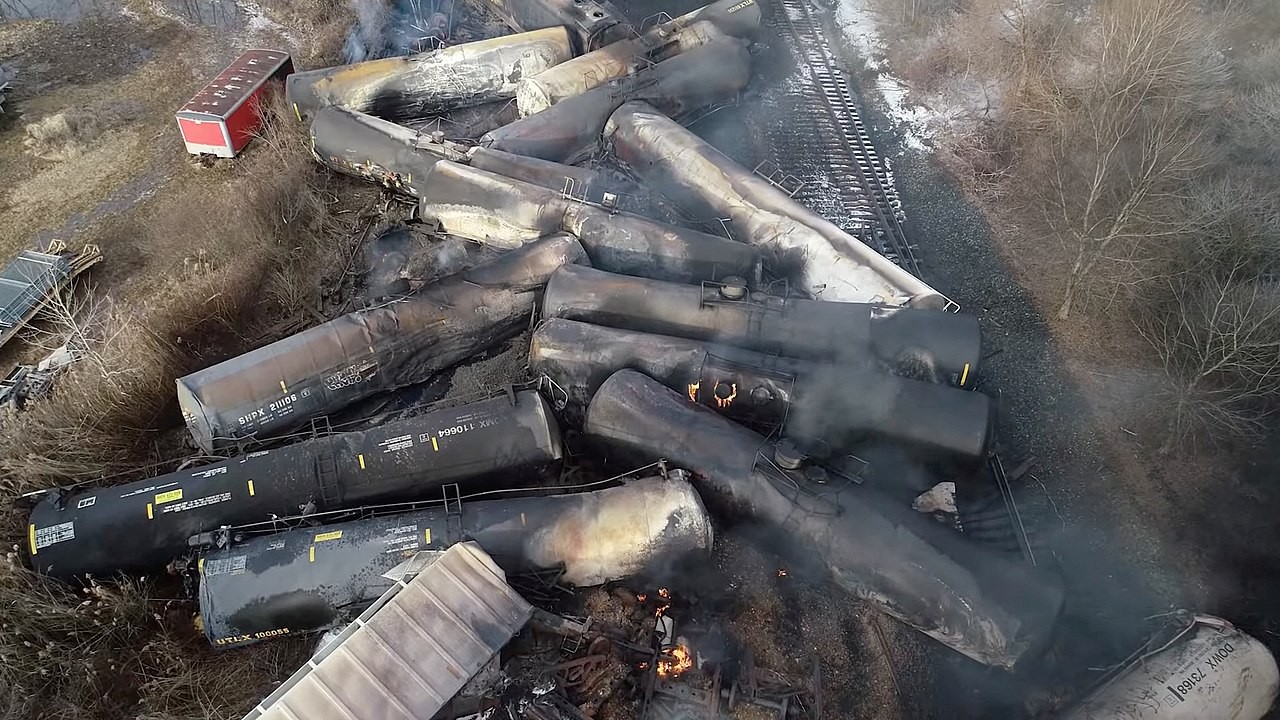
Rabat – The chemical disaster that befell the town of East Palestine, Ohio earlier this month has prompted severe questions over safety standards in the US, and some have speculated that it could be one of the worst environmental disasters in the country’s history.
A large train carrying hazardous chemicals derailed on February 3, resulting in the leakage of toxic chemicals into the air, water, and soil, as well as horrifying pictures of thick black smoke looming over the small town of 4,700.
Of the 38 cars that derailed from the train, 11 contained hazardous substances. Exposure to some of the chemicals that leaked into the town could have a number of side effects, including headaches, dizziness, and in some cases certain kinds of cancer.
A number of residents have already reported experiencing headaches and respiratory problems following the incident. Experts remain worried as it is not clear, nor is it easy to measure, how much of the chemicals exactly leaked into the town.
Concerns have also mounted over the effect the chemicals could have on the town’s environment in the long term.
It is unclear what sort of effect the disaster will have on air quality in the long term, Vox reported, and while most of the water has been deemed safe for human consumption, chemical leakage into the Ohio River could cause negative effects on wildlife.
In the aftermath of the disaster, the Biden administration has been considering civil penalties for Norfolk Southern, the freight railroad company that operated the derailed train.
Nevertheless, residents remain frustrated by what they see as an insufficient response from the US government.
Michael Regan, chief of the US Environmental Protection Agency, only visited the town two weeks after the disaster struck amid concerns of an impending explosion at the site and health complaints from residents.
Despite promises from the US’ federal government and agencies of providing continued support for affected communities in the state, residents remained skeptical, demanding more transparency about the health effects they can expect.