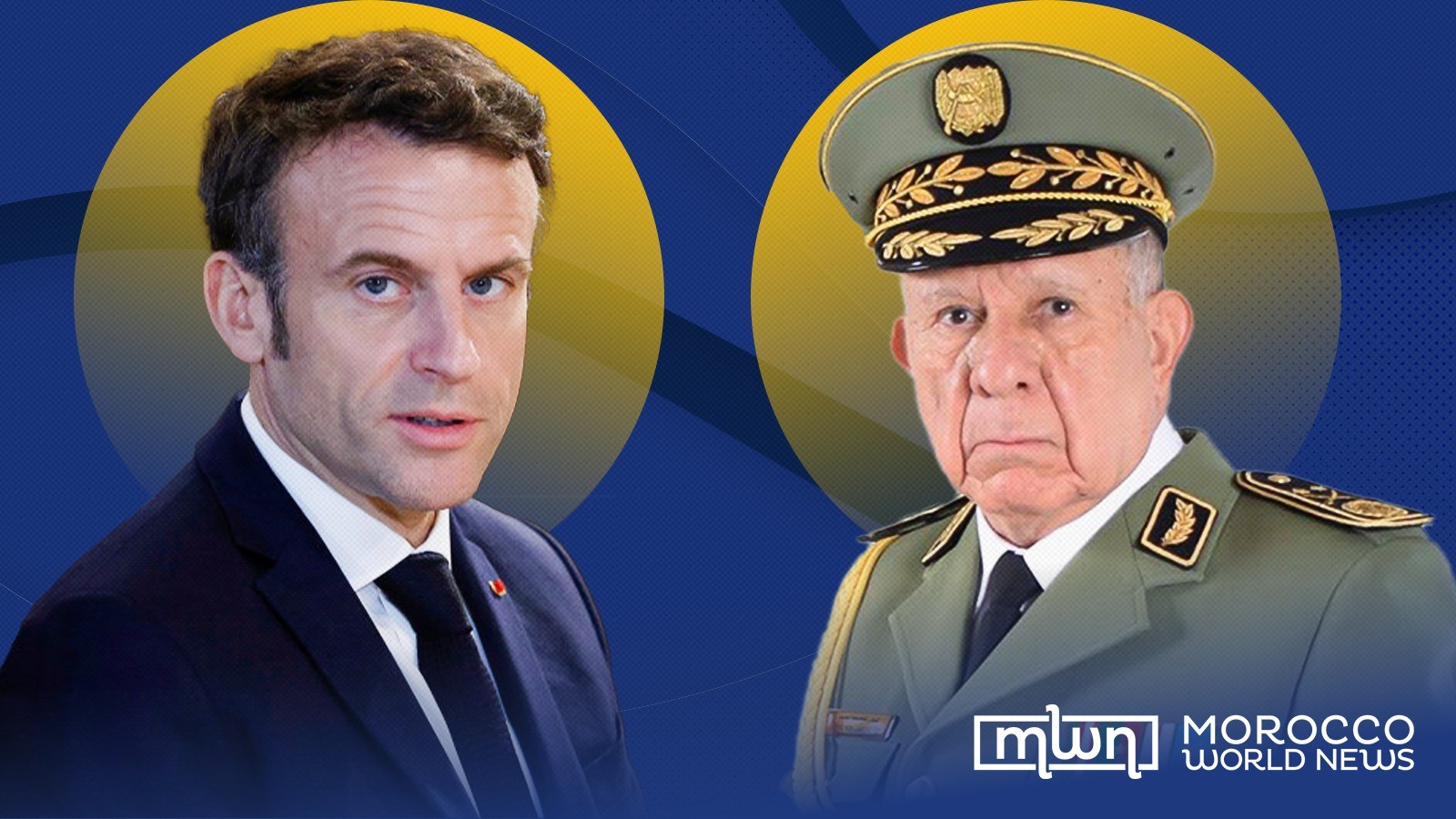
Washington DC – French President Macron is blatantly and recklessly pursuing a policy of escalation in the Maghreb that represents a new and very dangerous escalation in the conflict between Morocco and Algeria.
As regional tensions rise in North Africa, Macron is fueling the flames. His decision to embrace the erratic Algerian regime and antagonize Morocco when both countries are in the middle of a potentially lethal crisis is serious and foolish. French officials are willing to burn North Africa and the southern Mediterranean to punish Morocco for its decision to move away from decades-long dependency on France.
The French support of the current Algerian government against Morocco in the conflict over Western Sahara amounts to an endorsement of the Algerian army’s militarization of the region and a blessing of the Polisario guerilla’s daily provocations of the Moroccan forces.
Morocco has made sovereign decisions to strengthen its defensive capability and deepen its military and political cooperation with Israel and the United States to protect its national security and deter Algeria. But Paris ignores this evolving global security environment and insists on being the sole power in the Maghreb and the Sahel.
Rabat’s alliance with the US and Israel and improved relations with Spain could strongly shape geopolitics in the Maghreb and Africa for years to come. Paris has lost its influence and prestige in Africa and President Macron blames Morocco for this.
Over the past decade, perceptions of France in Morocco have changed considerably, as the public now sees the United States as the only reliable ally. This transformation of France’s image and sway is due to an array of factors and events, including Paris’s shy support of the Moroccan positions in the Western Sahara and Macron’s chummy relations with the Algerian military.
In the long term, Morocco understands that France will never betray a military regime in Algeria. Paris and Algiers have an operational mechanism that protects French interests in exchange for political support.
Meanwhile, there is a total anti-French tonal shift underway in Morocco. The Moroccans made a calculated tactical move away from Paris as the US explicitly supported the Kingdom’s position in the Western Sahara dispute. France’s long-standing ambiguous stances in Moroccan-Algerian disputes are no longer tolerated in Moroccan diplomatic circles.
As Morocco emerged as a regional power and began to forge new alliances outside the neo-colonial France-Afrique sphere, it inevitably exerted an influence that troubled France and Algeria. To curb this dynamism, French politicians use European institutions such as the European Parliament and exploit sensitive topics such as human rights to embarrass and intimidate the Kingdom.
Furthermore, It is ironic and shameful to hear French Members of the European Parliament from the ruling party condemning Morocco’s human rights records as their Minister of Defense was receiving Algeria’s de-facto leader, General Chengriha, a war criminal responsible for the documented killings of dozens of Algerian civilians during Algeria’s dirty war. The irony is self-evident!
The French MEPs criticizing Morocco should first denounce Algeria’s harassment and threats against Algerian and Kabyle activists living on French soil and investigate the secret relations between Algeria’s notorious chief of National Police Farid Zineddine Bencheïkh and French intelligence services.
Despite the long list of rights abuses perpetrated by the Chengriha regime, human rights cases were never on Macron’s agenda during his recent visit to Algeria. The French president conveniently avoided mentioning the arrest and detention of “peaceful activists, civil rights defenders, and journalists for their critical expression.”
Macron’s open and aggressive support of the military regime in Algeria is dangerous and worrisome. In the political environment of the Maghreb today, France’s support of Chengriha represents a clear and present danger to peace and stability in the region. The growing political and military partisanship between the Macron government and the Military junta in Algiers is a direct threat to Morocco and a major factor harming France’s credibility in the region.
Now more than ever, French officials need to recognize and accept Morocco’s latest sharp-tongued, aggressive approach that brought the diplomatic fight to its rivals. The Quai d’Orsay must face and respect the “new” Moroccan diplomats who are better trained and more assertive on the international scene.
French diplomats recognize the stakes involved, and they choose a closer alliance with Algeria as an answer to Morocco’s growing influence in Africa. In other words, Paris is ready to take the Maghreb closer to a regional war to chastise Rabat for choosing a strong military alliance with Israel and the US over a feeble and fickle partnership with France.
Even though French diplomats are trying to strike a conciliatory by denying the existence of a crisis between Paris and Rabat, Moroccan officials believe that the Elysée’s fundamental policy is neo-colonial and will not change any time soon. The window for improving relations is open now but will close soon.
Both Macron and the Algerian military are circling their wagons preparing to respond to a new political and economic reality in North Africa. Paris cannot afford to lose Rabat to the Americans and Israelis, and President Macron is desperate to keep it in his orbit. Thus, the world should not underestimate France’s diplomatic maneuvering as it pushes the region toward a new military confrontation with disastrous consequences for the world economy and regional peace and stability.
Hassan Masiky is a freelance writer based in Washington DC. You can follow him on Twitter @elmagharibi .