
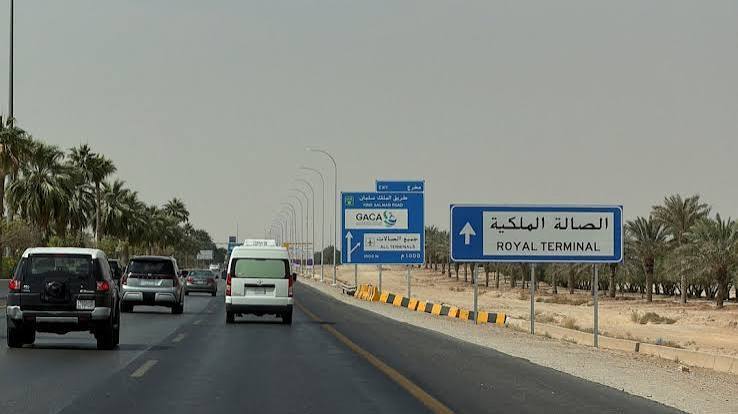
Rabat – Saudi Arabia has partially reopened its main international airport after a two-week suspension, but new Houthi threats and continued missile attacks have raised questions about the safety of air travel across the kingdom.
King Khalid International Airport in Riyadh resumed limited operations on Sunday, October 25, despite a warning from Yemen’s Iran-aligned Houthi movement that the facility remained a “military target.”
The airport closed on October 10 after an attack claimed by the Houthis killed 13 people, the deadliest assault in Saudi Arabia in more than a decade.
The latest escalation comes as the conflict between Saudi Arabia and the Houthis adds to regional instability amid the US-Israeli offensive against Iran, which has exposed key infrastructure across the Middle East to further threats.
Riyadh airport resumes limited flights
Saudi airport authorities announced late Saturday that Terminal 1 would serve domestic flights, while Terminal 2 would handle international flights operated by national carriers.
However, data from flight-tracking service Flightradar24 showed little air traffic at the airport on Sunday, despite the official announcement.
Houthi military spokesperson Yahya Saree rejected the move and warned that the airport would “never be safe.” He urged airlines, airport workers, and passengers to stay away from the facility.
The Saudi-led coalition reported that the Houthis launched 20 attacks against the airport between October 1 and 11, underscoring the security challenges that preceded the shutdown.
The Houthis also claimed attacks on the airport and Saudi oil facilities on Saturday. Saudi authorities did not directly respond to those claims.
Saudi air defenses intercept new missile Salvo
The partial reopening coincided with another wave of missile and drone attacks against Saudi Arabia on Sunday.
Saudi Civil Defense said debris from two intercepted ballistic missiles fell over Khamis Mushait and Ahad Rafidah, injuring two people and damaging residential buildings and vehicles.
Authorities also issued emergency alerts for Riyadh, Abha, Khamis Mushait, Jazan, and Najran. They later announced that the immediate threat had passed.
The Saudi-led coalition reported that the Houthis launched two drones and a ballistic missile toward Riyadh, as well as a cruise missile toward Khamis Mushait. The coalition later said it intercepted 10 ballistic missiles aimed at southern Saudi Arabia.
The attacks have placed renewed pressure on Saudi air defenses and raised concerns about the security of civilian infrastructure, including airports and energy facilities.
Red Sea escalation threatens regional stability
Saudi Arabia has intensified its strikes against the Houthis after the group seized strategic positions along Yemen’s Red Sea coast last month and advanced toward the Bab el-Mandeb Strait.
The waterway connects the Red Sea to the Gulf of Aden and serves as a vital passage for global trade and energy shipments. Its proximity to the conflict adds to concerns about maritime security at a time when the wider regional war has also threatened traffic through the Strait of Hormuz.
The latest fighting has also shattered a UN-brokered truce that had largely held since 2022, reviving a conflict that has repeatedly threatened regional stability.
Saudi Arabia entered Yemen’s civil war in 2015 at the head of a coalition that backed the internationally recognized government, one year after the Houthis seized the capital, Sanaa.
The renewed confrontation now poses fresh security challenges for Riyadh, which must protect its territory and critical infrastructure while the broader regional conflict continues to place pressure on key transport and energy routes.