


 Join on WhatsApp
  Join on Telegram
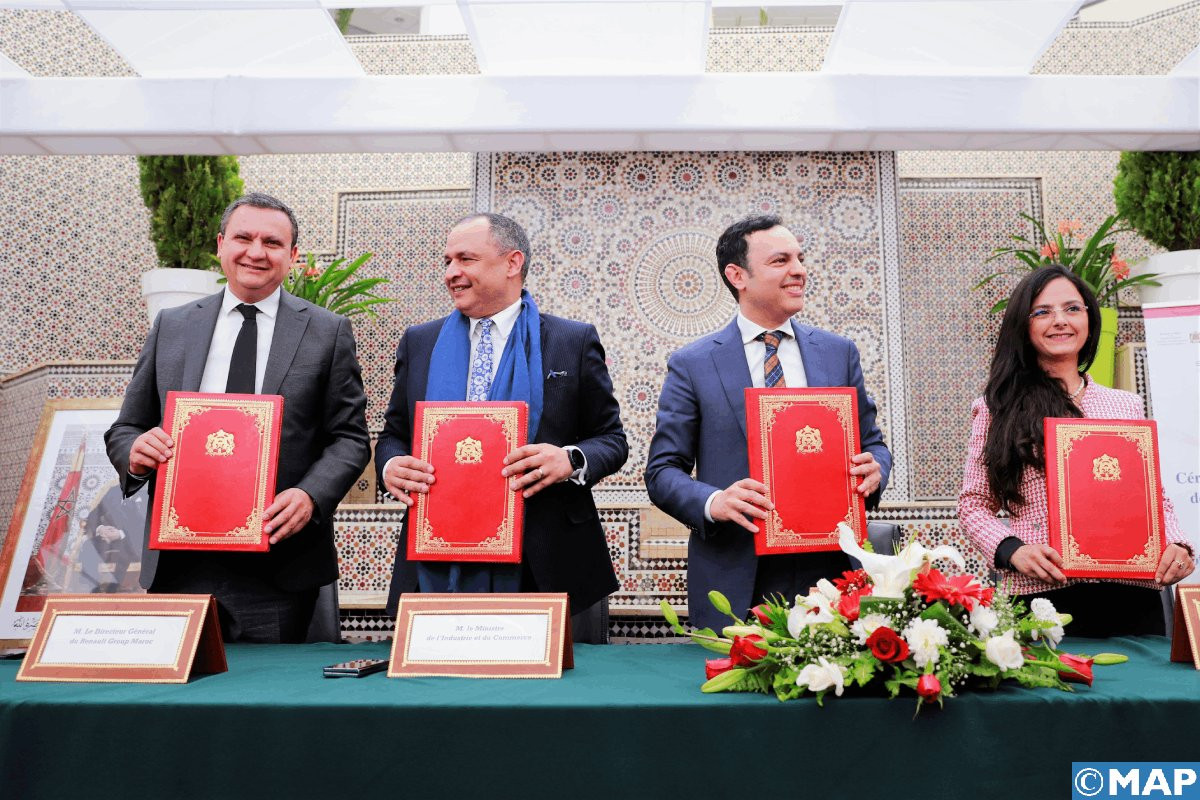
 Rabat – Morocco and Renault have signed two agreements in a bid to boost training in the automotive industry.
The two agreements aim to support the development of the automotive industry through training human resources qualified to meet the skills needed in the manufacturing industry.
Renault Morocco Group signed the agreement on Thursday with Morocco’s Ministry of Economic Inclusion, the Ministry of Industry, the Moroccan Office of Vocational Training, as well as the SNOP Groupe FSD.
Commenting on the signing, Minister of Economic Inclusion Younes Sekkouri stressed the importance of vocational training in supporting sectoral strategies through the development of human capital and the improvement of business performance.
He also emphasized the importance of Morocco’s vocational training center, describing it as a “locomotive for the preparation and mobilization of skill.”
Minister of Industry Ryad Mezzour echoed Sekkouri’s comments, emphasizing that the development of national industry and the maintenance of its competitiveness remain dependent on qualified, dynamic, and evolving human capital.
“Our efforts are continuing to meet the new challenges of vocational training in line with the ecosystem and thus promote the rise in performance of Moroccan industry,” the minister said.
Renault Maroc also expressed satisfaction with the signing, noting that the signed agreements reflect the shared desire of the various stakeholders to support the development of the automotive sector.
“The first partnership sealed with the Renault Morocco Group concerns the establishment of a training offer that meets the specific needs of the group, including industry 4.0, the electric car and automotive culture in general,” general manager of the Renault Maroc group Loubna Trisha said.
Areas of collaboration cover the development of training engineering and the development of trainers.
The second agreement signed with SNOP Groupe FSD Maroc, Renault and the Moroccan ministries concerns industrial maintenance, and the establishment of qualifying training courses in the fields of robotics, automation, and hydraulics.
“The training will start in 2023 in Tangier, with the prospect of extending it to the regions of Rabat and Casablanca from 2024,” Trisha said.
Morocco’s automotive sector is one of the key pillars that contribute to Morocco’s economic growth.
The industry created over 200,000 jobs in 2021.
To strengthen the sector, Morocco emphasizes the importance of training as a strategic activity as part of the Industrial Acceleration plan 2014-2020– seeking to contribute to the development of the sector.
According to the Industry Ministry, the objective is to create a pool of skilled workers through vocational training centers in different cities – including Casablanca, Kenitra, and Tangier.
Last year, Mezzour emphasized Morocco’s ambition to become the “platform of the most competitive automotive industry in the world.”


