 Join on WhatsApp
 Join on Telegram
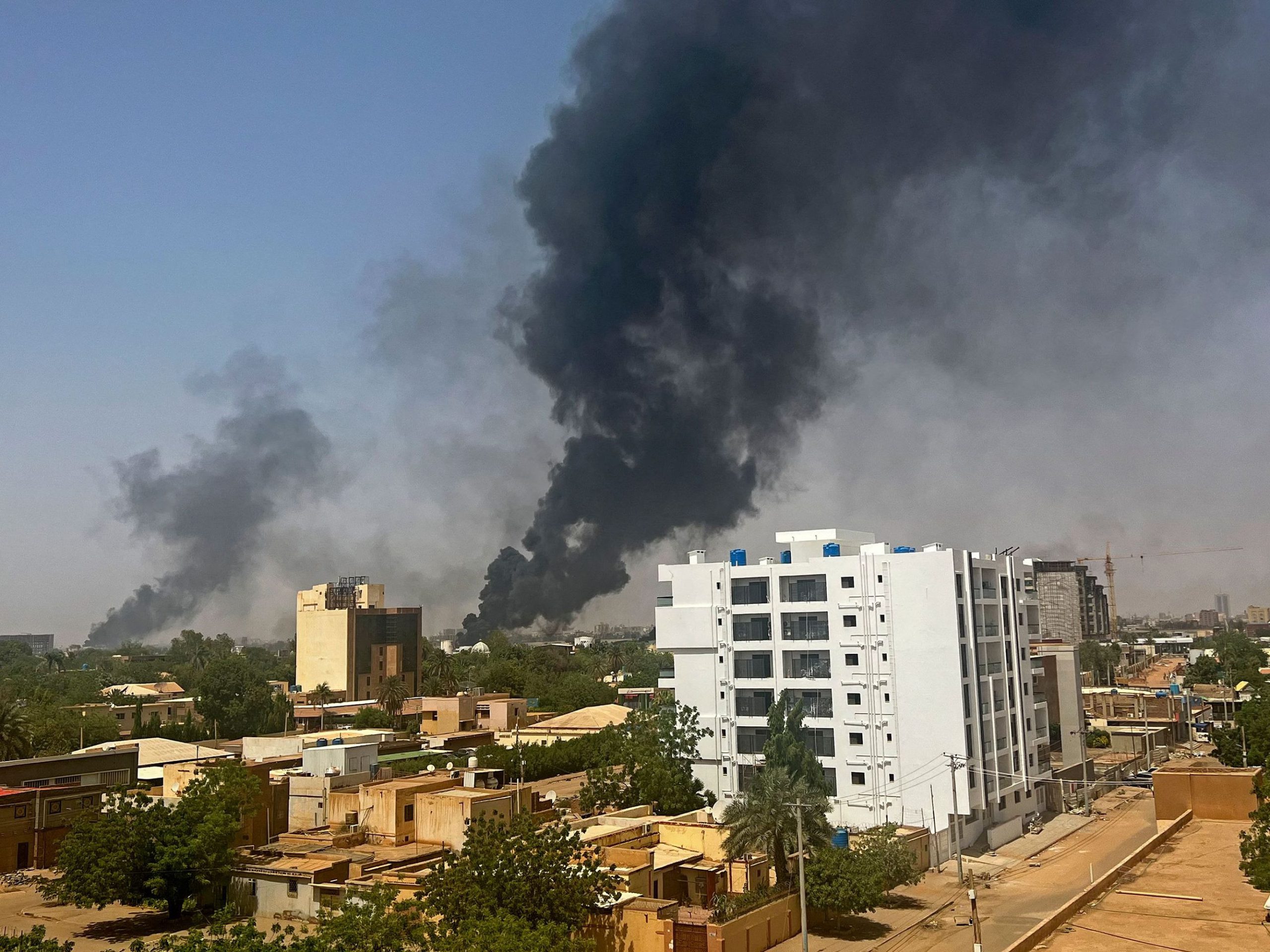
Rabat – A burst of gunfire and airstrikes echoed in Khartoum, Sudan’s capital on Thursday night, the eve of Eid al-Fitr, and Friday, the morning of the Eid. So has been the case every day since April 15, with the human toll exceeding 330 deaths and 3,300 injuries.
General Abdel Fattah al-Burhane, army chief and leader of Sudan since the 2021 putsch, said he was contacted by international leaders on Thursday. United Nations Secretary-General, Antonio Guterres, and the American Secretary of State, Antony Blinken, have all pleaded with the leaders of the clashing factions, General al-Burhane and General Mohamed Hamdane Daglo of the the paramilitary group the Rapid Support Forces (RSF) to end the fighting.
The RSF announced their agreement for a “72-hour truce” in the early hours of Friday at 4:00 a.m local time, to give a respite to the Sudanese on the day of Eid Al-Fitr. However, as has been the case for several days, these announcements have not been followed up. General Burhane, who appeared for the first time on state television since the start of hostilities, made his Eid speech without any mention of the truce.
“Our country is bleeding on the occasion of Eid this year: destruction, desolation, and the sound of bullets have taken precedence over joy. We hope we will come out of this ordeal more united … one army, one people… towards a civil power,” said the leader of Sudan’s transition and chief of the regular armed forces.
Khartoum has now been under the din of air raids for seven days, with explosions and street fighting being the daily experience of trapped, helpless civilians. The incessant shootings have heavily damaged new hospitals, reported the Sudanese doctors’ union, four of whom were hit in al-Obeid, 350 kilometers south of Khartoum.
“We would like the fighting to stop for Eid, but we know that will not happen,” Abdallah, a resident of the capital, told AFP on Thursday. According to the doctors’ union, “70% of the 74 hospitals in Khartoum and the areas affected by the fighting have been put out of use.”
Aid workers were mostly forced to suspend aid after three World Food Program (WFP) staff were killed.
In the capital, many families have run out of food and other essential resources. The telephone network only works intermittently. Women and children throng the roads to flee between RSF and army checkpoints and corpses strewn along the roadsides. As a result, 10,000 to 20,000 civilians have fled to the neighboring Chad since the start of hostilities, according to the UN.
Read also: Morocco Calls for Immediate Cessation of Hostilities in Sudan