 Join on WhatsApp
 Join on Telegram
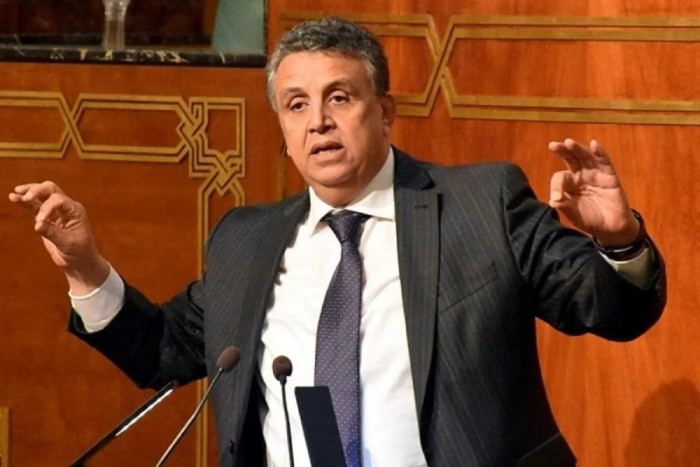
Rabat – Minister of Justice Abdellatif Ouahbi has renewed his commitment to implementing “individual freedoms” reforms, suggesting that such action does not clash with Morocco’s values and national interests.
Ouahbi made his remarks during a speech at the National Library themed “Individual Freedoms between Universal and National Values.”
Organized by the Center for Public Dialogue and Contemporary Studies, the meeting served as a platform for Ouahbi to renew his pledges to enact his reforms that many have deemed controversial over recent months.
“My goal is to prove that individual freedoms are a national interest that responds to the requirements of modernity and does not contradict Islamic value,” the justice minister said, stressing that Islam and modernity “share the same supreme values,” namely freedom, dignity, equality, justice, forgiveness, love, mercy, and love of wisdom, among others.
Citing the Quran, the minister said that many verses of the holy book prove that individual freedoms are in line with Islamic values. “Coercion is hated in the Quran,” he said, arguing that the prevailing authoritarian reading of Islam’s history should dictate neither the practice of Islam nor what should be considered Islamic values.
Many have criticized Ouahbi’s proposed reforms, especially his plans to decriminalize consensual extramarital sexual relations.
Earlier this month, a video went viral online of the moment when Abdelilah Benkirane, the leader of the former ruling Justice and Development Party (PJD), confronted Ouahbi about his proposal to reform the penal code.
“We are going through these conditions, and all you could see is consensual extramarital relations,” Benkirane told Ouahbi in front of reporters.
Ouahbi responded: “ Isn’t it better than having similar sexual relations on the beach?”
Read also: Ouahbi Sparks Controversy with Remarks on Extramarital Relations
The justice minister was referring to an incident in 2016, when two vice presidents of the Unity Reform Movement were arrested under charges of having extramarital sex in public in a car.
The PJD has been one of vocal opponents of Ouahbi’s proposal of penal code reforms.
In a statement in February, the former ruling party accused Ouabi of trying to provoke sedition.
Responding to Ouahbi’s comments that the draft text for the e “ready and can be presented to the parliament,” the PJD statement strongly condemned Ouahbi’s reform plans by describing them as “attempts to stir sedition” through the adoption of “trends” that are against Islamic and Moroccan values.
“Regarding sensitive points of this code, such as the possibility of granting more individual freedoms, mutually consensual sexual relations outside marriage, and shared guardianship of children, among others, it is necessary that all the answers to these questions obtain green light from the government, religious, and parliamentary authorities,” Ouahbi had said.
Article 490 of Morocco’s current Penal Code prohibits sexual relations outside of marriage: The article provides for a prison term of between one and two years for adultery.
Several Moroccan rights organizations and advocacy associations have been calling for reforms, arguing that the penal code does not take into account the changes Moroccan society has been through over recent years.
However, opposing such liberal critics of the penal code are conservative citizens and politicians who maintain that demands of reforming the penal code constitute an attack on Islam and traditional Moroccan values.