 Join on WhatsApp
 Join on Telegram
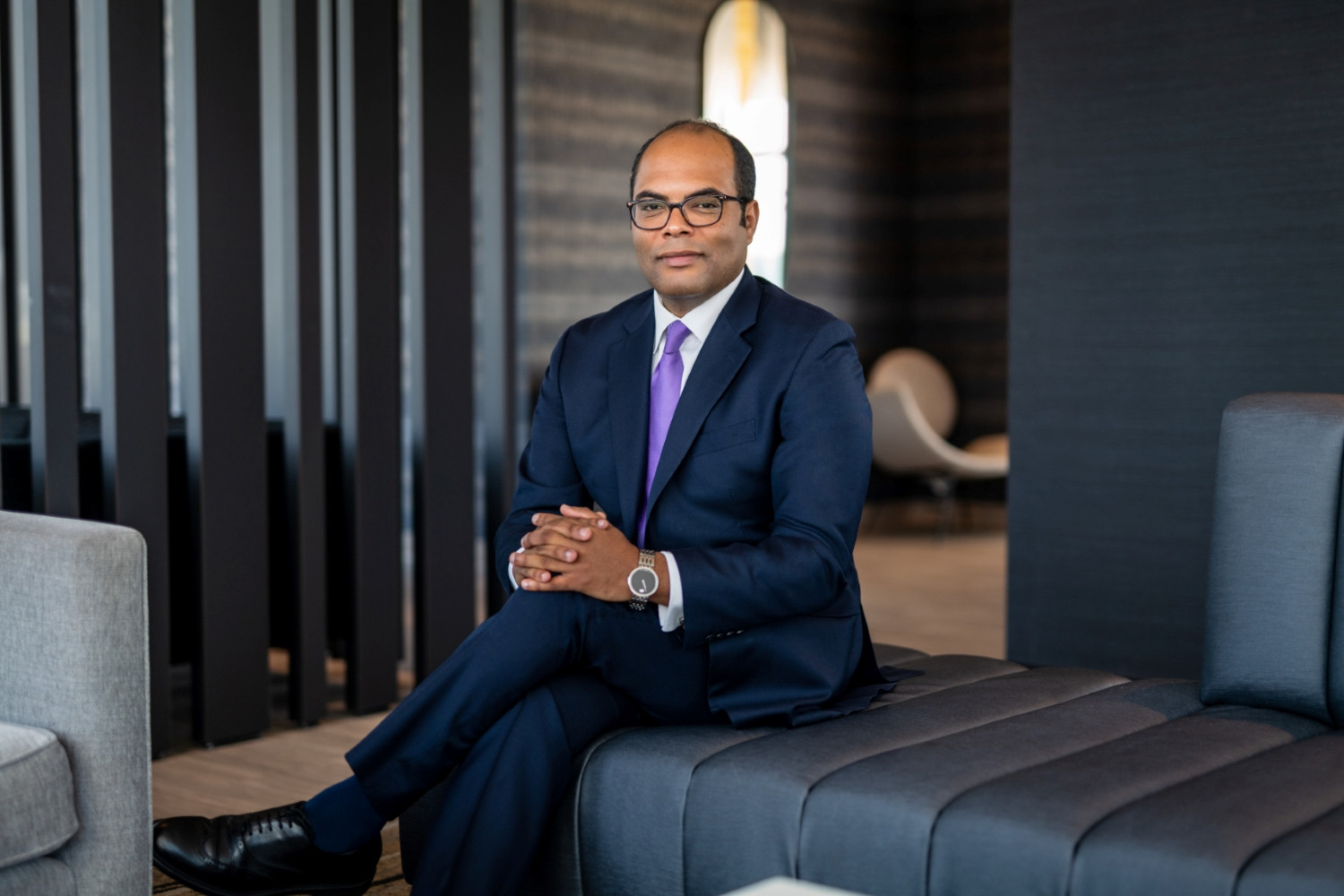
Rabat – New York University’s Professor Anasse Bari has emphasized the significance of developing a national AI strategy in Morocco, highlighting the need for the government and industry leaders to prioritize AI and invest in resources.
Speaking exclusively to Morocco World News (MWN), the NYU professor particularly called for training Moroccans, especially in public schools and universities to be ready for the AI world.
Bari, who also serves as the head of the Predictive Analytics and AI Lab at NYU, highlighted the remarkable progress made in AI thanks to the increased accessibility of powerful computational resources, the availability of vast amounts of data for training predictive models, machine learning algorithm breakthroughs, and substantial funding from both governments and industry.
AI and Morocco
Professor Bari explained the critical importance of aligning Morocco’s national AI strategy with the latest global developments, underscoring that “Morocco, along with other African and Arab countries, must not miss out on the AI wave.”
Bari further highlighted the key steps necessary for Morocco to ride the AI wave and maintain a competitive edge.
“These steps involve revolutionizing the educational system, starting from primary public schools to universities, by introducing new and modern curricula, training teachers and university professors, establishing and funding research labs in public universities, and swiftly establishing publicly accessible AI and data science majors,” he said.
The AI expert also emphasized the significance of fostering international collaborations and adopting multidisciplinary approaches.
Taking these actions promptly is crucial to ensure that Morocco avoids falling behind and seizes the AI opportunities before it becomes too late, he asserted, stressing the need for a proactive approach to ensure that Morocco is at the forefront of AI development.
Bari also highlighted the importance of addressing the risks and benefits associated with AI, stating, “Like any emerging technology, AI comes with both risks and benefits.”
“The national strategy should also include guidelines, governance, and regulations for AI to ensure the development of fair, safe, ethical, and responsible AI tools,” he elaborated.
Professor Bari expressed an “unwavering confidence” in the intelligence and potential of Moroccan students, as well as those across Africa and the Arab world.
He urged governments to prioritize investments in AI and ensure free access to necessary resources especially in public universities. Bari emphasized the importance of enabling youth in these regions to learn AI easily and cost-free, as well as to engage in AI research and compete at the international level.
Bari additionally shed light on why prioritizing AI should be a top concern.
He strongly believes that by harnessing the potential of AI, Morocco can effectively prepare its next generation of thinkers and seize the opportunities presented by this transformative technology in some of the country’s key sectors such as agriculture, tourism, and renewable energy, among others.
Bari closed by highlighting that Artificial Intelligence is undeniably one of the most thrilling and promising fields of our time, already making a significant impact on various aspects of our lives.
It is crucial for Morocco, as well as other Arab and African nations, to prioritize the development of effective AI strategies that empower and prepare younger generations, he asserted.
By doing so, he maintains that these countries can enhance their economy, tackle numerous challenges, and embrace the transformative potential of AI.

Professor Bari advocates for an evolved teaching method and cirricula to keep up with AI advancements.
An extension of human intelligence
For Bari, AI is not nearly at a point where it can be said that it mirrors human intelligence.
“While there is a lot of hype and malarkey around AI, I want to clarify that the current confusion stems from the mistaken belief that the AI we are currently developing is equivalent to human intelligence, but that is not true,” he emphasized. “We still have a significant journey ahead of us to achieve true general intelligence, reaching a point where AI closely mirrors human thinking.”
Discussing the tangible applications of specialized AI, Bari showcased several projects undertaken under his leadership in the past years.
One project focused on developing a tool to predict severe COVID-19 cases in the earliest days of the pandemic, offering assistance to healthcare professionals. Through the utilization of predictive analytics and large clinical datasets, the AI tool successfully predicted the severity of COVID-19 cases.
Another project centered around monitoring vaccine hesitancy by leveraging natural language processing and emotion AI.
By analyzing millions of categorized tweets, the AI tool detected false information and aided governments in debunking myths. This approach holds the potential to address misinformation in various domains, such as politics and elections, Bari said.
Another project led by Bari aimed to utilize alternative data sources to model epidemics, enabling the AI tool to predict public behavior and its influence on COVID-19 cases, thereby offering a decision support tool for government and public health agencies.
Bari additionally emphasized the potential of AI in politics, particularly in how the popularity of candidates on social media can be indicative of their electoral success. He also stressed the broader role of AI in combating misinformation, extending beyond just elections.
Bari pointed to the fact that he has led multiple projects that utilized AI to predict the outcomes of the 2020 United States elections, leveraging diverse datasets including merchandise purchase data among others. According to the expert, these datasets hold the potential to forecast election winners.
In addition, politicians are increasingly utilizing predictive analytics to identify the most impactful message for voters, effectively influencing their decisions and leveraging AI “not only to predict the future but also to shape and change it,” according to Bari.
The professor also detailed various AI projects he spearheaded in the finance sector.
In one notable project, he led a team in collaboration with major banks to develop a predictive analytics framework to forecast the direction of financial markets.
The framework leveraged large datasets from diverse sources such as satellite images, credit card transactions, jobs and layoffs reports, social media data, news articles, and online search queries.
Bari highlighted that by applying predictive analytics to these alternative data sources, valuable insights can be discovered and contextualized, leading to more accurate predictions. He emphasized that possessing unique knowledge provides firms with a competitive edge and enables them to develop innovative investment strategies.
AI and the job market
When asked about the impact of AI on education and employment, Bari emphasized that AI should be viewed as an augmentation of human intelligence rather than a substitute.
He also expressed this viewpoint during a speech at the 2023 graduation ceremony in NYU’s College of Arts and Science.
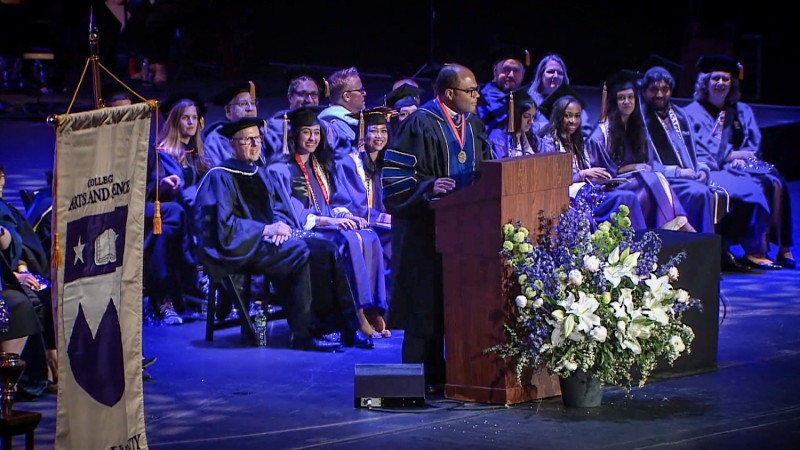
Professor Bari at the 2023 graduation ceremony for NYU’s College of Arts and Science.
“AI is here to stay and should serve as an extension of our intelligence, not a replacement,” he said. “It will enhance our capabilities, enabling us to perform our tasks more effectively and efficiently.”
Speaking to MWN, Bari further highlighted his belief that individuals who possess AI skills, and know how to use those tools, will surpass and replace those who do not, giving an example of lawyers who can benefit from AI tools to work faster, more efficiently, and with greater precision.
He noted that analytical thinking, critical thinking, design thinking, and creativity are essential skills that AI may never be able to fully replicate, and therefore, education should focus on nurturing these skills in students.
Bari encouraged students to embrace AI and learn more about its capabilities to prepare for future opportunities.
Addressing concerns about technologies like ChatGPT and academic dishonesty, the professor acknowledged the presence of pros and cons in every technology.
“Yes, instances of cheating existed before ChatGPT, and they will persist during its existence and beyond,” he emphasized.
To address these challenges, he shared his approach at NYU, where he constantly modifies the educational methods in his classes by assigning tasks and exams that emphasize analytical thinking and creativity.
He also highlighted his collaborative efforts with his Dean to teach applied AI research skills to students from various disciplines, emphasizing that AI can be applied in diverse fields such as film, law, arts, humanities, and beyond.
Their aim is to equip students with the ability to utilize AI to advance their work and achieve greater innovation in their respective domains.
While AI-powered tools can enhance learning and research, Bari emphasized the significance of critically evaluating and verifying AI-generated results. Drawing a parallel with calculators in mathematics, he explained that initial concerns were eventually addressed, leading to the widespread use of calculators as a means to advance mathematical understanding and efficiency.
Professor Anasse Bari is an internationally renowned expert in Artificial Intelligence who was born and raised in Tangier, Morocco and now teaches in NYU.
Recently, he had the honor of serving as the distinguished faculty speaker at the 2023 graduation of NYU’s College of Arts and Science. He was introduced during the ceremony by Dean Wendy Suzuki, one of the world’s leading experts in neuroscience, as “a true superstar.”
In his speech to over five thousand attendees, Professor Bari emphasized the importance of AI serving as an extension of human intelligence. He encouraged the graduates to embrace the technology and become active participants in the AI revolution, creating tools that are open, safe, transparent, trustworthy, and fair while maintaining the essential roles of human judgment and creativity.