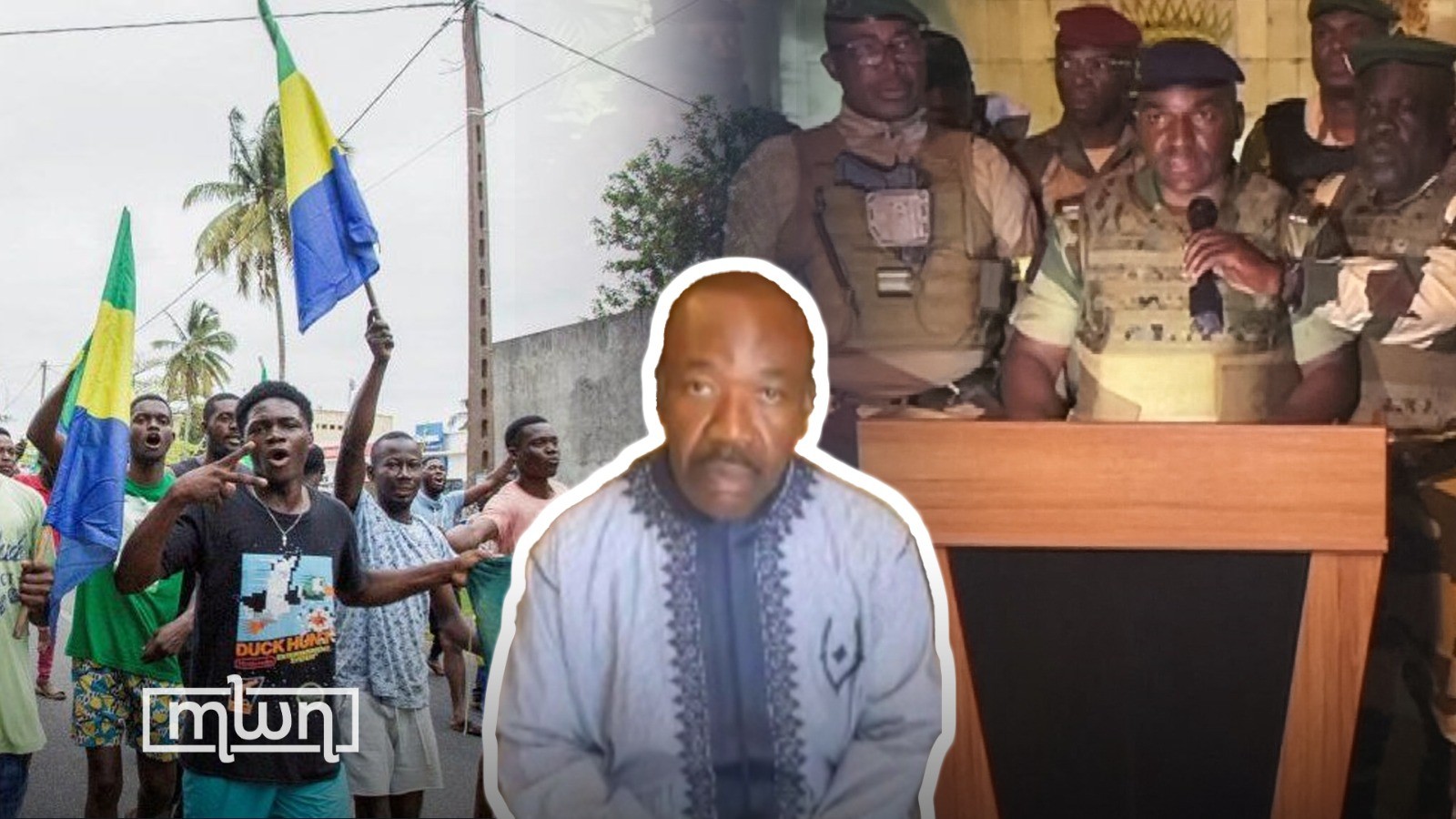
Gabon is the latest African country to witness a military coup – with many linking the situation to unfair elections, mismanagement, and government dysfunctions.
On Wednesday, a group of senior military leaders announced the coup – seizing power from Ali Bongo Ondimba, whose family ruled the country for more than 54 years.
What the coup leaders said
The Gabonese military announced the coup shortly after Ali Bongo was announced as president to the country for a third term. The now-ousted president ruled the oil-rich country for nearly 14 years.
The military officers appeared on television to announce the news, declaring the election results to be canceled.
They also announced border closures as well as the dissolution of several state institutions.
Following the announcement, the military leaders also unanimously voted to appoint General Brice Oligi Nguema as a transitional president.
What happened to Bongo
Following the coup, all eyes have been on what the announcement means for Bongo and his family, with the international community mounting concerns about the already fragile situation in Africa.
A series of coup attempts has further fueled instability in the continent, which has been mostly due to civil conflicts and security threats like terrorism.
The ousted president appeared in a video, appealing for help from the country’s allies and supporters.
“My son is somewhere, my wife is in another place…. Nothing is happening. I don’t know what is going on,” he said, launching a plea for help from his supporters.
The world reacts
Many countries and organizations have expressed concerns about the situation, including the European Union, the African Union, as well as the United Nations.
UN Secretary-General Antonio Guterres said he “firmly” condemns the attempt, with the organization “closely” following the situation in Gabon.
“He firmly condemns the ongoing coup attempt as a means to resolve the post-electoral crisis,” UN Spokesperson Stephane Dujaric quoted Guterres as saying.
“The Secretary-General reaffirms his strong opposition to military coups,” the spokesperson added.
Moussa Fami Mahamat, head of the AU Commission shared the same concerns, calling on security forces to peacefully return to “democratic constitutional order.”
“He calls on the national army and the security forces to guarantee the personal safety of the president, the members of his family, and those of his government,” an AU spokesperson said.
While France has also condemned the situation, some reports suggested that Bongo’s video in the English language suggests that his appeal is more directed to the commonwealth instead of Paris.
“Mr Bongo’s use of English in his video, rather than French which is Gabon’s official language, suggests he was addressing the Commonwealth rather than France,” BBC reported. The outlet suggested that the country’s military leaders may have seen France’s diminishing influence in Africa as a motivation to carry out their plan.
The EU also expressed concerns over the situation with its top diplomat Josep Borell announcing that the coup would be discussed by the EU’s ministers this week.
Many countries have also voiced their concerns, including Morocco which has called for preseversing stability.
In a statement on Wednesday, Morocco’s Foreign Ministry said that it trusts in “the wisdom of the Gabonese nation, its vital forces, and its national institutions to move towards a perspective that allows them to act in the best interests of the country.”
Morocco is one of Gabon’s strongest allies, with both countries sharing good diplomatic ties for decades.
Morocco also offered its support for Bongo in 2018 after his health complications, with King Mohammed VI inviting the now ousted president to complete his medical recovery in Rabat instead of London.
In addition to Morocco, the US is among a growing list of countries also concerned over the situation.
“We are going to watch this closely, and we’re going to continue to do everything we can to support the idea of democratic ideals that are expressed by the African people,” White House national security spokesperson John Kirby said.
What’s next?
What is coming next remains uncertain and ambiguous as nothing is still confirmed with regard to who is taking over leadership.
Other than videos showing celebrations from the military and supporters applauding the coup, news on what Gabon is witnessing next remains preserved amid a curfew, border closures, and an internet access shutdown.
A group of former French colonies, including Mali, Guinea, Burkina Faso, Chad, and Niger experienced a series of military coups for various reasons including mismanagement, poverty, and corruption.
CNN quoted analyst Remi Adekoya who wrote in 2021 that reasons like corruption and poverty ”still resonate with many Africans today”.
“And in many countries, people feel these problems are worsening. All the while the population is growing in the world’s youngest continent intensifying already fierce competition for resources,” CNN said.