
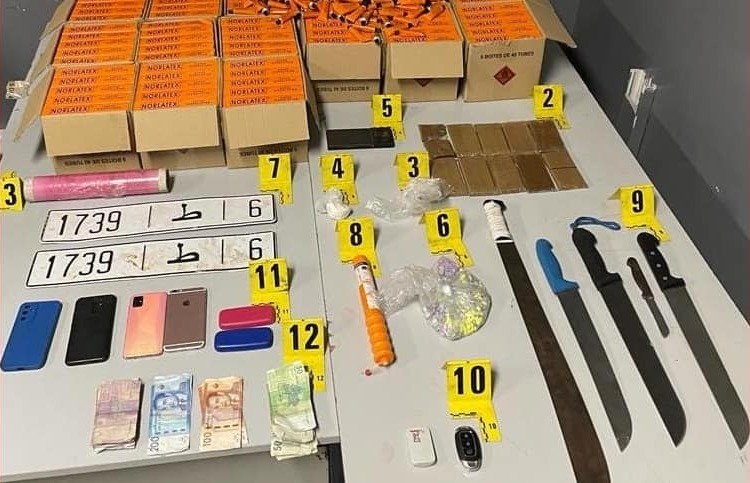
Rabat – Security authorities in the Moroccan city of El Jadida have arrested three individuals suspected of involvement in drug trafficking, the General Directorate of National Security (DGSN) reported on Thursday.
The operation led to the confiscation of a substantial quantity of illicit substances, including 21 grams of L’Poufa, 1,000 ecstasy tablets, doses of cocaine, 846 grams of Chira, and 5,500 packets of adhesive material used for sedation.
The arrest comes as Morocco grapples with the deadly proliferation of L’Poufa, a highly addictive and dangerous form of crack cocaine that has spread among the country’s youth.
Morocco’s struggle against the epidemic has intensified in recent months as the drug has spread through communities, particularly affecting young people.
Often referred to as the “drug of the poor” due to its affordability, the drug’s accessibility has made it increasingly widespread.
What was once confined to marginalized areas has now infiltrated schools and social gatherings, contributing to the destruction of the lives of adolescents and young adults.
The drug, a homemade substance formed from remnants of cocaine and ammonia, assumes a solid, crystalline structure.
Read also: Alarming Rise of ‘L’Poufa’: Crack Epidemic Sweeping Through Moroccan Youth
Users typically smoke the drug by inhaling the crystalline rocks in makeshift pipes, often made from pen tubes. This form of consumption accelerates the drug’s impact on the brain, inducing immediate euphoria and a surge in dopamine levels.
However, the intense feeling is short-lived, leading to a cycle of repeated use and eventual addiction.
The consequences of addiction to L’Poufa are profound, with withdrawal symptoms encompassing paranoia, depression, anxiety, and chronic fatigue.
As users submit to these physical and psychological effects, they find themselves trapped in a cycle that is both destructive and challenging to break.
Health professionals and concerned citizens have united in urging immediate measures to confront the mounting crisis.
Moroccan social media users have launched an online campaign to highlight the grave consequences of the drug on the country’s youth. The hashtag #Together_We_Stand_Against_L’Poufa trended on Twitter and other social media platforms as citizens called for action against the epidemic.