 Join on WhatsApp
 Join on Telegram
Rabat – King Mohammed VI has instructed the Head of Government Aziz Akhannouch to ensure the revision of Morocco’s family code.
The monarch gave his instructions in a letter he addressed to Akhannouch today, the Royal Cabinet said in a press statement.
According to the statement, the King’s message is in line with the royal decree announced by the monarch during the Throne Day speech in 2022, “reflecting the gracious attention that his majesty, may God protect him, has consistently paid to family-related issues in general and the promotion of women’s rights.”
In the speech, which King Mohammed VI gave last year on July 30, the monarch stressed the importance of social inclusion in family law, underlining that all decisions and recommendations should respect Islamic Law, also known as Sharia.
“As the Commander of the Faithful, I pointed out before Parliament in 2023, when introducing the Moudawana, or Family Law, that I shall not make licit that which the Almighty has forbidden, nor shall I forbid that which he has authorized, particularly when it comes to matters of government by unequivocal Quranic prescriptions,” the monarch said in his speech.
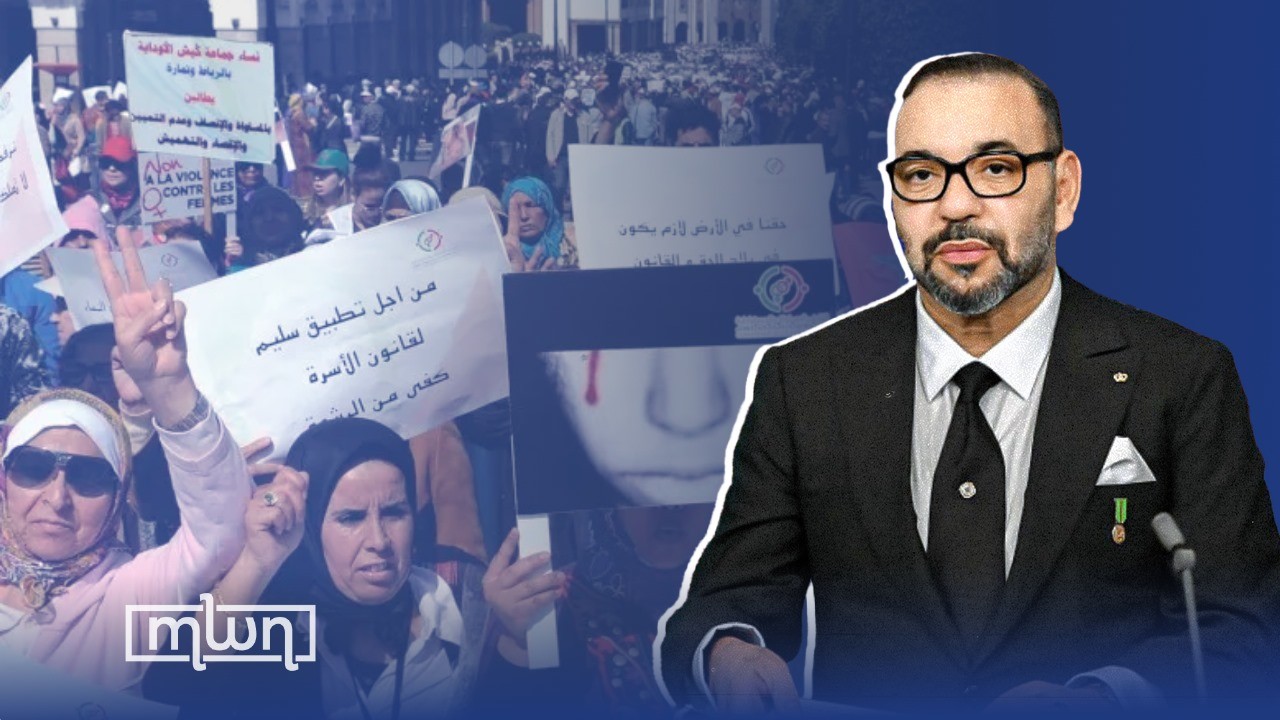
The speech came amid several campaigns and advocacy calling for reforms in the country’s inheritance laws.
Many campaigns have shown that a large number of Moroccans, especially women, have long called for reforms to inheritance laws in Morocco.
Read also: Moudawana: King Says All Decisions Should Comply With Islamic Law
A 2022 survey by Morocco’s Association of Moroccan Women for Research and Development in partnership with the National Council for Human Rights (CNDH) showed that around 34% of Moroccans want reforms to the country’s inheritance laws, while 44% others are against the decision to rethink the country’s conservative inheritance laws.
The monarch’s letter to Akhannouch also included instructions regarding the practical supervision of the reform to be a “collective and joining effort” involving several institutions, including the Ministry of Justice, the Supreme Judicial Council, and the Public Prosecutor Office.
In particular, the royal letter urged these institutions to “closely involve relevant bodies directly concerned with this subject, including the Supreme Scientific Council, the National Council for Human Rights, and the governmental authority responsible for solidarity, social integration, and family affairs.”
The revision process should be done with an “openness to civil society organizations, researchers, and experts,”the King stressed in his letter, calling for the submission of draft recommendations based on consultations within six months before the government prepares and submits a draft law for parliamentary approval.